

The brush is out of the box, the cord is plugged in, and you have no idea whether your hair should be wet or dry. Good news: a hot air brush for beginners is easier than juggling a dryer and a round brush, and seven steps cover the whole routine.
New to the tool itself? Read what a hot air brush is and what it does first, then come back here to learn how to use one.
Table of Contents
Quick Answer: To use a hot air brush as a beginner, start with hair that is about 80% dry, apply heat protectant, split it into four sections, and choose a low or medium setting. Brush slowly from roots to ends, keep the brush moving, and finish with cool air to set the style.
What You Need to Know
- A hot air brush works on damp hair (about 80% dry), never soaking wet hair.
- Check which type you own first. Heated-plate brushes need fully dry hair.
- A hot air brush for beginners works best with heat protectant, four sections, and a low or medium start.
- Brush slowly and use as few passes as you can. Each extra pass adds heat.
- Short hair needs smaller sections and a brush placed right at the roots.
Is a Hot Air Brush Good for Beginners?
Yes. A hot air brush is one of the easier heat tools to learn because it dries and shapes hair in one motion, with no clamping plates. A hot air brush is a styling brush with a built-in heater and fan, used to dry, smooth, and shape hair in a single step.
Feeling nervous about frying your hair is normal. A hot air brush for beginners carries less risk than a flat iron because the heat comes from moving air, not pressed plates.
The tool is also sold as a blow dryer brush, so you may see both names. Its limit: it is a finishing tool, not a full dryer replacement.
Which Type Do You Have: Airflow Brush or Heated-Plate Brush?
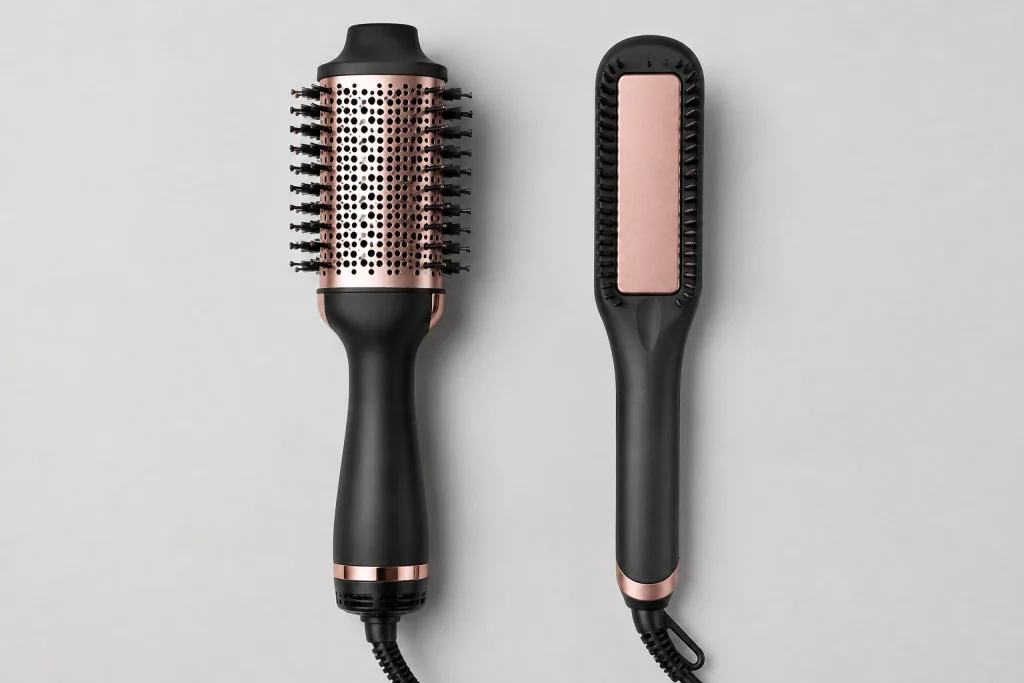
Look for vents and a fan (airflow brush) or flat ceramic plates (heated-plate brush). Never put a heated-plate brush on wet hair.
| Type | How it heats | Hair state | Rule |
|---|---|---|---|
| Hot air (airflow) brush | Fan pushes heated air through or around the barrel | Damp, about 80% dry | Finishing tool, not a full blow dryer |
| Heated-plate (thermal straightening) brush | Ceramic plates heat directly | Fully dry | Behaves like a flat iron |
| Combination brush | Both modes | Follow the mode in use | Read the manual for each mode |
Heated-plate brushes work much like a flat iron, so treat them with the same care. If you are unsure which type you own, check the product page or the manufacturer’s manual.
Hot Air Brush for Beginners: Your 7-Step First Routine
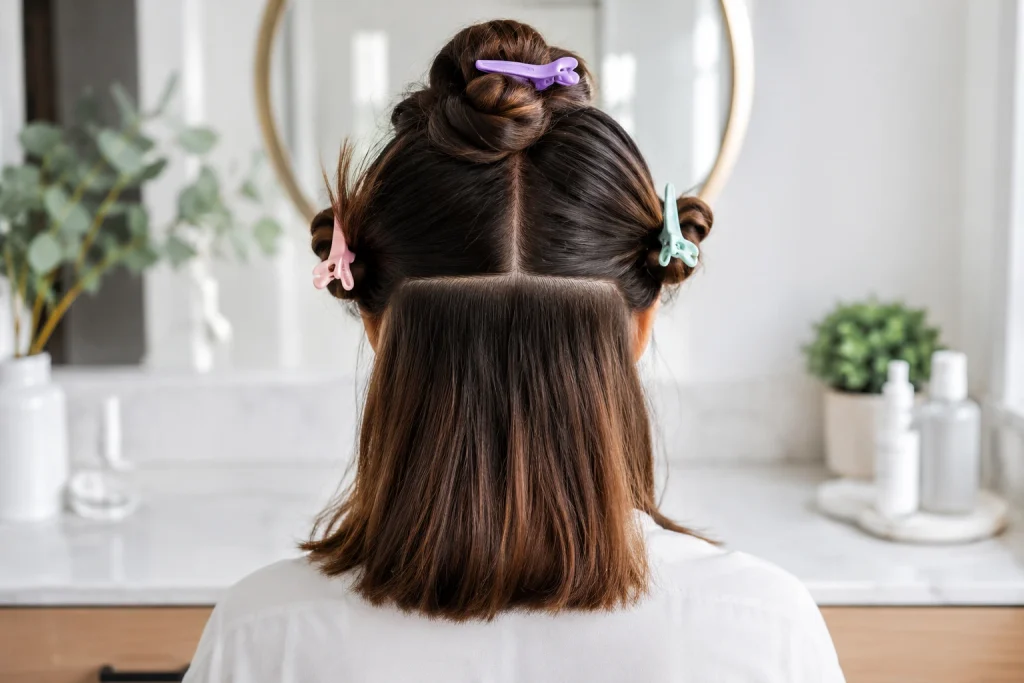
Seven steps cover the whole routine: get hair damp, protect it, section it, set low heat, brush slowly, shape the ends, and cool it down. The goal is a smooth, lifted finish in the fewest possible passes, because each extra pass adds heat to the same strands.
Why does this work? The heat and airflow smooth the hair while the bristles guide it. How a hot air brush works explains the mechanics.
- Get your hair damp, not wet. Towel-dry, then air-dry or rough-dry with a blow dryer until hair is roughly 80% dry. If water drips when you squeeze a section, wait. Check your model’s manual too.
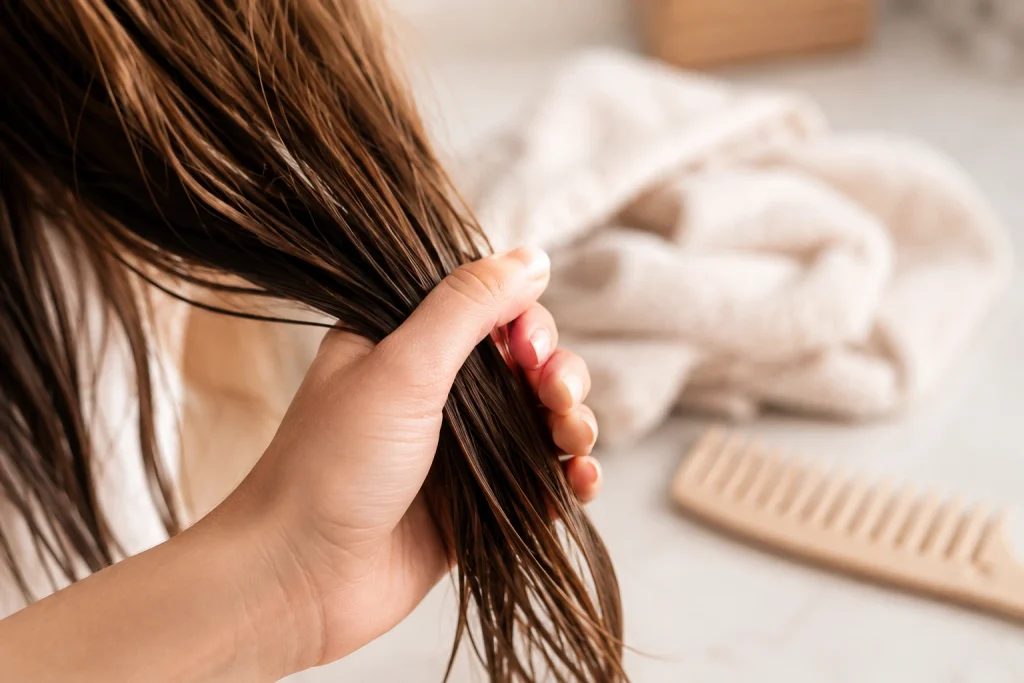
- Detangle and apply heat protectant. Comb with a wide-tooth comb from the ends upward. Then apply a heat protectant made for your hair type: mousse or a light spray for fine hair, a creamier formula for thick hair.
- Divide your hair into four sections. Clip up the crown, left side, right side, and back. Start with the back, and work in strands about 1 to 2 inches wide.
- Choose a low or medium setting. Fine or thin hair does best on low, and thick hair may need medium. Move up one level only if hair is not shaping after a couple of passes.
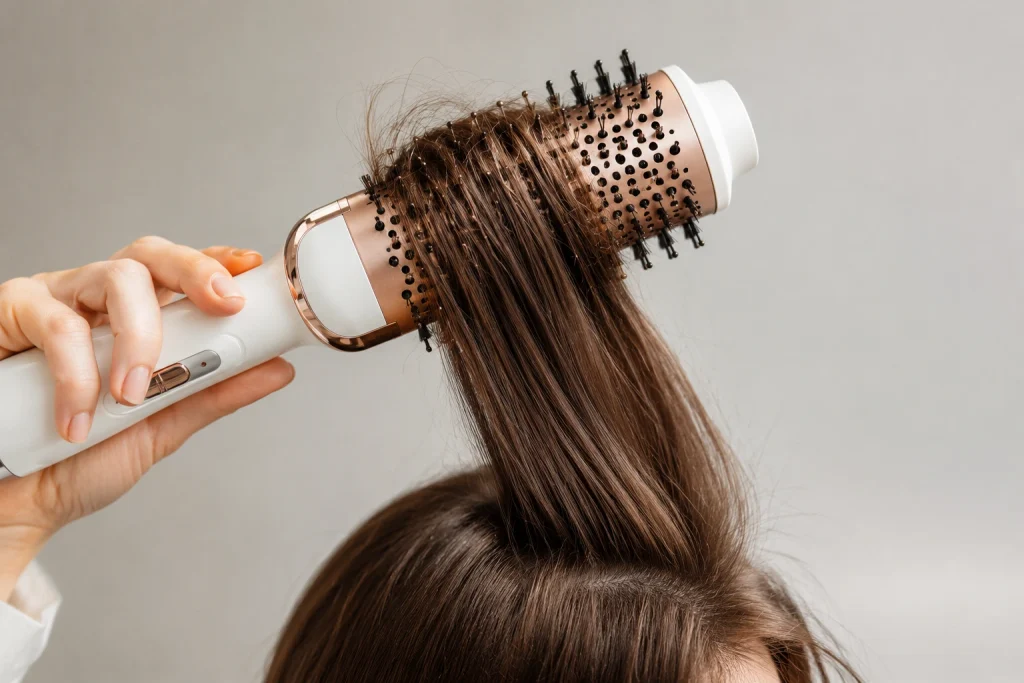
- Brush slowly from roots to ends. Place the brush at the roots and glide down at an unhurried pace without stopping. As a starting point, aim for one or two passes per strand.
- Lift or turn to shape. For volume, lift each strand up and away from your scalp as you brush. For curved ends, rotate the brush at the bottom and hold it for about 5 to 10 seconds.
- Finish with cool air. If your brush has a cool button, use it for several seconds to set the shape. Then add a lightweight hairspray, and put serum on the ends only.
Go slower than feels necessary the first time. Speed is not what makes a hot air brush work.
Can You Use a Hot Air Brush on Wet Hair?
No, not on soaking-wet hair. A hot air brush works on damp hair because its airflow is much weaker than a blow dryer’s.
Here is the counterintuitive part: starting wetter means more total heat on your hair. You need more passes and longer exposure, and you get more frizz.
If your hair is wet, rough-dry it with a blow dryer first, or let it air-dry until damp. Then use the brush to finish. For the full comparison, see how a hot air brush differs from a hair dryer.
What Heat Setting Should a Beginner Use?
Start on low or medium. Begin on the lowest setting that shapes your hair, and move up one level at a time. Exact temperatures vary by model, so use your manual for specifics.
| Hair type | Starting setting | Step up only if |
|---|---|---|
| Fine or thin | Low | Hair is not shaping after a couple of passes |
| Wavy or medium | Low to medium | Ends will not smooth on low |
| Thick or coarse | Medium | Hair still resists after a few slow passes |
| Color-treated or previously damaged | Low | Your stylist says it is fine |
| Short | Low | Hair is not holding shape |
6 Beginner Mistakes (and How to Fix Them)
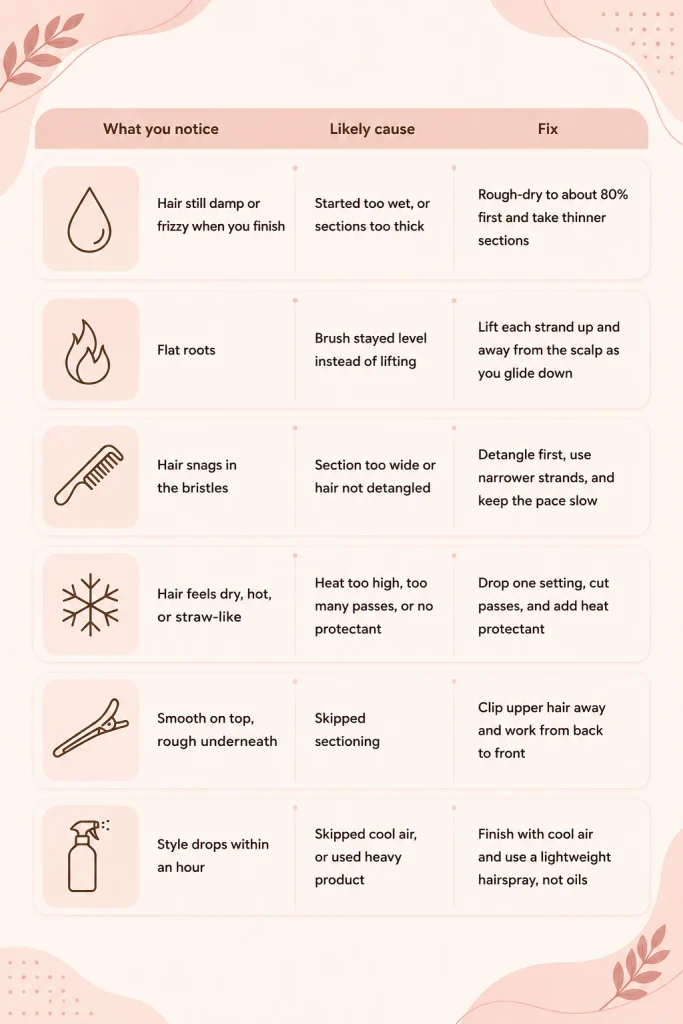
Your first session may not look like the video, and that is normal. Most first-time problems trace back to hair that is too wet, sections that are too big, or too much heat.
| What you notice | Likely cause | Fix |
|---|---|---|
| Hair still damp or frizzy when you finish | Started too wet, or sections too thick | Rough-dry to about 80% first and take thinner sections |
| Flat roots | Brush stayed level instead of lifting | Lift each strand up and away from the scalp as you glide down |
| Hair snags in the bristles | Section too wide or hair not detangled | Detangle first, use narrower strands, and keep the pace slow |
| Hair feels dry, hot, or straw-like | Heat too high, too many passes, or no protectant | Drop one setting, cut passes, and add heat protectant |
| Smooth on top, rough underneath | Skipped sectioning | Clip upper hair away and work from back to front |
| Style drops within an hour | Skipped cool air, or used heavy product | Finish with cool air and use a lightweight hairspray, not oils |
Save or screenshot this First-Time Fix-It Table. It covers six common first-session problems and their fixes.
Want it as a one-page printout? Join the Styleraia newsletter and we will send the printable version.
How Do You Use a Hot Air Brush on Short Hair?
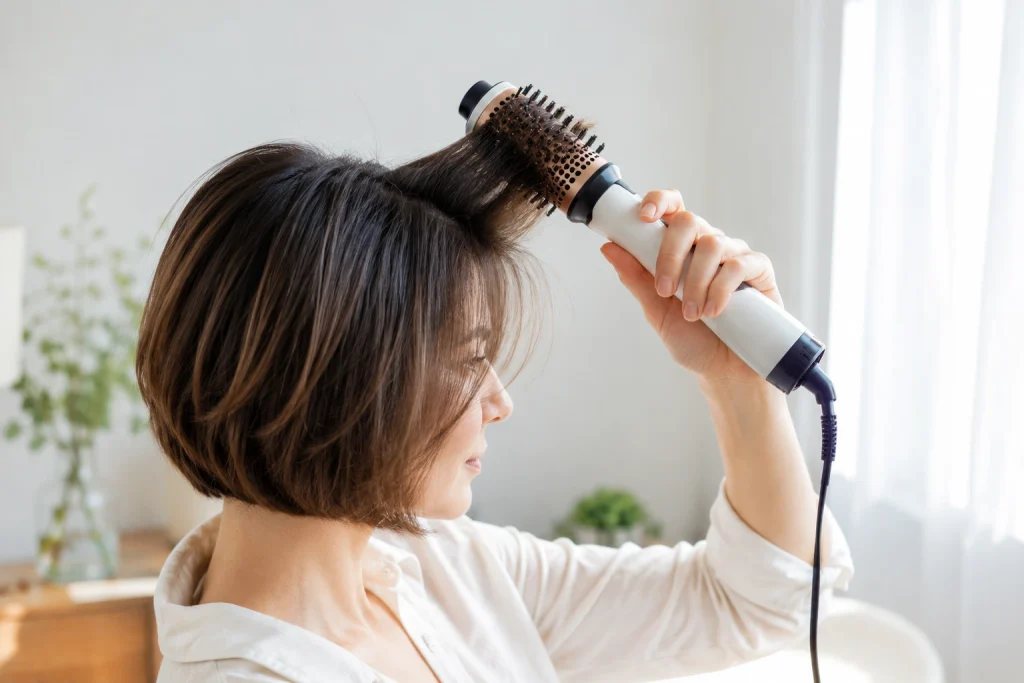
Use the same seven steps with smaller sections and a small barrel placed right at the roots. Short hair needs closer, smaller passes to get lift without overheating the same spot.
Air-dry until damp, then apply a volumizing mousse or heat protectant. Clip into four small sections. Place the barrel at the roots, lift away from the scalp, and glide slowly to the tips on low or medium heat. Finish with a soft-hold hairspray.
What Should a Beginner Look for in a Hot Air Brush?
Look for control: adjustable settings, a cool-air option, and a size that suits your hair length. Features matter more than brand when you are choosing a hot air brush for beginners.
| Feature | Why it helps a beginner |
|---|---|
| Adjustable heat and speed | Lets you start low and step up one level at a time |
| Cool-air button | Sets the style in step 7 |
| Barrel size for your hair length | Smaller barrels generally suit short hair, larger ones longer hair |
| Lightweight body and swivel cord | Less arm fatigue and fewer cord tangles |
| Overheat protection | An extra safeguard if the brush gets too hot |
The best hot air brush is the one that fits your hair and that you can control comfortably.
Is a Hot Air Brush Safe for Your Hair?
A hot air brush is gentler than clamping plates, but it is not harm-free. Heat styling of any kind can dry out hair, so lower heat and fewer passes protect it best.
The American Academy of Dermatology’s hair-styling guidance advises limiting heat exposure. Follow your manual too: keep the brush away from water, and stop using it if it overheats, smells burnt, or has a damaged cord.
See a dermatologist for scalp burns, irritation, or breakage that does not improve. If your hair is chemically treated, ask your stylist before using heat regularly.
This guide is based on manufacturer guidance and dermatology advice, not hands-on testing.
Hot Air Brush FAQ
How to use a hot air brush?
Start with hair that is about 80% dry, apply heat protectant, and clip it into four sections: crown, left, right, and back. Set the brush to low or medium heat. Glide it slowly from roots to ends in strands about 1 to 2 inches wide, lifting at the roots for volume. Finish with cool air to set the shape.
Which hot air brush is the best?
The best hot air brush is the one that fits your hair length and gives you control. Look for adjustable heat and speed settings, a cool-air option, a barrel size that suits your hair, a lightweight body, and overheat protection. Compare those features across models, and read the manual for guidance on your hair type.
What is the best hot air brush for short hair?
For short hair, look for a hot air brush with a small barrel that you can place right against the roots for lift. A smaller barrel handles short layers and bangs more precisely, while adjustable heat lets you start low. Choose a lightweight model so you can control it at close range.
How to use a hot air brush on short hair?
Air-dry short hair until damp, then apply a volumizing mousse or heat protectant. Clip it into four small sections and start at the back. Place the barrel at the roots, lift away from the scalp, and glide slowly to the tips with low or medium heat. Finish with a soft-hold hairspray.
Do I need heat protectant with a hot air brush?
Yes. A hot air brush is gentler than clamping plates, but it still applies heat to your hair, and a heat protectant adds a buffer. Apply a product made for your hair type to damp hair before sectioning: lightweight sprays or mousse for fine hair, creamier formulas for thick or dry hair. Skip heavy oils at the roots.
How often can I use a hot air brush?
There is no universal number, but daily heat styling can dry hair over time. Use the lowest effective setting, limit passes, and take heat-free days when you can. Starting with a protectant and damp hair also reduces how long heat touches each strand. If your hair feels brittle or ends start splitting, cut back and let it air-dry more often.
Do I still need a blow dryer?
Often, yes. A hot air brush typically has less airflow than a full blow dryer, so it works best as a finishing tool on damp hair. If your hair is soaking wet or very thick, rough-dry it with a blow dryer first, then use the brush to smooth, lift, and shape. Many people use it for quick touch-ups between full blow-dries.
What to Do Next
Your first routine is done. Here is where most readers go from here:
- Compare it with your dryer: read hot air brush vs. hair dryer to see when each tool wins.
- Understand heated plates: see hot air brush vs. flat iron for the safety differences.
Pingback: How to Use a Hot Air Brush on Curly Hair
Pingback: How to Get Volume With a Hot Air Brush: 7 Easy Steps
Pingback: Hot Air Brush for Frizzy Hair: Does It Work? (2026 Guide)
Pingback: Hot Air Brush for Damaged Hair: Is It Safe? (2026 Guide
Pingback: Why Does My Hot Air Brush Tangle My Hair? Causes and Fixes
Pingback: How to Get Hair Out of a Hot Air Brush Safely
Pingback: How to Make a Blowout Last Longer: 9 Steps That Work