
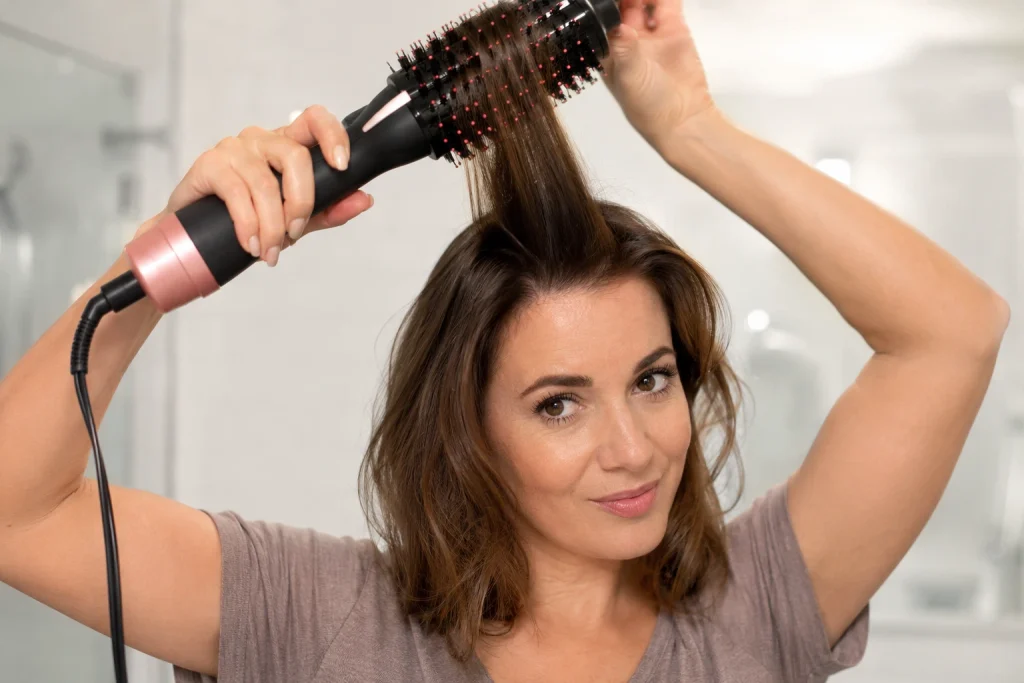
Your blowout looks full in the bathroom mirror, then the roots drop flat before you reach the car. Here is how to get volume with a hot air brush, step by step, plus a fix-it chart for the days it still falls flat.
New to the tool? Our hot air brush for beginners walkthrough covers the basics first.
Quick Answer: To get volume with a hot air brush, start with damp hair that is about 80% dry, add heat protectant, split it into sections about 1–2 inches wide, lift each root straight up while heating, then hold the cool shot for 5–10 seconds before releasing. The cool air sets the lift.
What You Need to Know
- Volume comes from drying the roots while they are lifted, on hair that is damp but not wet.
- Sections of 1–2 inches, worked from the nape up to the crown, give even lift.
- The cool shot locks the lift in. Skipping it is the most common reason volume vanishes.
- Medium heat is the working setting for most hair. Fine or damaged hair needs less.
- Heat protectant goes on first, every time.
Table of Contents
What Actually Creates Volume?
Volume comes from drying roots while they are held away from the scalp, then cooling them in that position. The cool air, not the extra heat, is what locks the lift in place.
Hair holds a new shape when it cools in that shape. A root that dries lying flat stays flat. A root that cools while lifted stays lifted.
A hot air brush puts airflow and brush tension in one tool, which is why the technique matters more than the heat level. Our explainer on how a hot air brush works covers the mechanics.
What Should You Do Before You Start?
Start with damp hair, a heat protectant, and a barrel that fits your hair length. Ten minutes of prep decides most of the result.
Why Should Hair Be Damp, Not Soaking?
Aim for hair that is about 80% dry. It should feel cool and slightly damp, with no dripping and no water flicking off when you touch it.
Soaking hair takes longer to dry and tends to dry flat. Blot it with a towel first. For the basic hold-and-glide motion, see our guide on how to use a hot air brush.
Which Products Help?
Apply heat protectant to mid-lengths and ends. Apply a lightweight mousse or root-lift spray at the roots only.
Skip heavy oils and serums near the scalp. They weigh the roots down.
Which Barrel and Heat Setting Should You Pick?
Use a wider barrel for longer hair and a smaller one for short hair and bangs. Begin on medium heat and raise it only if the hair is not drying.
How to Get Volume With a Hot Air Brush, Step by Step
Seven steps build volume: prep, section, root lift, mid-lengths, ends, cool shot, finish. Do the root lift first in every section, because roots are the part that sets the shape.
- Start with hair that is about 80% dry. Blot after washing, then air-dry or rough-dry until it feels cool and slightly damp.
- Apply heat protectant and a root-lift product. Protectant goes on mid-lengths to ends. The root-lift product goes on roots only.
- Divide hair into four sections and clip three. Work one section at a time, with strands no wider than the brush, about 1–2 inches.
- Lift the roots first. Slide the brush under the section at the scalp, pull straight up, and hold the heat on the root for about 5 seconds.
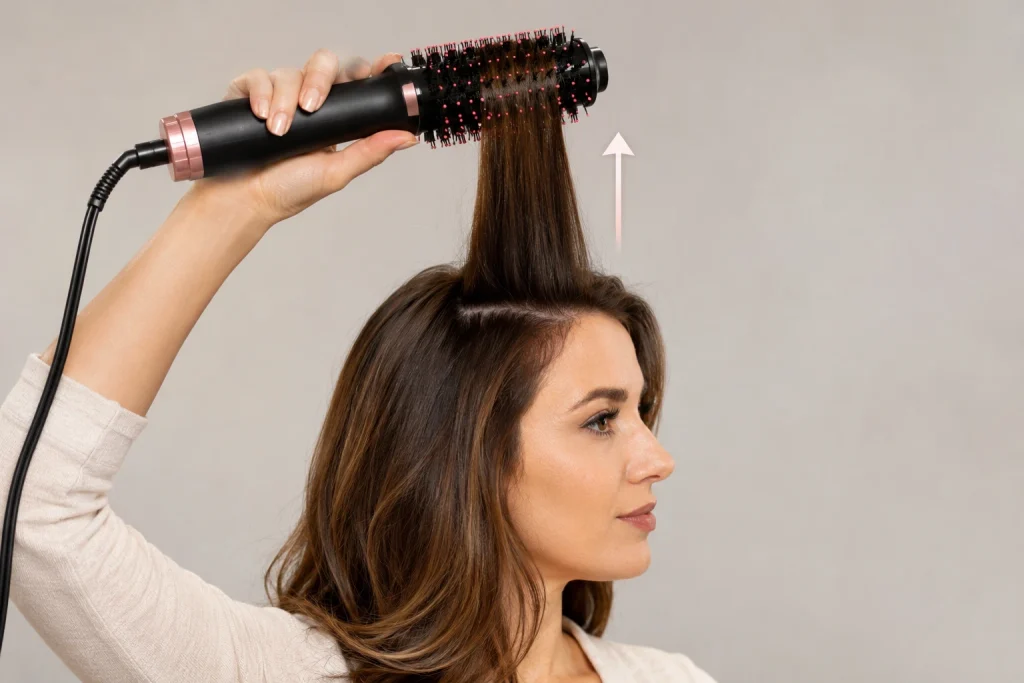
- Glide through mid-lengths and ends. Move slowly with light tension. Two or three passes per section is plenty, because extra passes add heat without adding lift.
- Hold the cool shot for 5–10 seconds. Keep the section lifted while the cool air runs. Release only when the hair feels cool.
- Let it rest, then finish. Wait about a minute before touching the hair. Shape it with your fingers, not a comb, so the lift stays.
How Do You Section Hair for a Hot Air Brush?
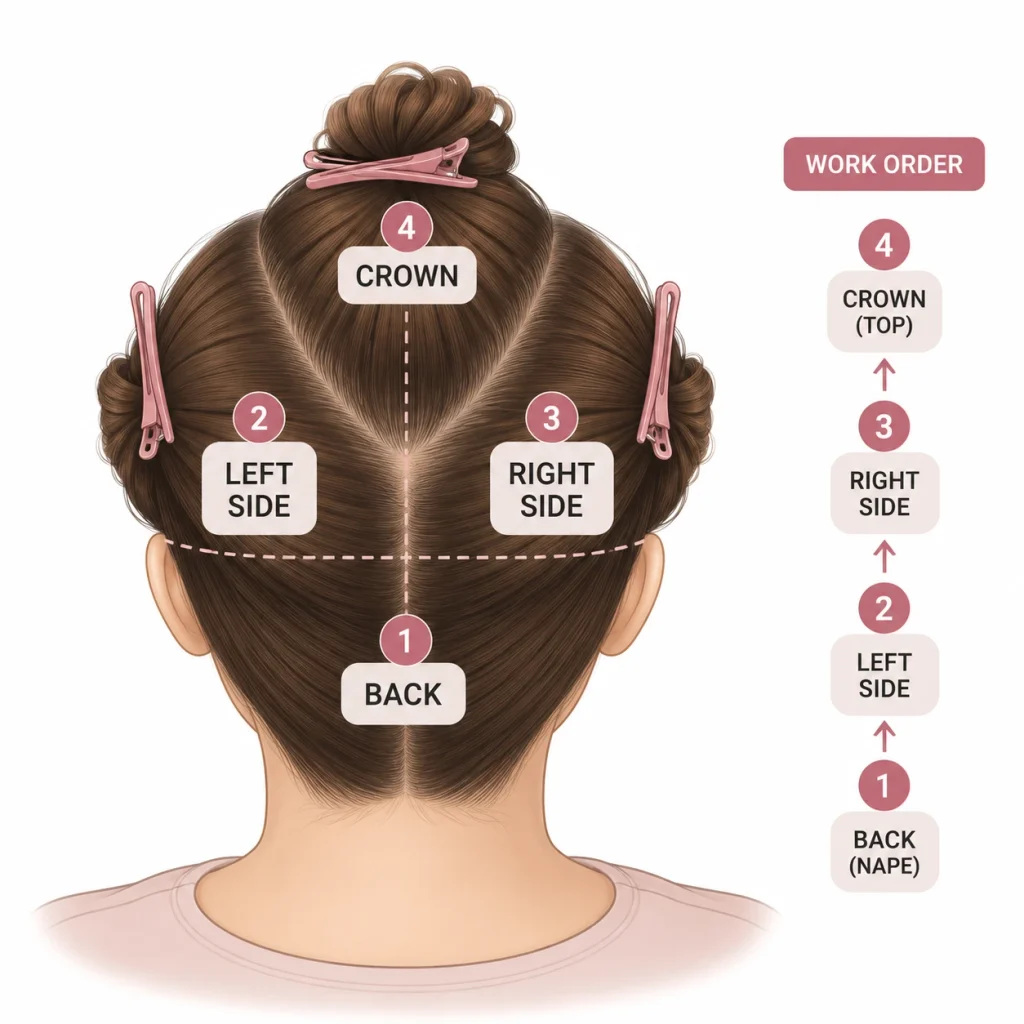
Split hair into four sections: back, two sides, and top or crown. Clip all but the section you are working on, and start at the nape.
Each section should be no wider than the brush head, about 1–2 inches thick. Wider sections leave damp roots under dry surface hair, and damp roots dry flat.
Work from the back to the sides, and finish with the crown. The crown shows the most lift, so it deserves your freshest, most careful pass.
How Do You Lift the Roots at the Crown, Sides, and Bangs?
Lift each root straight up from the scalp, heat it briefly, then cool it in that position. The direction changes slightly by area.
Crown
Pull the section straight up, perpendicular to the scalp. Hold the heat at the root, then cool before releasing. Straight up gives the most lift. Angling the brush back softens it.
Sides
Lift up and slightly away from the face. Keep the brush near the root until it dries, then glide to the ends.
Bangs
Lift bangs at the root and angle them slightly back. Then smooth them forward so they do not separate. Use low heat here, because bangs sit close to the face and scalp.
Which Settings Work for Each Hair Type and Length?
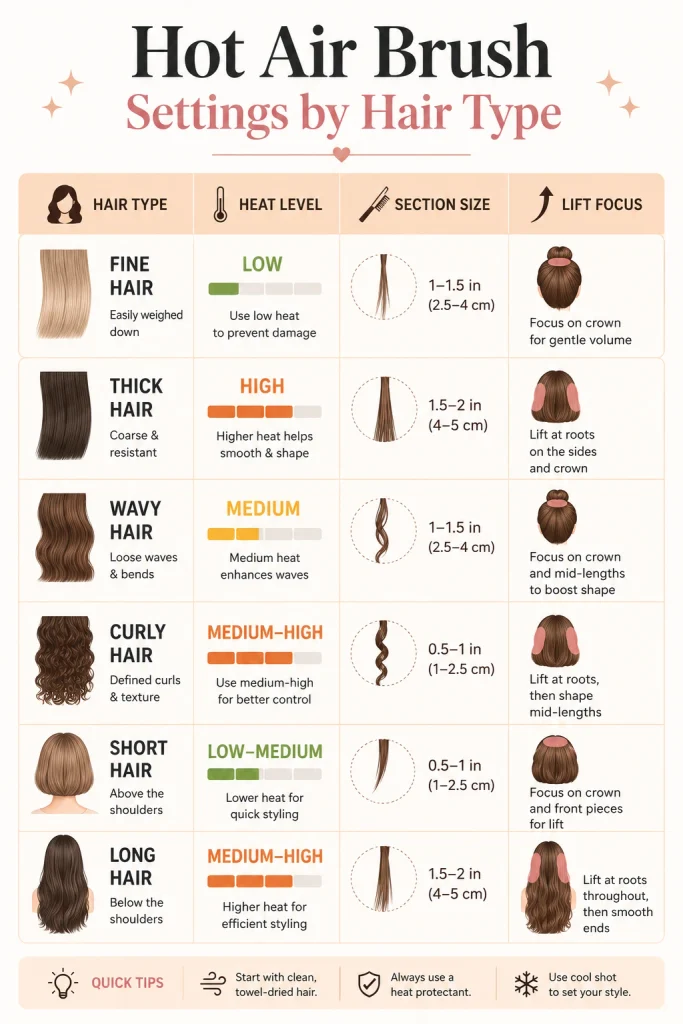
Medium heat suits most hair, but the right setting shifts with texture and length. Fine hair needs lower heat and lighter product, while thick hair needs smaller sections.
| Hair type or length | Heat level | Section size | Lift focus |
|---|---|---|---|
| Fine or flat | Low to medium | About 1 inch | Roots and crown. Use light product. |
| Thick or coarse | Medium | About 1 inch | Smaller sections so heat reaches every strand |
| Wavy | Medium | 1–2 inches | Roots, then smooth the ends with tension |
| Curly | Low to medium | 1–2 inches | See our curly hair guide |
| Short | Low to medium | About 1 inch | Small barrel, shorter heat time |
| Long | Medium | 1–2 inches | Extra lift at the crown, where weight pulls roots down |
Save or screenshot this hair-type settings chart. It covers heat level and section size for every length.
Why Does Your Volume Fall Flat? A Fix-It Table
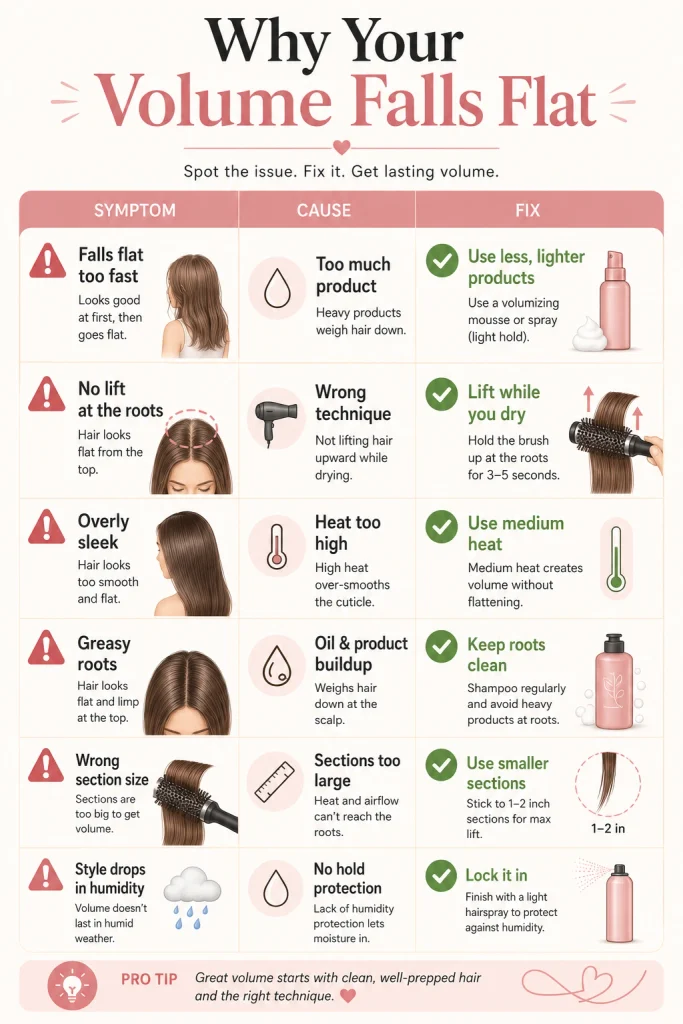
Volume usually disappears for one of six reasons, and each has a fix. Most flat results trace back to lifting too late or skipping the cool shot.
| Symptom | Likely cause | Fix |
|---|---|---|
| Flat at the roots | Lifted too late, or hair too wet | Lift at about 80% dry, roots first |
| Volume gone within an hour | No cool-air set | Hold the cool shot while the hair is still lifted |
| Puffy or frizzy, not full | Too much heat or too many passes | Use medium heat and smaller sections |
| One side flatter | Uneven sections | Section both sides evenly |
| Bangs flat | Skipped the bang lift | Lift bangs at the root first |
| Hair feels dry afterward | Too much heat or product | Lower the heat and use heat protectant |
Save or screenshot this Volume Fix-It Table. It covers the six most common reasons lift disappears.
If your brush has only one heat setting, no cool shot, or a barrel too small for your hair length, technique can only do so much.
How Do You Get a Salon Blowout at Home With a Hot Air Brush?
Follow the volume steps, then add smoothing and shape. A salon-style finish comes from tension and a final cool pass, not from extra heat.
After lifting the roots, glide the brush slowly from mid-length to ends with light tension. Keep the airflow pointed down the hair shaft so the surface lies smooth.
A stylist usually uses a dryer in one hand and a round brush in the other. A hot air brush combines both in one hand. Our comparison of a hot air brush vs hair dryer explains the trade-offs.
How Long Does Hot Air Brush Volume Take?
Expect roughly 10–40 minutes, depending on hair length and thickness. These are typical estimates for hair that starts about 80% dry, not measured data.
- Short hair: about 10–15 minutes
- Shoulder-length hair: about 15–25 minutes
- Long or thick hair: about 25–40 minutes
According to The Healthy, a hotter setting does not make hair dry any faster, so raising the heat will not shorten the job. thehealthy
Is It Safe to Use a Hot Air Brush for Volume Every Day?
Daily heat styling carries risk, so use the lowest heat that works and style less often. The American Academy of Dermatology says excessive heat can damage any hair type, and it advises letting hair partly air-dry before styling and blow-drying less often. aad
Read the AAD’s guide to hair styling without damage for its full recommendations.
Learning how to get volume with a hot air brush safely also means knowing when to stop. Fine, bleached, or chemically treated hair needs lower heat. Humidity can reduce results regardless of technique.
See a dermatologist if you notice unusual breakage, thinning, or scalp irritation.
FAQ
How do you use a hot brush for volume?
Use damp hair, protectant, and sections of 1–2 inches. Lift each root straight up, hold the heat on it for about 5 seconds, glide to the ends, then hold the cool shot for 5–10 seconds before releasing. The cool air sets the lift.
How do you add volume to hair with a brush?
Place the brush under a section at the scalp, pull it straight up, and dry the root while it is lifted. Cool it in place, then release. Work the back first and the crown last, since the crown shows the most lift.
How do you use a hot air brush on short hair?
Use a smaller barrel, sections of about 1 inch, and low to medium heat. Short hair dries quickly, so shorten the heat time at the root. Lift upward at the crown and keep the brush moving to avoid overheating.
How do you straighten your hair with a hot air brush?
Straightening uses tension and a downward glide instead of root lift. Sections are pulled taut from root to end with the airflow pointed down the shaft.
Should you use a hot air brush on wet or dry hair for volume?
Use damp hair, about 80% dry. Soaking hair dries flat and takes longer, while fully dry hair cannot be reshaped as easily. Blot with a towel, let it air-dry or rough-dry until it feels cool and slightly damp, then start.
Does a hot air brush add volume to fine hair?
Yes, with lower heat and lighter product. Fine hair responds well to root lift and a firm cool shot, but heavy oils and serums weigh it down. Use sections of about 1 inch and avoid too many passes over the same strand.
What to Do Next
Now that you know how to get volume with a hot air brush, three guides make logical next steps:
- Have curls or waves? Read how to use a hot air brush on curly hair.
- Want the core technique? Revisit how to use a hot air brush.
Pingback: Hot Air Brush for Frizzy Hair: Does It Work? (2026 Guide)