

Introduction
You have read three “best of” lists, and you still can’t tell whether a blow dryer brush is worth buying over the dryer already in your bathroom.
This guide gives you the decision framework those lists skip: what the tool does, which specs matter, and how to match them to your hair. For the basics first, read our plain-English guide to what a hot air brush is.
Table of Contents
Quick Answer: A blow dryer brush is a brush-shaped styling tool that blows heated air through a barrel or paddle, so you dry and smooth hair in one pass. Also sold as a hot air brush, it works best when barrel size matches hair length and heat stays low. Seven specs matter, and three decide most purchases.
What You Need to Know
- Different names, one product: hot air brush, hair dryer brush, dryer brush. The spec sheet tells you more than the name.
- Three specs decide most purchases: barrel or paddle size, heat settings, and bristle type.
- Smaller barrels suit short hair and tighter curl. Larger barrels and paddles suit longer hair and smoother, fuller results.
- Heat is the real risk to your hair, so use the lowest setting that works.
- A Dyson Airwrap-style multi-styler belongs to a different category.
Hot Air Brush vs Hair Dryer Brush: What the Names Mean
Hot air brush, hair dryer brush, and dryer brush are interchangeable names for one product category. Brands and retailers use whichever term they prefer.
A blow dryer brush is a hair-styling tool that combines a brush with a built-in heater and fan, so heated air flows through or around the bristles as you comb. It goes by other names, like hot air brush and hair dryer brush. Unlike a regular dryer, it dries and styles at once.
The name tells you almost nothing about quality or design. Two products with the same label can differ in barrel size, heat control, and power. Judge by the spec sheet.
What Types of Dryer Brushes Exist?
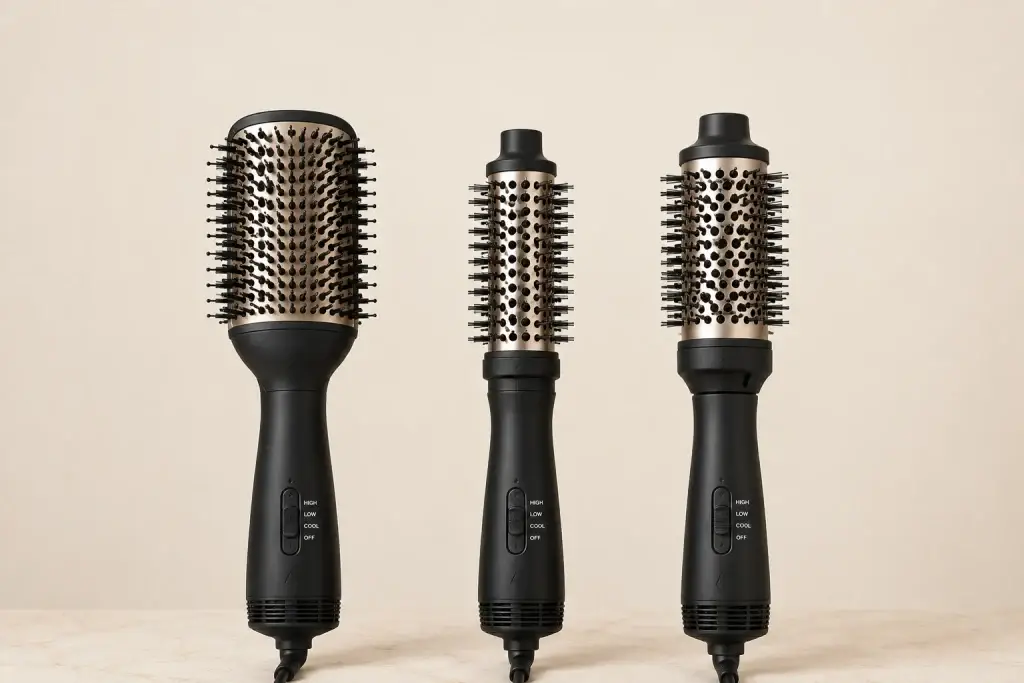
Most dryer brushes fall into three shapes: oval or paddle, round-barrel, and rotating. A fourth group, multi-stylers, is often confused with them.
| Type | Shape | Best for | Trade-off |
|---|---|---|---|
| Oval or paddle | Wide brush face | Smoothing and volume on medium to long hair | Less defined curl or bend at the ends |
| Round-barrel | Cylindrical brush head | Curls, flips, and root lift | Smaller area per pass, so long hair takes longer |
| Rotating | Motorized barrel that turns | Reducing hand and wrist effort | More mechanical parts |
| Multi-styler | One handle, interchangeable attachments | Several finishes from one tool | A different category, covered below |
Shape decides the finish more than any other feature. Pick the shape for the result you want, then compare specs within that shape.
How to Choose a Blow Dryer Brush by Hair Type

Choose by hair length first, then texture, then heat control. Barrel size follows hair length, and heat control follows hair condition.
A blow dryer brush that suits fine, color-treated hair is rarely the right one for thick hair. The table below shows which spec matters for which hair, and what to look for on a product page.
| Spec | What it does | Who should care most | What to check on the box |
|---|---|---|---|
| Barrel or paddle size | Sets how tight or smooth the finish is | Everyone: smaller for short hair, larger for long | Stated barrel diameter or paddle width |
| Bristle type | Grips, detangles, and spreads heat | Thick or tangle-prone hair | Bristle material and density in the description |
| Heat settings | Lets you lower the temperature | Fine, color-treated, or damaged hair | Number of settings and a cool-air option |
| Power (wattage) | Affects how much air and heat the tool produces | Thick or long hair that dries slowly | Listed wattage, as one input rather than a quality score |
| Ionic or ceramic claims | Marketed to reduce static and frizz | Frizz-prone hair | Whether the maker explains the mechanism and testing |
| Weight and cord | Affects comfort over a full session | Long hair and long styling sessions | Listed weight, cord length, and swivel cord |
| Safety certification | Marks independent electrical safety testing | Everyone | A recognized mark, such as UL, on the product or listing |
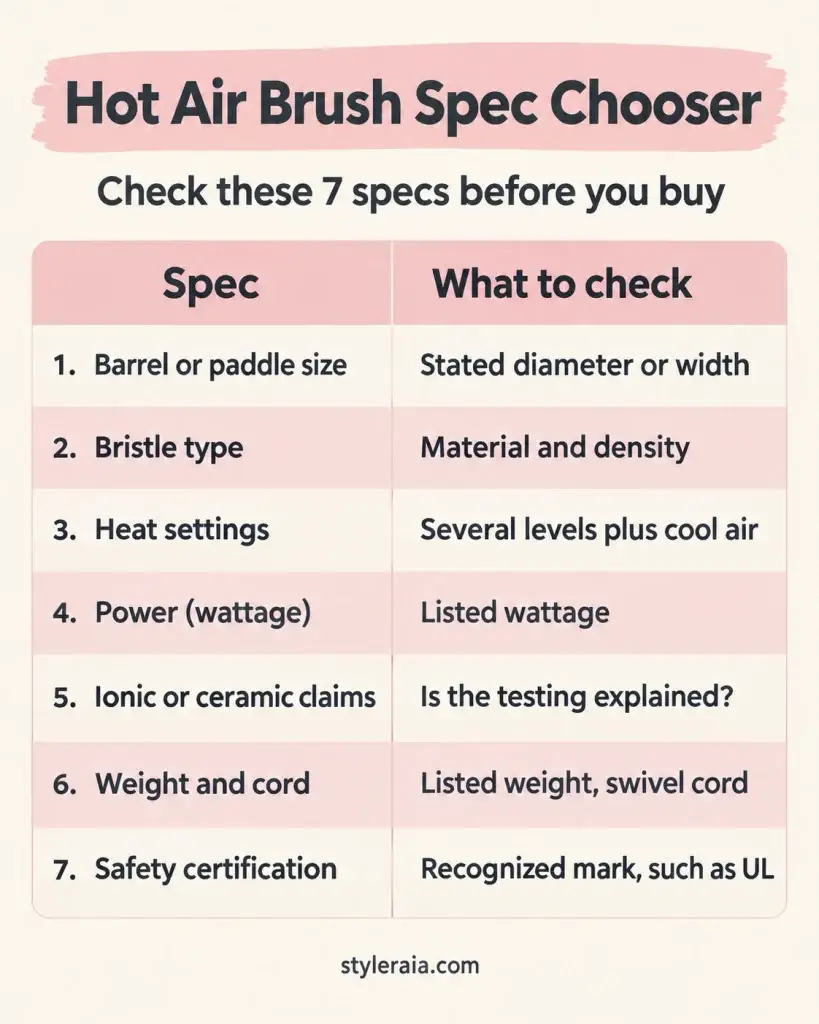
Save or screenshot this Hot Air Brush Spec Chooser. It covers what to check on a product page before you buy.
Barrel or paddle size
Smaller barrels bend and curl more tightly, which suits short hair and flips. Larger barrels and paddles smooth and add volume, which suits longer hair.
Bristles
Bristles grip each section as you pull. As general styling guidance, denser, firmer bristles tend to help thick hair, and softer ones suit fine or tangle-prone hair.
Heat settings
Adjustable heat matters more than almost any other feature. Use the lowest setting that dries your hair, and treat a cool-air function as a way to set the style.
Ionic and ceramic claims
No explanation or testing from the brand? It’s just marketing.Treat them as a minor tiebreaker, not a reason to pay more.
Power, weight, and cord
More power moves air faster but doesn’t guarantee a better result. Weight and cord length decide how comfortable a full session feels.
Safety certification
Look for a recognized testing mark, such as one from UL Solutions, which tests electrical products against published safety standards.
Dryer Brush vs Regular Dryer and Round Brush
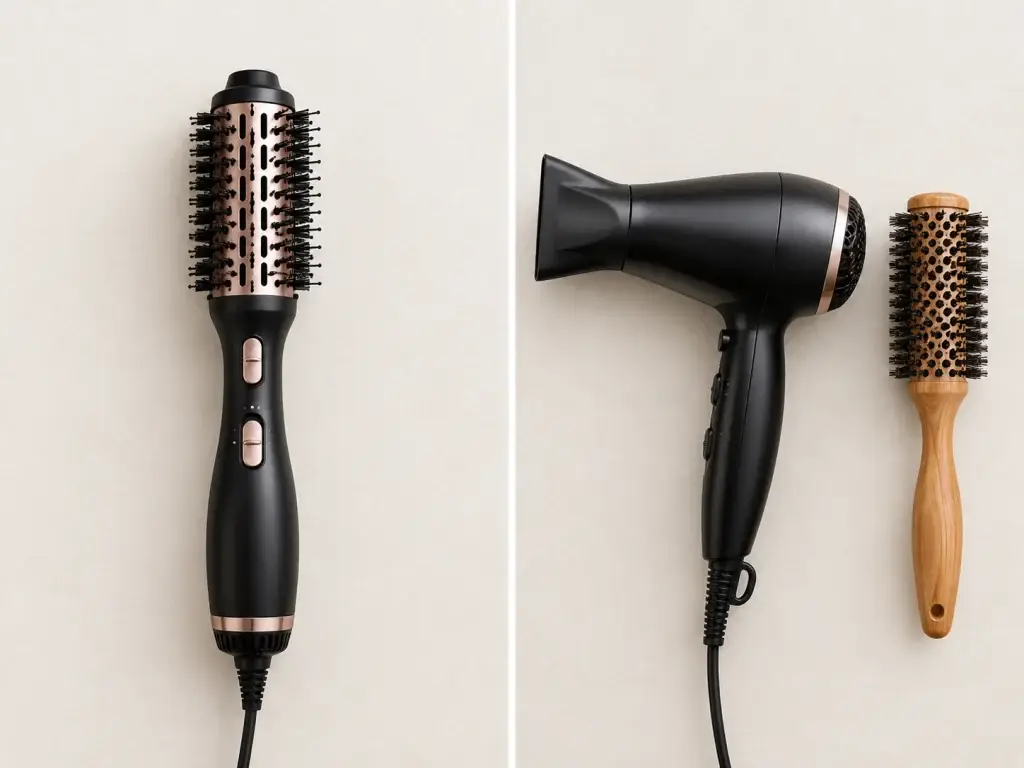
A hot air brush is quicker and easier to handle. A dryer with a round brush offers more control over heat and airflow.
| Factor | Hot air brush | Regular dryer + round brush |
|---|---|---|
| Hands needed | One | Two |
| Learning curve | Lower, since airflow and brush work together | Higher, since you coordinate two tools |
| Airflow and heat control | Limited to the tool’s settings | Separate controls, often with more range |
| Speed on thick or long hair | Often slower, depending on power | Often faster with a high-power dryer |
On thick or long hair, a high-power dryer with a round brush often wins on speed and control. A hot air brush makes the most sense for short to medium hair and for people who want one tool and one hand.
What Is the Price of a Hot Air Brush?
Prices vary widely by brand and retailer, and they change often, so check current listings instead of trusting an old figure.
What changes between price tiers is mostly features, not the basic function. Higher-priced models typically add more heat settings, rotating barrels, interchangeable attachments, or longer warranties.
Decide which of those your hair actually needs before paying for them. Use the Spec Chooser above to rule features in or out.
How to Read Dryer Brush Reviews
Reliable reviews tell you who the reviewer is and how long they used the tool. Styleraia has not hands-on tested these products, so this guide relies on manufacturer specs and published reviews, and so should your shortlist.
- Filter for your hair type. A review from someone with thick, long hair tells you little if yours is fine and short.
- Look past the first week. Reviews written after several weeks of use say more about durability and heat consistency.
- Separate claims from results. “Reduces frizz” copied from a product page is a claim. A reviewer describing their own results is evidence.
- Weigh repeated complaints. One angry review is noise. The same problem across many reviews, such as overheating or tangling, is a signal.
A review with no hair details is closer to an advertisement than evidence.
Dyson Airwrap vs a Hot Air Brush: Different Tools
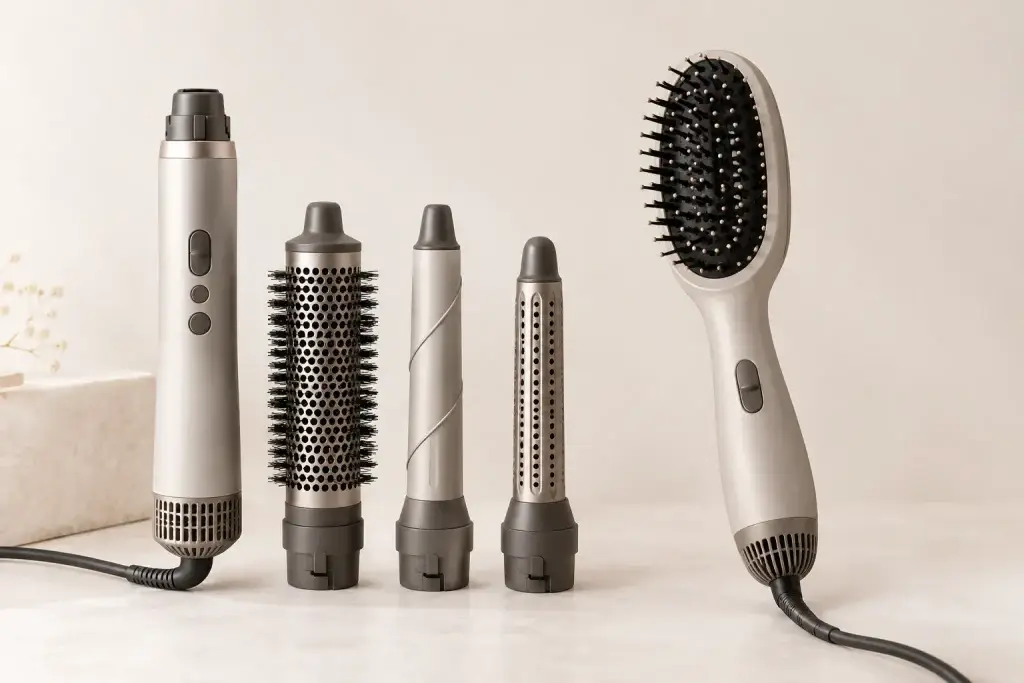
Dyson’s Airwrap line is a multi-styler: one handle with interchangeable attachments. A hot air brush is a single brush-shaped tool made to dry and shape hair in one pass.
The real question is whether you want one tool for one job or one handle for several. A multi-styler offers more finishes and is generally priced higher. A dedicated hot air brush is simpler and focused on drying and smoothing.
Is a Hot Air Brush Bad for Your Hair? Common Mistakes to Avoid
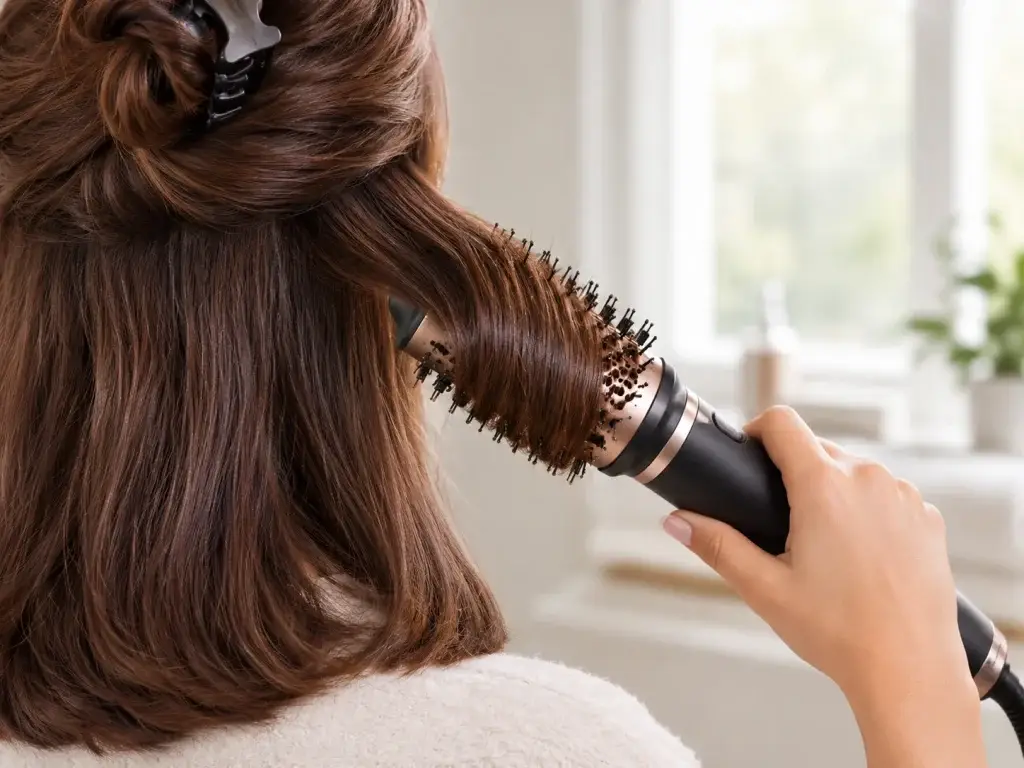
Heat is the main risk, not the brush shape. Any tool that applies high heat repeatedly can damage hair, so the setting and technique matter more than the tool.
- Starting on soaking-wet hair. Towel-dry first so the tool isn’t forced to work harder and longer.
- Defaulting to the highest heat. Start low and raise the setting only if the hair isn’t drying.
- Holding the brush in one spot. Keep it moving through each section.
- Taking sections wider than the barrel. Work in sections roughly as wide as the barrel so air reaches all the hair.
- Skipping the cool-air step. Let each section cool briefly to help the style hold.
Who should think twice: Very damaged or chemically processed hair can be more heat-sensitive, and results on tightly coiled textures vary. If you notice breakage or scalp irritation, stop and talk to a hair professional or a dermatologist. The American Academy of Dermatology publishes hair-care guidance.
Blow Dryer Brush FAQ
What is the best blow dryer brush?
There is no single best blow dryer brush, because the right one depends on your hair length, texture, and heat sensitivity. Pick a barrel or paddle size that matches your length, choose a model with adjustable heat, and confirm a recognized safety mark. Styleraia has not hands-on tested these tools, so use the spec table above to narrow your options before reading reviews.
How much does a hot air brush cost?
Prices vary widely by brand, retailer, and feature set, and they change often, so check current listings rather than trusting an old figure. Higher-priced models typically add more heat settings, rotating barrels, interchangeable attachments, or longer warranties. Decide which of those features your hair actually needs before paying for them.
Are dryer brush reviews trustworthy?
Some are, but trust depends on the reviewer. Reliable reviews state hair type, length, and how long the reviewer used the tool, and they separate measured results from manufacturer claims. Treat reviews without those details cautiously. Weigh complaints that repeat across many reviewers, such as overheating or tangling, more heavily than a single glowing or angry post.
Is a Dyson Airwrap a hot air brush?
Not exactly. Dyson’s Airwrap line is a multi-styler: one handle with interchangeable attachments for drying, curling, and smoothing. A hot air brush is a single brush-shaped tool built to dry and shape hair in one pass. Some multi-stylers include brush attachments, so the two overlap, but they are sold as different product categories.
Is a hot air brush worth it?
It is worth considering if you want to dry and style in one pass with one hand and your hair is short to medium length. It is less compelling if you have very thick or long hair that a dryer with a round brush handles faster. Match the tool to your hair length and daily routine before buying.
Can you use a hot air brush on curly or coily hair?
Results vary. Curly and coily textures are often more heat-sensitive and dry unevenly, so low heat and sectioning matter more. A hot air brush can stretch curls for smoother styles, but it adds heat and tension. If you notice breakage, stop and consult a hair professional or dermatologist before continuing.
What to Do Next
Once you know which specs matter, the next questions are how the tool works and how it compares with alternatives.
- Understand the mechanics and technique: how does a hot air brush work
Pingback: Hot Air Brush vs Flat Iron: Which Is Better for You?
Pingback: Is a Hot Air Brush the Same as a Volumizer?
Pingback: Hot Air Brush for Beginners: A Simple 7-Step Guide ✔ exact keyword at the front