

Your ends snap when you run a brush through them, and you still want a smooth blowout. A hot air brush for damaged hair can work, but only when you match the tool’s heat and your technique to how damaged your hair really is.
Below you’ll find a damage-level chart, a step-by-step method, and a clear list of situations where you should put the brush down.
Quick Answer: Yes, a hot air brush is usually safe for mild to moderate damage when you use the lowest heat setting, work on damp hair in 1–2 inch sections, apply heat protectant first, and limit sessions to 2–3 days a week at most. Skip it if your hair snaps easily or feels gummy when wet.
What You Need to Know
- Check your hair’s condition first. The right approach depends on the damage level, not on the brush.
- Use the lowest heat, damp (not soaking) hair, and a heat protectant every time.
- Keep the brush moving and limit passes to 2–3 per section.
- Hair that stretches and stays stretched, or breaks when wet, needs a break from heat.
- A hot air brush smooths and styles. It does not flat-iron straighten.
Table of Contents
Is a Hot Air Brush Best for Hair? The Short Answer
A hot air brush pairs warm airflow with brush bristles, letting you dry and smooth your hair in a single pass. It is neither automatically good nor automatically bad for hair; the result depends on heat level, hair condition, and how long the heat stays in one spot.
For healthy hair, careful use is generally fine. For damaged hair, the margin for error is smaller, which is why the next section matters.
If you want the mechanics behind the tool first, our plain-English explainer on how a hot air brush works covers the airflow and heating basics.
Can You Use a Hot Air Brush for Damaged Hair See This? Check Your Damage Level First
A hot air brush works for mild or moderate damage, but severely damaged hair needs a break from heat. Let how your hair feels right now decide, not what a brand promises.
The 60-second strand check
After washing, take one strand and hold it near the middle. Stretch it gently.
Healthy wet hair stretches a little and springs back. Heavily damaged hair stretches and stays stretched, feels mushy or gummy, or snaps. Treat this as an informal check, not a diagnosis.
The Damage-Level Decision Chart
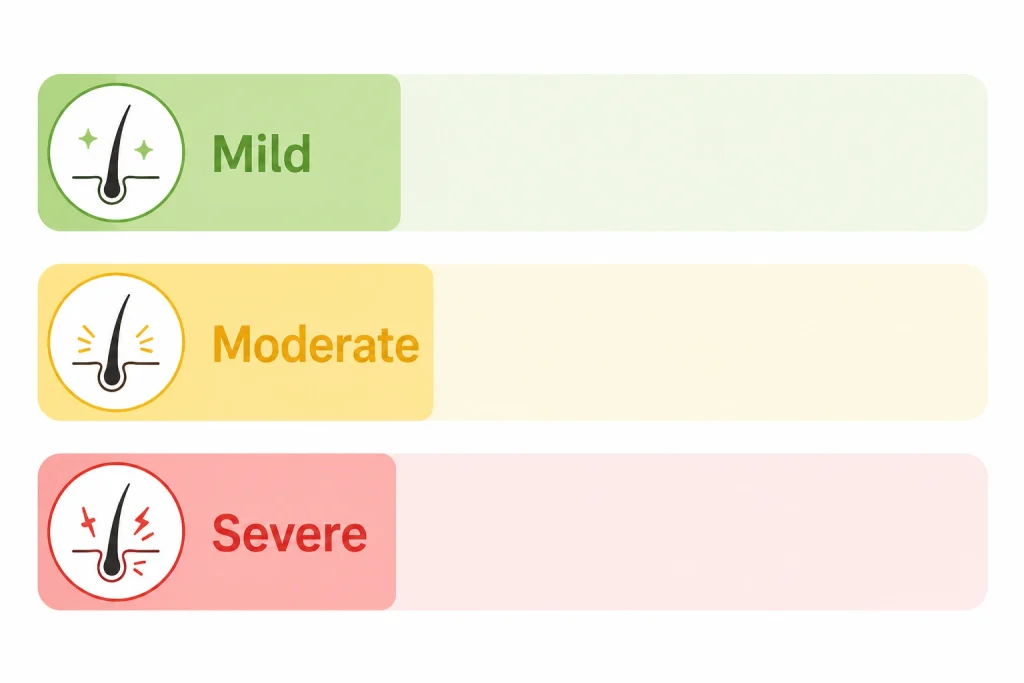
| Hair state | Signs | Verdict | Approach | Frequency guideline |
|---|---|---|---|---|
| Mild | Dull, dry ends, some frizz | Usually fine | Lowest heat, heat protectant, damp hair | 2–3 days a week at most, with rest days |
| Moderate | Rough texture, split ends, some breakage | Use with limits | Lowest heat, one to two passes per section, cool shot to finish | Once a week or less; air-dry in between |
| Severe | Snaps easily, gummy when wet, widespread breakage | Skip for now | Air-dry, trim, and repair before using heat | Pause until hair stabilizes |
Frequency numbers are conservative general guidelines, not medical advice. Check your device manual for heat specifics.
Save or screenshot this Damage-Level Decision Chart. A quick check takes only a few seconds and shows you whether your hair can handle a hot air brush.
Why Does Heat Hurt Hair, and Where Does a Hot Air Brush Fit?
Heat weakens hair by drying it out and stressing the outer cuticle layer. The risk grows with higher temperatures, longer contact time, and wetter hair.
The American Academy of Dermatology advises limiting heat styling and choosing lower settings to protect hair, which matches the approach in this guide. You can read their general hair-care guidance on the American Academy of Dermatology website
Why wet hair is the riskiest to heat
Hair that is soaking wet takes longer to dry, so it sits under heat for longer. Water inside the strand can also heat up fast, which is why stylists commonly say to remove most of the moisture first. Here is the counterintuitive part: a very wet start often means more total heat exposure, not less.
Hot air brush vs blow dryer vs flat iron
All three use heat, but they deliver it differently.
- Hot air brush: Warm air flows through the bristles, so it’s easy to hold the brush in one place too long.
Flat iron: Hot plates clamp directly onto the hair, packing intense heat into small sections. - Hot air brush: Combines airflow and bristles, and it’s tempting to pause in one spot.
Flat iron: Presses hot plates against the strands, so the heat lands on a narrow section.
None is automatically safer. The setting and your technique decide the outcome.
Can I Use a Hot Air Brush on Dry Hair?
Yes, you can use one on hair that is already dry, but heat protectant matters more because the strands have no moisture buffer. Dry-textured hair also benefits from lower heat and fewer passes.
“Dry hair” can mean two things. If you mean hair that is already blow-dried or air-dried, a quick touch-up with the lowest heat is the safer route. If you mean hair that feels dry and brittle, treat it as damaged and follow the chart above.
For a gentler introduction to the tool, see our first-blowout guide for beginners.
How to Use a Hot Air Brush on Damaged Hair, Step by Step
Using a hot air brush for damaged hair comes down to gentle prep, low heat, and short exposure. Fewer passes at lower heat beat repeated passes at high heat.
- Towel-dry until hair stops dripping. Press and squeeze the water out instead of rubbing, which roughs up the cuticle. Aim for damp, not soaking.
- Apply a heat protectant. Spread it evenly from mid-length to ends, where damage is usually worst.
- Set the tool to its lowest heat. If your brush has a cool or low setting, start there and increase only if hair won’t dry.
- Divide hair into 1–2 inch sections. Clip the rest away so each section dries evenly without extra passes.
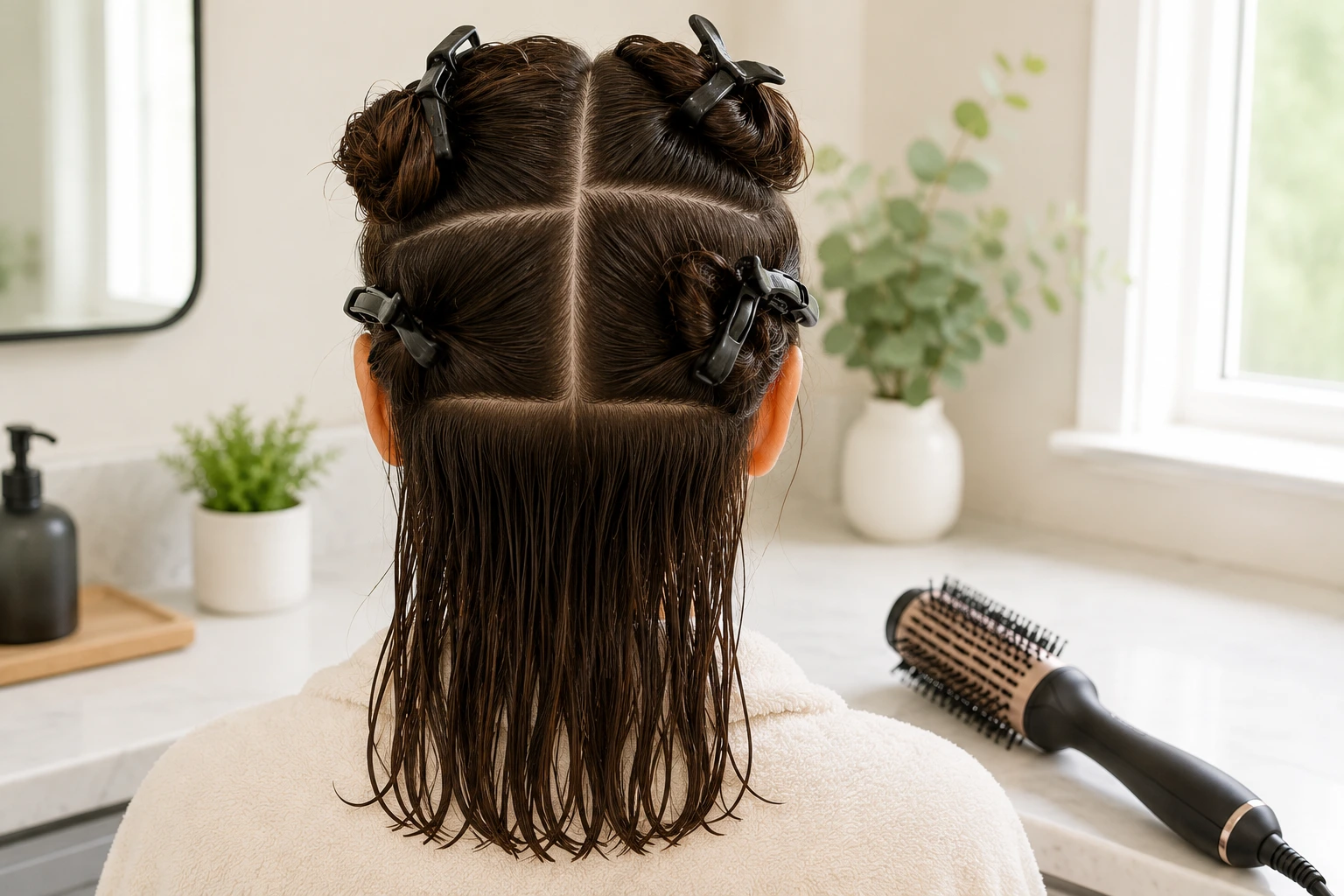
- Keep the brush moving. Glide from roots to ends and avoid holding it in one spot. Limit yourself to 2–3 passes per section.
- Finish each section with the cool shot. About 5–10 seconds of cool air helps set the shape.
- Stop when hair feels dry, not hot. Extra passes on dry hair add damage without adding smoothness.
- Space out your sessions. Follow the frequency in the chart, and let hair rest between uses.
What Common Mistakes Make Damaged Hair Worse?
The most common mistakes are starting with soaking-wet hair, skipping heat protectant, and raising the heat to save time. Repeated passes on the same section do more harm than a slightly less perfect finish.
Other frequent errors:
- Brushing through tangles with the heat on instead of detangling first
- Using the tool daily because the hair “looks fine”
- Ignoring early warning signs like new split ends or a straw-like feel
- Skipping a trim, which leaves split ends to travel up the strand
How Should You Adjust for Your Hair Type?
Hair texture and thickness change how much heat and tension your strands can handle. The finer or more fragile the hair, the lower the heat and the lighter the pressure should be.
Using a hot air brush for thin hair
Thin and fine strands usually have less cushion against heat, so keep the setting low and the sections small. Use light tension and avoid pulling hard on the brush. A smoothing product that adds slip can reduce tugging.
Curly hair
Curly hair has its own shape and tension needs. Our guide on using a hot air brush on curly hair walks through sectioning and technique.
Textured hair, including African American hair
Coily and textured hair, including many African American hair types, tends to be drier and more prone to breakage at the curl bends. If you’re considering a hot air brush for African American hair, prioritize moisture before styling, use the lowest heat, and watch for breakage near the bends. A stylist who works with your texture can give advice specific to your hair.
Do Hot Air Brushes Straighten Hair?
A hot air brush smooths and reshapes hair, but it generally does not give the pin-straight finish of a flat iron. For damaged hair, that milder result is often a benefit, because the heat is lower and more spread out.
If frizz is your main concern, our guide to hot air brushes for frizzy hair explains what the tool can and can’t do. You may also want to read whether a hot air brush makes hair frizzy.
What Should You Look for in a Hot Air Brush If Your Hair Is Damaged?
Look for control over heat, a way to cool the hair, and gentle bristles. Adjustable heat settings matter more than extra attachments.
A hot air brush for damaged hair should ideally offer:
- Multiple heat settings, including a low one
- A cool-air option to finish each section
- Smooth, flexible bristles that don’t snag
- A comfortable weight, so you don’t rush or pull
Check the instruction manual for heat information, because specifications vary by brand.
When Should You Skip the Hot Air Brush and See a Professional?
Skip the tool when hair snaps easily, feels gummy when wet, or is breaking widely. See a dermatologist or trichologist if breakage comes with scalp irritation or sudden shedding.
A hot air brush can’t fix damage, and heat on severely damaged hair usually makes it worse. Air-drying, regular trims, and professional advice are safer first steps. Medical sources such as the Cleveland Clinic (opens in a new tab) offer general information on hair breakage and when to seek care.
Frequently Asked Questions
Is a hot air brush good for hair?
It can be, when you use it carefully. Lowest heat, damp hair, heat protectant, and short sessions reduce the risk. Healthy and mildly damaged hair usually tolerates it well, while severely damaged hair does better without heat until it recovers. The tool matters less than your technique and how often you use it.
Can I use a hot air brush on dry hair?
Yes, but use the lowest heat and a heat protectant, because dry strands have less moisture to buffer the heat. Limit yourself to one or two passes per section. If your hair feels dry and brittle rather than just already dried, treat it as damaged and follow the chart above.
Do hot air brushes straighten hair?
They smooth and reshape hair, but they usually don’t produce the sleek, pin-straight finish of a flat iron. The result is more of a polished blowout. For damaged hair, that gentler outcome is often an advantage because it needs less direct heat.
How often can I use a hot air brush on damaged hair?
For mild damage, 2–3 days a week at most is a conservative guideline. For moderate damage, once a week or less. For severe damage, pause heat until your hair stabilizes. Use rest days to air-dry, and watch for new breakage.
Can I use a hot air brush on bleached hair?
Bleached hair is often more fragile, so treat it as moderate to severe damage. Use the lowest heat, fewer passes, and protectant, and skip the tool if strands feel gummy or snap. A stylist who handles lightened hair can advise on your specific situation.
Do I need heat protectant with a hot air brush?
Yes. A heat protectant adds a thin barrier between the hot air and your strands. Apply it from mid-length to ends on damp hair before styling. It reduces risk but does not make high heat safe, so keep the setting low.
What to Do Next
Once you know where your hair stands, these are the logical next reads:
- Learn the basics in What Is a Hot Air Brush? A Plain-English Guide.
- Get comfortable with the tool using our beginner’s guide.
Pingback: How to Get Hair Out of a Hot Air Brush Safely
Pingback: Does a Hot Air Brush Cause Heat Damage?