
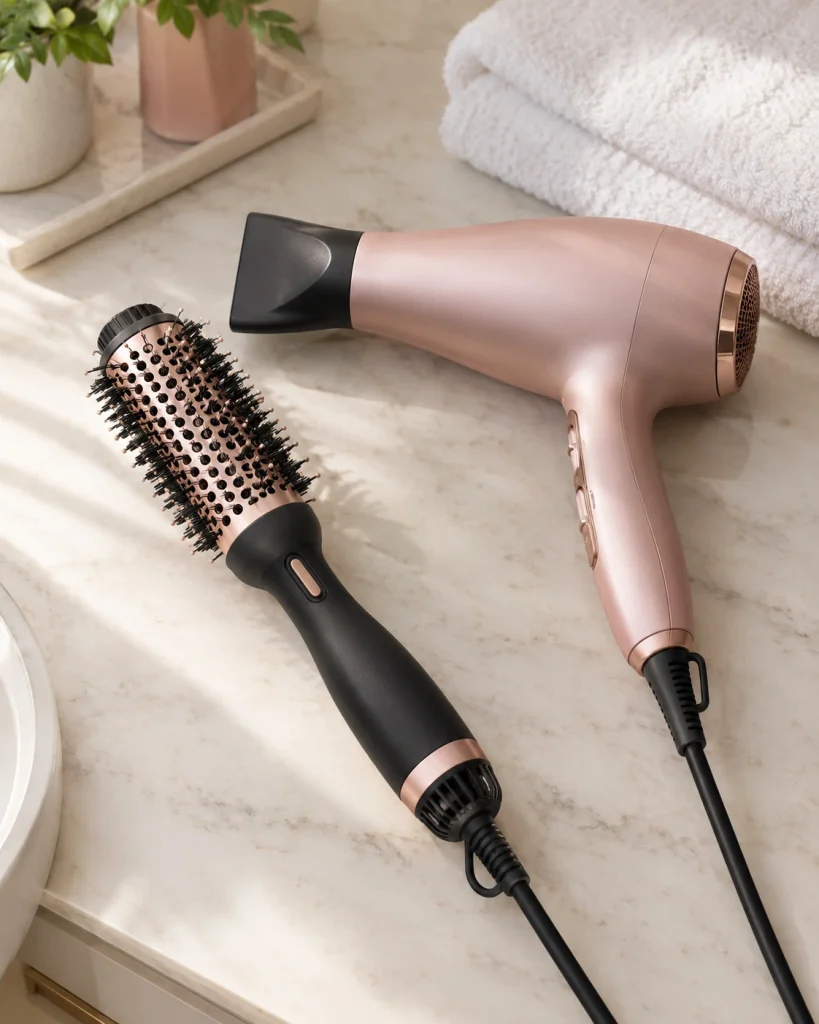
You have a hair dryer in the bathroom drawer, a hot air brush in your cart, and no clear reason to believe the second one replaces the first. That hesitation makes sense, and the hot air brush vs hair dryer difference comes down to one question: which part of your routine do you want to make easier?
This comparison covers speed, hair type, heat, and a three-question decision tree. If you’re still getting oriented, start with what a hot air brush is.
Quick Answer: A hot air brush combines heated airflow with a brush, so one tool dries and shapes damp hair. A hair dryer handles drying, with styling done by a separate brush or attachment. Pick the brush for easier blowouts, the dryer for faster drying, root control and curl diffusing, or both for thick hair.
What You Need to Know
- A hot air brush dries and styles in one tool. A hair dryer dries, and styling is a separate step.
- A dryer usually wins on drying speed, root control and diffusing curls.
- A brush usually wins on convenience and one-handed blowouts.
- Heat damage depends on temperature, time, distance and technique, not on the tool category.
- Thick or dense hair often does best with both tools: dryer first, brush to finish.
Table of Contents
What Is the Difference Between a Hot Air Brush and a Hair Dryer?
A hot air brush is a brush with built-in heated airflow, used to dry and shape damp hair in one pass. A hair dryer is a handheld heated blower, used mainly to dry hair, with brushes and attachments added for styling. The brush simplifies blowouts; the dryer gives more control.
The real difference is how many jobs one tool does at once.
A salon-style round-brush blowout asks one hand to hold the brush and the other to aim the dryer. A hot air brush merges those two jobs into a single handle.
The Hot Air Brush vs Hair Dryer Difference, Side by Side
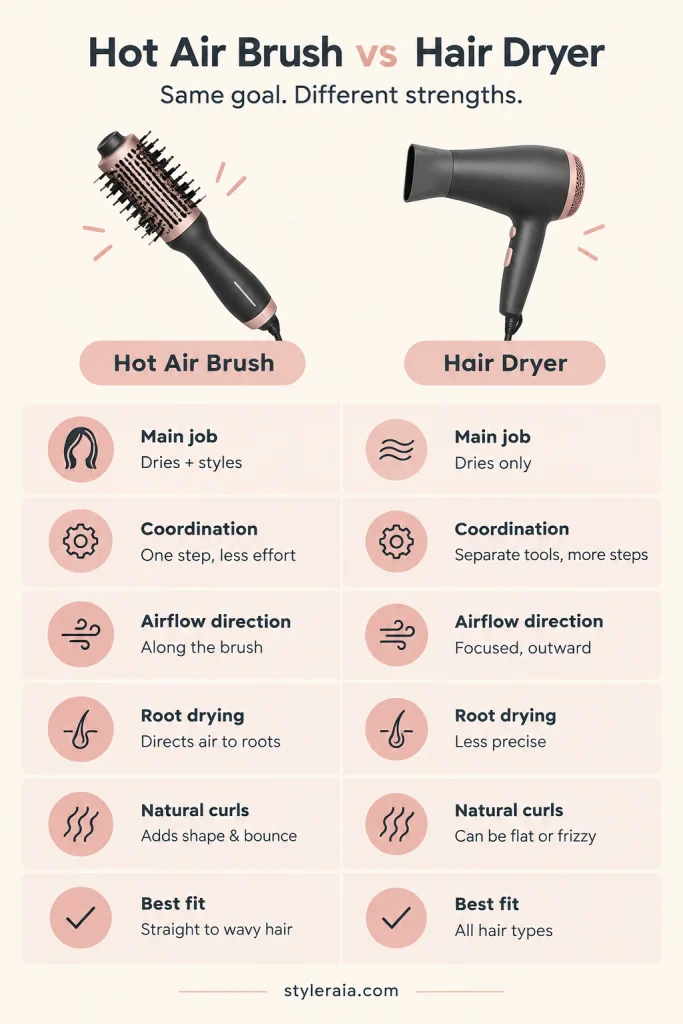
The table below compares the two tools on the points that change your daily routine.
| What matters | Hot air brush | Hair dryer |
|---|---|---|
| Main job | Dries and shapes in one step | Dries; styling is separate |
| Coordination | Usually one-handed | Two hands for a round-brush blowout |
| Airflow direction | Tied to the brush head | Aimable anywhere |
| Root drying | Depends on brush shape | Easier to target directly |
| Natural curls | Tends to stretch or smooth them | Preserves them with a diffuser |
| Best fit | Easy at-home blowouts | Speed, control, flexibility |
A dryer separates airflow from shaping, and that separation is where its extra control comes from.
Hot Air Brush vs Blow Dry Brush: Are They the Same Tool?

Yes, in most cases. “Hot air brush,” “hair dryer brush,” “blow dryer brush” and “blowout brush” usually name the same tool: a brush that blows heated air.
A thermal brush is a different tool. A thermal brush is a heated-barrel brush that does not blow air, used to style hair that is already dry.
Which Dries Hair Faster, a Hot Air Brush or a Hair Dryer?
A hair dryer usually dries faster, but a hot air brush can shorten your total routine because shaping happens while the hair dries.
That is the counterintuitive part. The slower drying tool can still be the quicker way to a finished style.
Retailer guides disagree on the numbers. Some claim a hot air brush roughly halves a blowout routine, while others say a dryer is usually faster for drying alone. No published test data? Don’t trust the minute count.
For very thick, dense or long hair, many guides suggest drying with a dryer first and finishing with the brush.
Which Is Better for Your Hair Type?
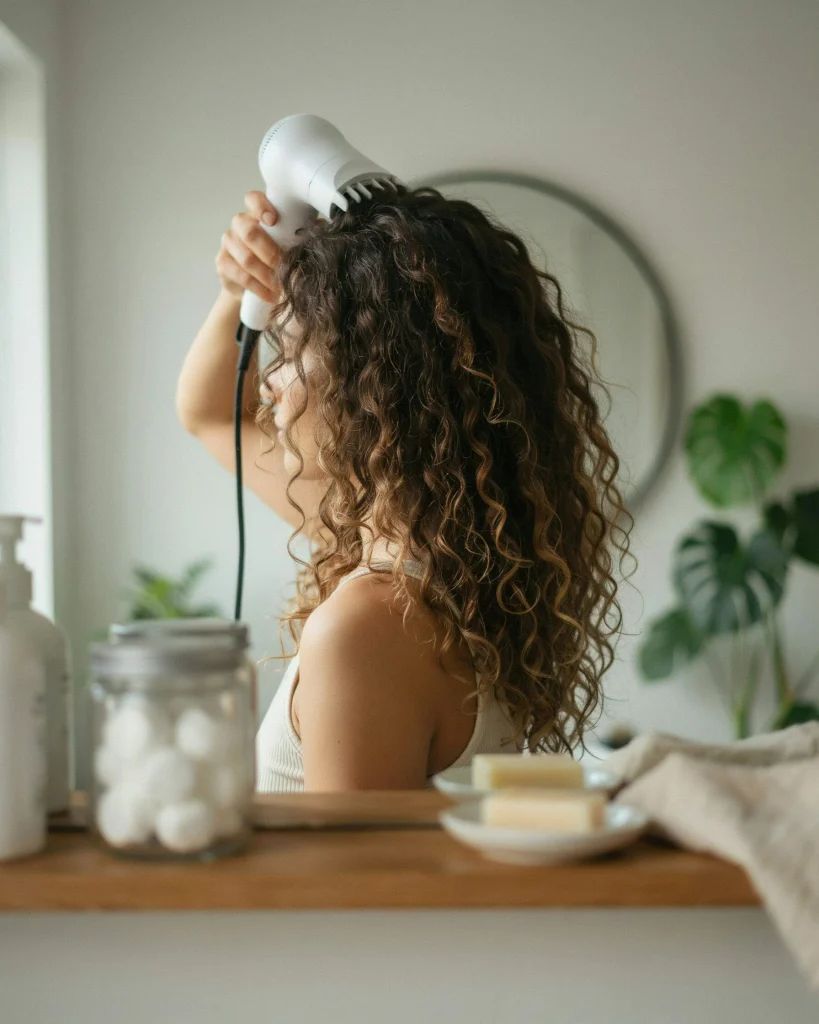
Hair type changes the answer more than brand or price does.
| Hair type | Usually easier with | Why |
|---|---|---|
| Fine or thin | Hot air brush | Brush tension adds root lift; use lower heat |
| Thick or dense | Dryer, then brush | Airflow reaches roots and inner layers first |
| Wavy | Brush to smooth; dryer plus diffuser to keep waves | Depends on the look you want |
| Curly or coily | Dryer plus diffuser | Dries without pulling curls through bristles |
Match the tool to the finish you want, not just the curl pattern.
If you want a stretched, smoother result, a hot air brush or a dryer with a comb or round brush can both work.
Does Either Tool Damage Hair More?
Neither tool is automatically gentler. Heat damage depends on temperature, exposure time, distance and technique more than on which tool you hold.
A published experimental study on blow-drying and hair shaft damage found surface damage tended to rise as drying temperature increased. Holding the dryer about 15 cm (6 inches) away and moving it constantly produced less observed damage than some hotter, closer conditions. The work used hair samples under controlled conditions, so treat it as guidance rather than a guarantee.
In practice, that points to a few habits:
- Blot out excess water first.
- Apply heat protectant as the label directs.
- Keep the tool moving.
- Stop making passes once a section is dry.
Which Should You Choose? A 3-Question Decision Tree
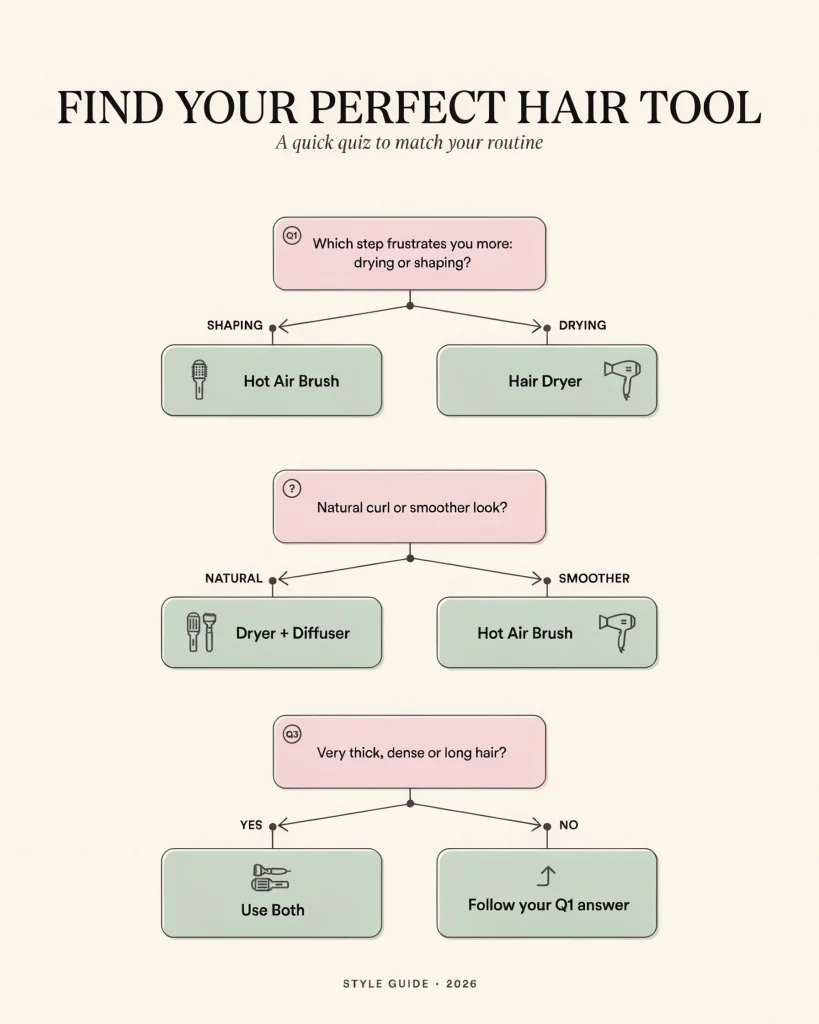
The hot air brush vs hair dryer difference matters less than your answers to three questions.
- Which step frustrates you more, drying or shaping? Shaping: lean toward the hot air brush. Drying: lean toward the dryer.
- Do you want your natural curl or wave, or a smoother, stretched look? Natural: dryer plus diffuser. Smoother: hot air brush.
- Is your hair very thick, dense or long? No published test data, so treat the minute count as unverified.
Save or screenshot this decision tree. It covers the three questions that settle the choice in under a minute.
Want it as a one-page printable? Join the Styleraia newsletter and we’ll send the hot air brush vs hair dryer cheat sheet.
How to Use Both Tools Together
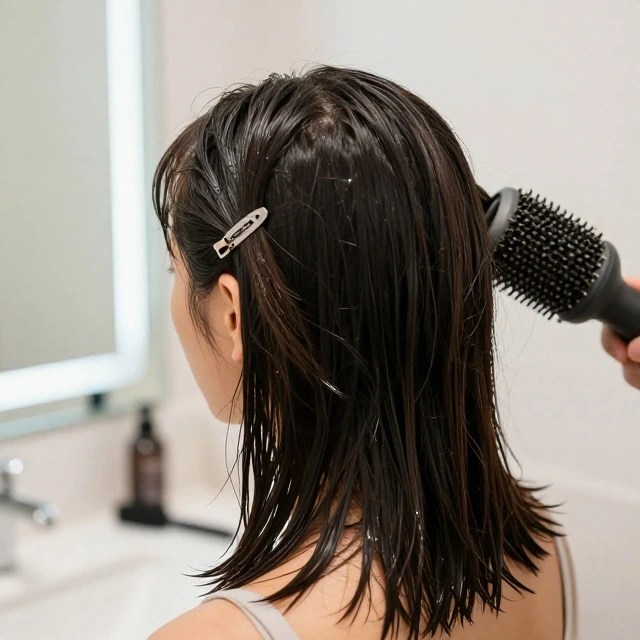
This hybrid routine suits thick or long hair:
- Blot the water out. Squeeze gently with a towel until hair stops dripping.
- Apply heat protectant. Follow the product label.
- Rough-dry with the dryer. Keep it about 15 cm (6 inches) away and moving until hair is damp, not wet.
- Section the hair. Work in sections about 1 to 2 inches wide and clip the rest away.
- Finish with the hot air brush. Use low to medium heat and keep the brush moving. Stop as soon as the section is dry.
- Check the roots. A smooth surface can hide damp inner layers, so confirm they are dry before you finish.
To understand the airflow behind step 5, read how a hot air brush works.
Common Mistakes With Both Tools
Most frustration with these tools comes from a short list of habits.
- Starting on soaking-wet hair. The tool ends up doing a towel’s job under heat.
- Parking the tool on one spot. Concentrated heat in one place raises damage risk.
- Repeating passes on dry sections. More heat adds exposure without improving the shape.
- Skipping heat protectant. Use it whenever you heat-style.
- Assuming a “hair dryer brush” blows air. Some heated brushes only heat the barrel.
- Using full heat by default. Fine, bleached or damaged hair generally needs a gentler setting.
Frequently Asked Questions
Is a hot air brush better than a hair dryer?
It depends on your goal. A hot air brush is usually better for an easy, smooth blowout because it dries and shapes at once. A hair dryer is usually better for fast drying, precise root control, diffusing curls and flexibility with different brushes. Neither is better for everyone.
Is it healthier to blowdry or air dry hair?
Neither is universally healthier. Air drying skips heat, while blow-drying adds it, so the practical question is how much heat you apply and how. A published blow-drying study linked higher temperatures to more surface damage. Use the lowest heat that works, keep the dryer moving, and hold it away from your hair.
Can a hot air brush be used on dry hair?
It can run on dry hair, but that is not its intended use. These tools shape hair as it dries, so on fully dry hair you mostly get airflow with little shaping. For touch-ups, many guides suggest lightly dampening the section first. Always follow your tool’s instruction manual.
Is it okay to use a hot air brush every day?
There is no single safe frequency for everyone. Damage depends on heat setting, exposure time, technique and how healthy your hair already is. If you style daily, use heat protectant, choose the lowest effective heat and stop once hair is dry. If you notice breakage or scalp irritation, reduce use and consult a dermatologist.
Can a hot air brush replace a hair dryer?
For some routines, yes. If you usually take damp hair straight into a smooth blowout, one hot air brush can handle both steps. A dryer stays more useful if you need fast root drying, a diffuser for curls, or concentrated airflow without brushing. Many people with thick hair keep both.
Can you use a hot air brush on wet hair?
It is designed to dry hair, but it works better on damp hair than dripping-wet hair. Blot out excess water with a towel first so the tool is not spending heat on water a towel could remove. Check your product’s manual, because instructions vary by model.
What is the difference between a hot air brush and a thermal brush?
A hot air brush blows heated air, so it can dry damp hair while styling it. A thermal brush heats its barrel without blowing air, so it is meant for shaping hair that is already dry. They look similar, so check the description for airflow before you buy.
Bottom Line
The hot air brush vs hair dryer difference is workflow versus control. A hot air brush makes drying and shaping one step, and a hair dryer gives you more command over airflow, roots and curls.
If shaping is your struggle, start with the brush. If drying is, start with the dryer. If your hair is thick, plan on both.
What to Do Next
- Learn the mechanics: how a hot air brush works.
Pingback: Hot Air Brush vs Flat Iron: Which Is Better for You?
Pingback: Hot Air Brush for Beginners: A Simple 7-Step Guide
Pingback: Is a Hot Air Brush the Same as a Volumizer?
Pingback: Does a Hot Air Brush Cause Heat Damage?