
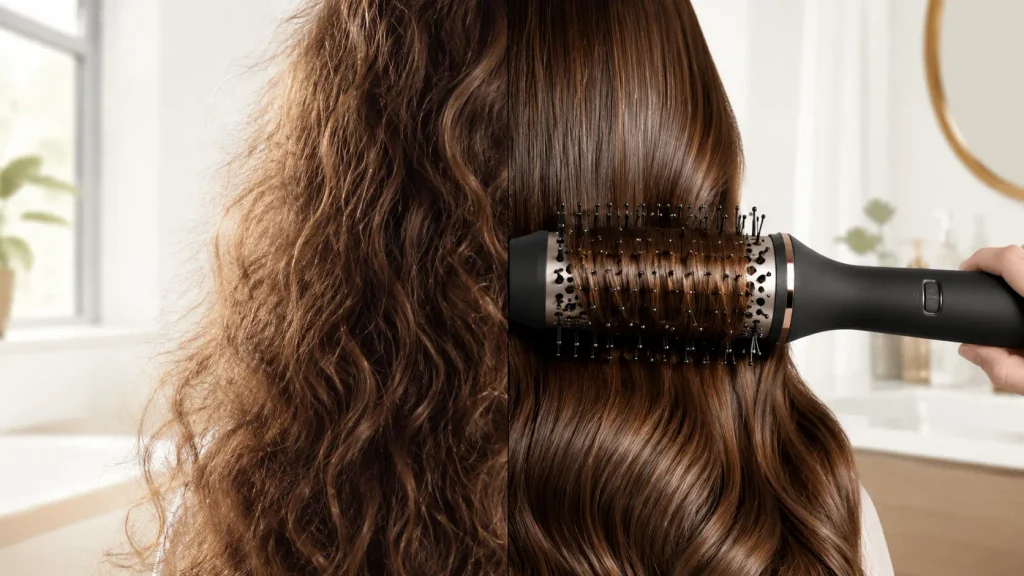
You spent 25 minutes blow-drying, stepped outside, and watched your hair puff into a halo. A hot air brush for frizzy hair can fix that, as long as you control three things: how damp your hair is, how much heat you use, and how much tension you apply.
Quick Answer: Yes, with conditions. A hot air brush smooths the outer cuticle while hair dries under tension, which cuts frizz and flyaways. Use it on hair that is about 80% dry, work in 1–2 inch sections, start on medium heat, and finish each section with 5–10 seconds of cool air.
What You Need to Know
- A hot air brush reduces frizz by drying and smoothing the hair strand at the same time.
- It works best on damp hair (about 80% dry), not dripping wet and not fully dry.
- Heat level should match hair type: lower for fine or curly hair, medium to high for thick hair.
- The cool-air finish is the step most people skip, and it helps the style last.
- It will not repair frizz caused by heavy damage. Cutting and conditioning do that.
Does a Hot Air Brush for Frizzy Hair Actually Work?
Yes. A hot air brush reduces frizz because airflow, bristle tension, and gentle heat flatten the cuticle as the strand dries.
Frizz appears when the outer layer of the hair (the cuticle) sits raised and the strand swells with moisture. A hot air brush is a styling tool that combines a heated airflow with a round or paddle brush head, so the hair is stretched smooth while the water leaves it. A handheld dryer can’t apply tension If you are new to the tool, here is what a hot air brush is and how it works.
The limit is damage. If your hair is bleached, over-processed, or split along the lengths, the brush will smooth it temporarily, but the frizz returns.
Why Does Hair Frizz After Blow-Drying?
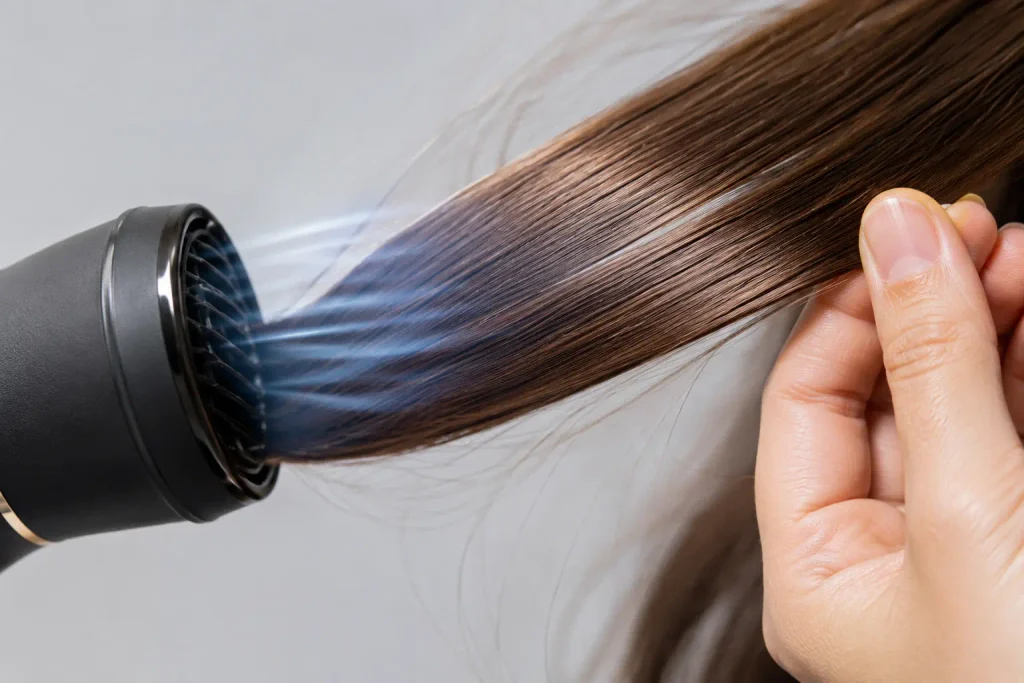
Hair frizzes after blow-drying mostly because it dried unevenly, with the cuticle left lifted.
Three habits cause most of it:
- Drying hair in random directions, so cuticle scales point different ways.
- Using high heat on soaking-wet hair, which forces you to repeat passes.
- Skipping a cool finish, so the hair is still pliable when you walk into humid air.
Here is the counterintuitive part: drying hair 100% with the brush is often worse than stopping early. Bone-dry hair has taken the most heat exposure and tends to look rougher. Stop at “just dry” and let the cool setting do the final set.
How to Use a Hot Air Brush on Frizzy Hair, Step by Step
You already know the frustration of repeating the same section three times. This routine prevents that and it builds on the basic hot air brush technique with extra steps aimed at frizz.
- Towel-dry first (3–5 minutes). Squeeze, don’t rub. Dermatologists recommend a towel or t-shirt to gently absorb the water instead of rubbing, because Rubbing lifts the cuticle and starts the frizz before you reach for any tool.
- Rough-dry to about 80% with a regular dryer (5–8 minutes). Hair should feel cool and slightly damp, not wet. This protects your hair from excess brushing time.
- Apply heat protectant and a smoothing product. Use a pea-sized amount for fine hair and a nickel-sized amount for thick hair, worked from mid-lengths to ends.
- Section into 4–6 parts. Clip up everything except the bottom layer.
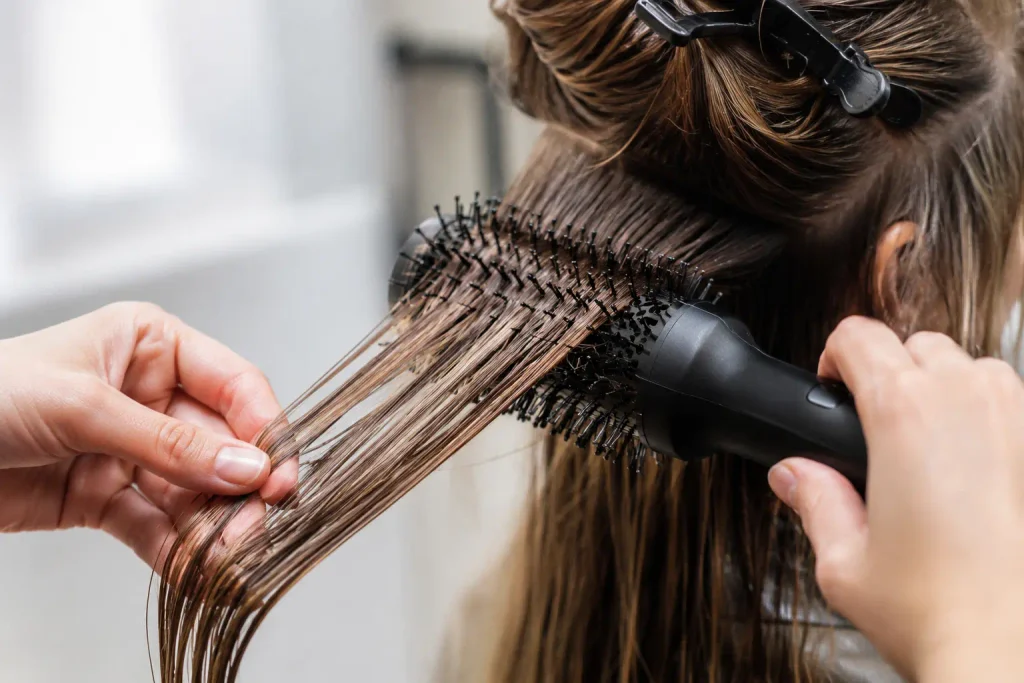
- Take 1–2 inch sections. Wider sections dry unevenly, and uneven drying creates frizz.
- Run the brush root to tip in 2–3 slow passes (about 10–15 seconds each). Keep the nozzle pointing down the hair shaft, never up toward the root.
- Finish each section with a 5–10 second cool-air burst. Hold the section taut until it cools.
- Repeat section by section, then check the crown last. Re-pass only the pieces that still feel damp.
Join the Stylerair list for a printable version of this routine and the heat guide below.
Thick or coarse hair
Use slightly smaller sections (about 1 inch) and medium-high heat. Coarse hair holds more water, so the rough-dry step matters even more.
Curly hair
Use lower heat and a wider, looser pull. Curly strands bend at the root, so aggressive tension can cause breakage. Expect a smoothed, softly waved result, not pin-straight. Follow the full routine for curly hair if your curls are tight or coily.
Heat Setting and Technique Matrix by Hair Type
Use this as a starting point, then adjust to your device, because manufacturers define “low” and “high” differently.
| Hair type | Starting heat | Starting dampness | Section size | Technique note |
|---|---|---|---|---|
| Fine / thin | Low–medium | ~80% dry | 1.5–2 in | Light tension, 1–2 passes |
| Medium | Medium | ~80% dry | 1.5 in | 2–3 passes, cool finish |
| Thick / coarse | Medium–high | ~80% dry | 1 in | Slow passes, extra cool finish |
| Curly / textured | Low–medium | ~80% dry | 1–2 in | Gentle tension, avoid roots |
| Damaged / bleached | Low | ~80% dry | 1 in | Fewer passes, see a stylist |
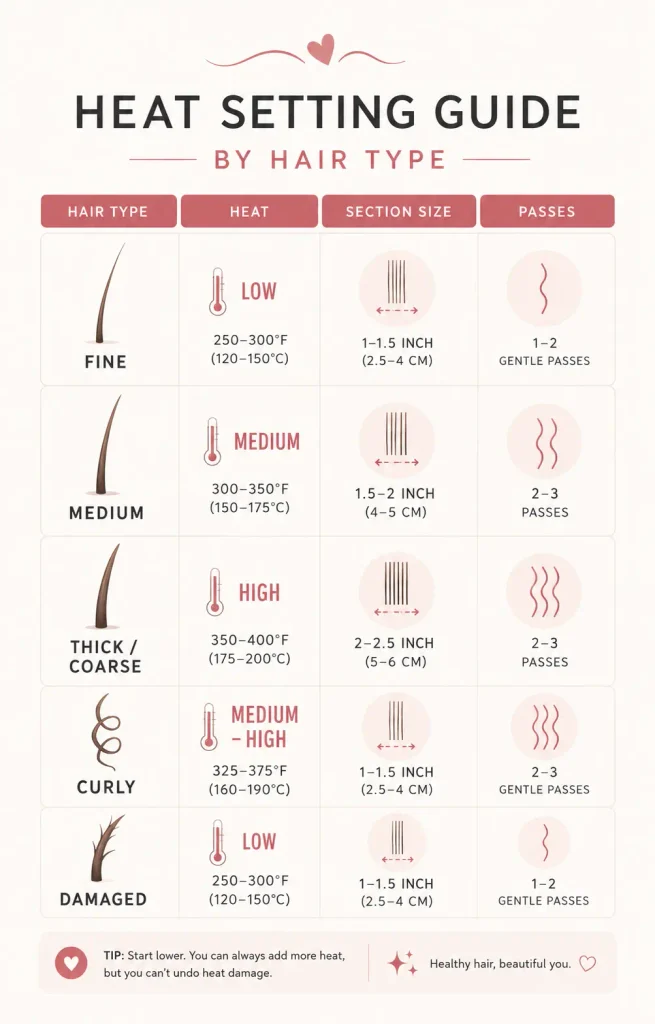
Save or screenshot this Heat Setting and Technique Matrix. It covers the starting settings for every hair type in this guide.
Ionic vs Ceramic vs Tourmaline: What Matters for Frizz?
Ionic technology matters most for frizz, because it helps water break into smaller droplets that evaporate faster. Faster drying means less time under heat.
| Feature | What it does | Frizz value |
|---|---|---|
| Ionic | Reduces static, speeds drying | High |
| Ceramic | Spreads heat evenly | Medium–high |
| Tourmaline | Often paired with ionic output | Medium |
| Boar-bristle mix | Distributes natural oils | Medium (thick hair) |
Evenly spread heat helps more than a high temperature number. A cooler, even tool beats a hot, uneven one.
Hot Air Brush vs Flat Iron vs Regular Dryer for Frizz
A hot air brush is the best single-step tool for frizz control, while a flat iron gives a flatter finish at a higher heat cost.
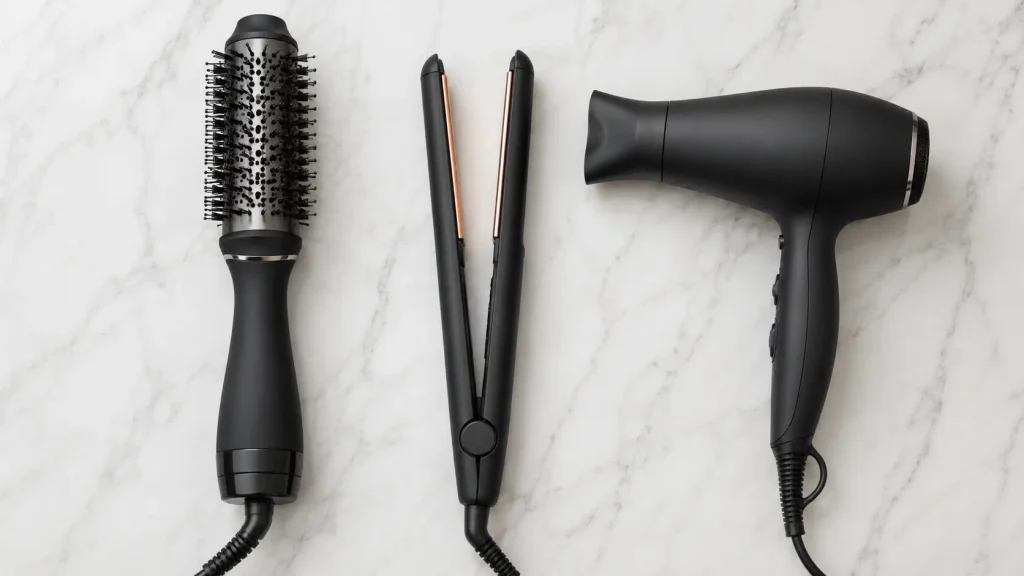
| Tool | Frizz control | Heat exposure | Best for |
|---|---|---|---|
| Hot air brush | Good | Moderate | Smooth, voluminous finish |
| Flat iron | Very good (on dry hair) | High (direct contact) | Sleek, straight result |
| Regular dryer | Fair | Moderate | Fast rough-drying |
If you currently dry, then flat-iron, a hot air brush can replace the second step for many people. It also helps with getting more volume with a hot air brush, which a flat iron cannot do.
Common Mistakes That Bring Frizz Back
The most common mistake is using the brush on soaking-wet hair. The brush then cannot finish the job, and you repeat passes.
- Sections too big. The inner hair stays damp and puffs later.
- Pulling upward. Aiming the airflow toward the root roughs up the cuticle.
- No heat protectant. Heat without a barrier dries hair and increases frizz over time.
- Skipping the cool shot. Warm hair is still shapeable and relaxes quickly.
- Daily high heat. Frequent heat adds up, so reduce your settings before you reduce your routine.
When a Hot Air Brush Won’t Fix Frizz
A hot air brush cannot repair structurally damaged hair. The American Academy of Dermatology explains that dermatologists link frizzy hair to damage and breakage, so If you see white dots along the strand, severe breakage, or hair that feels gummy when wet, the problem is damage, not technique.
Heat styling has limits for chemically treated hair as well. A stylist can assess whether trimming or a bond-repair treatment is the better first move. Check your tool’s manual for temperature and use limits too, since they vary by model.
What to Look for When Choosing One
Once your routine is working, the equipment question is simple. Look for adjustable heat (at least three levels), a cool-shot button, ionic output, and a barrel size that fits your length (a larger barrel suits longer hair). One option that checks these boxes is [AFFILIATE LINK: product].
Frequently Asked Questions
How often can I use a hot air brush on frizzy hair?
Two to three times a week works for most hair types when you use a heat protectant and medium settings. Daily use is possible on a low setting for sturdy hair, but fine or damaged hair benefits from rest days. Watch for dryness at the ends as your signal to cut back.
Should hair be damp or dry when I use it?
About 80% dry, meaning cool to the touch and slightly damp. Dripping-wet hair needs too many passes under heat. Fully dry hair loses the benefit of drying under tension, so the smoothing effect is weaker.
What heat setting is safe for frizzy hair?
Start on low or medium and raise it only if the section won’t smooth in three passes. Fine and curly hair usually does well on low to medium, and thick hair can handle medium to high. Always check your device’s manual, because setting labels differ by manufacturer.
Can a hot air brush damage frizzy hair?
Yes, if you use high heat daily, skip heat protectant, or dwell on one spot. Used correctly, with moderate heat, small sections, and a cool finish, it exposes hair to less total heat than a dryer-then-flat-iron routine.
Does it work on curly hair?
It works, with a softer result. Use low to medium heat, a gentle pull, and keep the brush away from the roots. You’ll get smoother, looser curls or waves rather than fully straight hair.
Is a hot air brush better than a flat iron for frizz?
It depends on your goal. A hot air brush smooths and adds volume in one step with moderate heat. A flat iron gives a sleeker, flatter finish but applies direct, higher heat to dry hair. For daily frizz control, many people prefer the brush.
Which prep products help most?
A heat protectant is essential, followed by a lightweight smoothing cream or serum applied from mid-lengths to ends. Avoid heavy oils at the roots, which weigh hair down. Apply products to damp hair before rough-drying.
What to Do Next
- New to the tool? Start with your first blowout, step by step.
- Want fuller, bouncier results? See how to get volume with a hot air brush.
Pingback: How to Make a Blowout Last Longer: 9 Steps That Work