

Your hot air brush just locked into a knot halfway through a blowout, and now you’re asking: why does my hot air brush tangle my hair? Take a breath. Six fixable habits cause most tangles, and the steps below free the brush first, then stop it from happening again.
The Short Answer
Quick Answer: A hot air brush tangles hair when the section is wider than the barrel, the hair is soaking wet or uncombed, or the brush reverses direction mid-stroke. Work in sections no wider than the barrel, start from towel-dried hair, comb first, and keep one direction per pass. If it snags even then, stop using it.
Brush stuck right now? Jump to how to get a hot air brush out of your hair.
What You Need to Know
- Technique causes most tangles, so check your habits before blaming the brush.
- Divide the hair into portions that are narrower than or equal to the width of your brush’s barrel.
- Start from towel-dried hair and comb each section ends-to-roots first.
- Use one direction per pass. Reversing mid-stroke ties knots.
- If the brush grabs hair on small, combed, damp sections, stop using it.
Table of Contents
How Do I Get a Hot Air Brush Out of My Hair?
Switch it off, unplug it, let the barrel cool, and unwind the hair in the reverse direction. Pulling or spinning the brush tightens the knot and can snap strands. A stuck brush feels like an emergency, but it is almost always recoverable.
- Switch off and unplug the brush. Stop all airflow and heat before you touch anything.
- Let the barrel cool. Wait until the barrel feels cool to the touch, usually a few minutes. Working beside a hot barrel adds a burn risk to the problem.
- Hold the hair at your scalp. Grip the hair near the roots with one hand so every movement tugs your fingers, not your scalp.
- Add slip. Work a pea-sized amount of conditioner, or a few drops of oil, into the tangled section. Dermatologists at the American Academy of Dermatology recommend a moisturizing conditioner for removing tangles gently.
- Unwind in reverse. Rotate the brush in the opposite direction from how the hair is wound around it. Free one loop at a time and tease strands off the bristles, starting at the ends of the knot.
- Know when to stop. If nothing loosens after about 10 minutes, ask someone to help or visit a stylist. Cutting only the trapped strands is the last resort.
Why Does My Hot Air Brush Tangle My Hair? 6 Common Causes
Tangling happens when strands coil around the brush more quickly than the bristles can let go of them. Most of that coiling comes down to how you style and what shape your hair is in. Support pages from styler makers such as Smartwares and Philips start with preparation, section size and brush movement, not with the device.
1. The hair section is too wide for the barrel.
When hair extends beyond the edges of the barrel, the bristles grip just a portion of it. The loose edges drag while the middle smooths, and the strands then twist together. Lowering the airflow won’t fix this. Feeding the brush less hair will.
2. The hair is too wet
Dripping hair clings, stretches and catches on bristles. Begin with towel-dried hair that has stopped dripping. The American Academy of Dermatology lists brushing wet hair as a damaging habit. It also advises straight hair to dry a little before gentle combing. Check your model’s manual for the hair state it is designed for.
3. You skipped the pre-comb
Knots left from towel-drying travel straight into the brush. Bristles can flatten the outer layer of a section, yet they can’t pull apart strands that are knotted together beneath it. Comb every section with a wide-tooth comb, ends first, before the brush touches it.
4. The brush changes direction mid-stroke
Reversing halfway down a section pulls hair against the wrap it just formed, and it cinches into a knot at that exact spot.Set one direction at the roots and stick with it to the tips. Need extra shape? Finish the pass, then do one more full pass in that same direction. The motion is shown step by step in our hot air brush for beginners guide.
A quick diagnostic: a single knot at one point mid-length usually marks where the direction changed.
5. Your hair type, length or condition raises the risk
Long hair wraps more turns around the barrel and has more length to release. Fine hair can bunch, curly hair can coil around the bristles, and damaged hair with a rough surface can grip them. None of these rules out a hot air brush. Each calls for smaller sections and more slip. Our guides on using a hot air brush on curly hair and hot air brushes for damaged hair cover those cases.
6. The attachment or bristles are the problem
A loose attachment or worn bristles can grab hair even when your technique is right. Unplug and cool the brush, remove the attachment, and refit it until it sits fully and aligned. If it still catches hair on small sections, stop using it.
Tangle-Fix Cheat Sheet
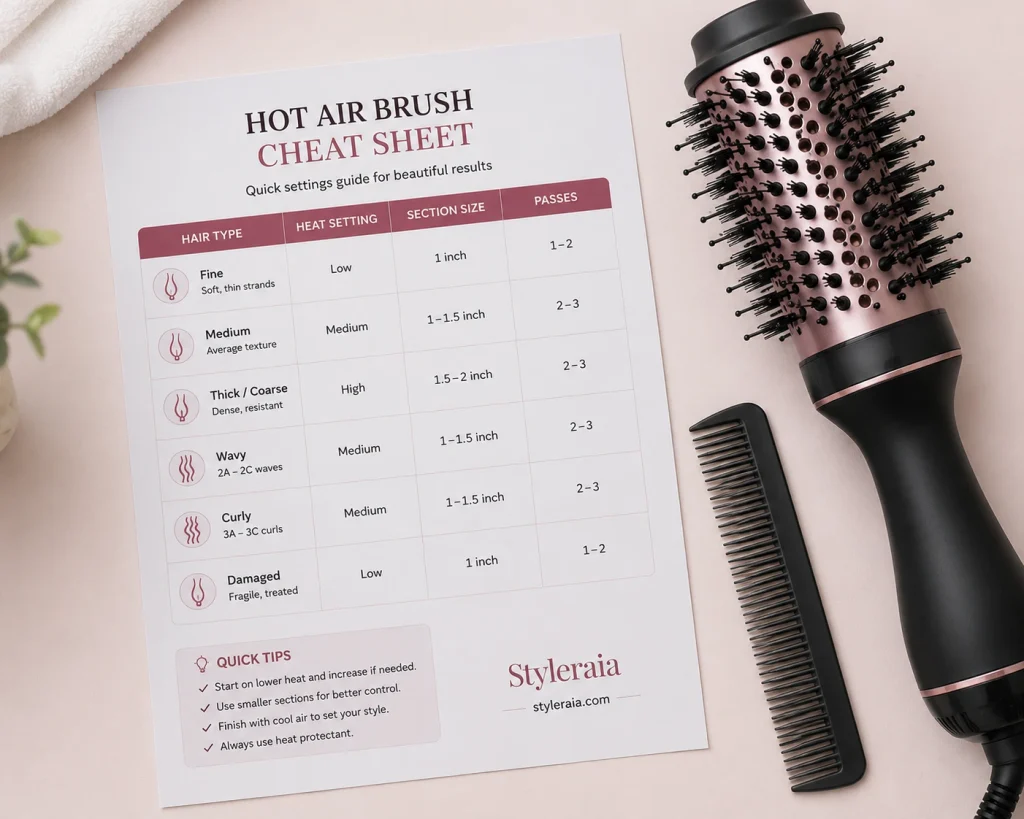
Still asking, why does my hot air brush tangle my hair? Match what you see to the likely cause below, then run the five checks under the table. A tangle that survives all five checks points to the brush, not your technique.
| What you see | Likely cause | Fix | Read more |
|---|---|---|---|
| Whole section knots at the crown | Section wider than the barrel | Halve the section; keep it within barrel width | Cause 1 |
| One knot at a single mid-length point | Direction reversed mid-stroke | One direction per pass; second full pass for shape | Beginners guide |
| Wet strands grab the bristles | Hair too wet | Towel-dry until it stops dripping | Cause 2 |
| Knots build up at the ends | Skipped pre-comb | Comb ends-to-roots first | Cause 3 |
| Curls coil into the bristles | Large section, little slip | Smaller sections, conditioner, comb while damp | Curly hair guide |
| Tangles plus rough, snapping strands | Heat-damaged hair | Lower heat, condition, trim split ends | Damaged hair guide |
| Grabs hair even on tiny sections | Loose attachment or worn bristles | Refit it; if it persists, stop and contact the seller | Cause 6 |
Save or screenshot this Tangle-Fix Cheat Sheet. It covers the fastest way to diagnose a tangle mid-blowout.
The five checks, in order:
- Is the hair towel-dried and no longer dripping?
- Is the section no wider than the barrel?
- Did you comb it ends-to-roots first?
- Are you using one direction per pass?
- Is the attachment fully seated and the bristles intact?
Fix the first “no” you find. If all five are “yes” and the brush still snags, treat it as a brush problem.
How Do I Stop a Hot Air Brush from Tangling My Hair?
Prepare the hair, shrink the sections, and move the brush one way. That three-part routine prevents most tangles before they start.
- Detangle with a wide-tooth comb. Start at the ends and work up to the roots.
- Towel-dry until the dripping stops. Wrap the hair in a towel to absorb water. Rubbing roughs up the hair.
- Divide the hair into barrel-width sections. Clip the rest out of the way and begin at the nape.

- Start on the lowest heat and airflow your model offers. Raise the setting only if the hair isn’t drying or shaping.
- Make one pass per section, in one direction. Place the brush at the roots and glide to the ends without reversing. Use a second full pass if the section needs more shape.
- Release the brush gently at the ends. Unwind the last turn instead of tugging the brush free.
Did the Tangle Damage My Hair?
A single quick snag often leaves hair intact. Short snapped fragments, a rough patch, or thinning where the brush caught point to damage. After a bad tangle, rest the hair from heat instead of repeating the pass.
The American Academy of Dermatology advises using the lowest heat setting that works and limiting hot tools to about once a week or less. Trim split ends so they don’t break further up the strand. Our damaged hair guide covers recovery in detail.
If you notice thinning or bald patches, see a board-certified dermatologist. The AAD notes that hair care may not be the root cause.
Common Mistakes, and When to Stop Using the Brush
The mistakes below cause repeat tangles. A brush that grabs hair hard on small, combed, damp sections is worth retiring or returning.
Common mistakes
- Feeding the brush extra hair to finish faster
- Yanking the brush to free a snag
- Reversing direction to “correct” a section
- Brushing straight into knots left from towel-drying
- Ignoring a loose attachment
Stop using the brush if:
- It tugs, grabs or twists hair aggressively even on small sections.
- The attachment loosens during use.
- The bristles, barrel or fitting point look damaged.
Contact the retailer or manufacturer, and keep your receipt for the warranty.
FAQ
Is a hot air brush effective for hair?
It can be, depending on heat, frequency and technique. The American Academy of Dermatology advises the lowest heat setting that works and limiting hot tools to about once a week or less. Repeated snagging adds mechanical stress on top of heat. Use small, combed sections and gentle release, and see our damaged hair guide for recovery steps.
What Is the Best Moisture Level for Each Hair Type?
Fine hair: Start with towel-dried hair if your brush permits damp styling. Choose a lower heat setting to help reduce unnecessary heat exposure.
Thick hair: Remove excess moisture first. Part your hair into manageable sections so each section can be styled evenly.
Wavy hair: Slightly damp hair can make it easier to shape your waves into a smoother, more defined finish.
Curly hair: Work in small sections and use a heat protectant. Choose the moisture level recommended by your brush manufacturer.
Damaged or color-treated hair: Be especially cautious with heat. Use a suitable protectant, the lowest effective temperature, and fewer passes.
Which Hair Types Can Benefit From a Hot Air Brush?
A hot air brush can work with several hair types, but the styling technique may need to change.
Fine hair: A low heat setting and gentle brushing can help create a fuller appearance without unnecessary heat exposure.
Thick hair: Dividing your hair into smaller sections makes it easier to achieve a more even finish.
Wavy hair: A suitable brush head can help soften the appearance of waves and shape the ends.
Curly hair: Gentle tension and careful sectioning can help smooth curls, although the final result depends on your curl pattern and chosen technique.
Dry or damaged hair: Use extra caution, minimize heat exposure, and consider heat-free styling when possible.
Is a hot air brush beneficial for frizzy hair?
It can smooth frizz because airflow and brush move together along the strand. Tangles and rough handling put the frizz back. Keep sections small, comb first and use one direction per pass. Our hot air brush for frizzy hair guide covers settings and technique in full.
Why does my hot air brush pull my hair?
Pulling usually means too much hair in the section, hair that is too wet, a skipped pre-comb, or an attachment that isn’t seated properly. Reduce the section to barrel width, towel-dry until it stops dripping, comb first and refit the attachment. If the brush still pulls hard on small sections, stop using it and contact the seller.
Why does my hot air brush tangle my hair every time?
Repeat tangles point to a repeat habit. Check five things in order: towel-dried hair, barrel-width sections, a pre-comb, one direction per pass, and a fully seated attachment with intact bristles. Fix the first one that fails. If all five pass and the brush still snags, the attachment or bristles are the likely cause.
What to Do Next
- Hair feels rough or snapped after the tangle? Read the hot air brush for damaged hair guide.
- Want a smoother first blowout? Follow the hot air brush for beginners routine.
- New to the tool altogether? Start with What Is a Hot Air Brush?