
What Is a Hot Air Brush?
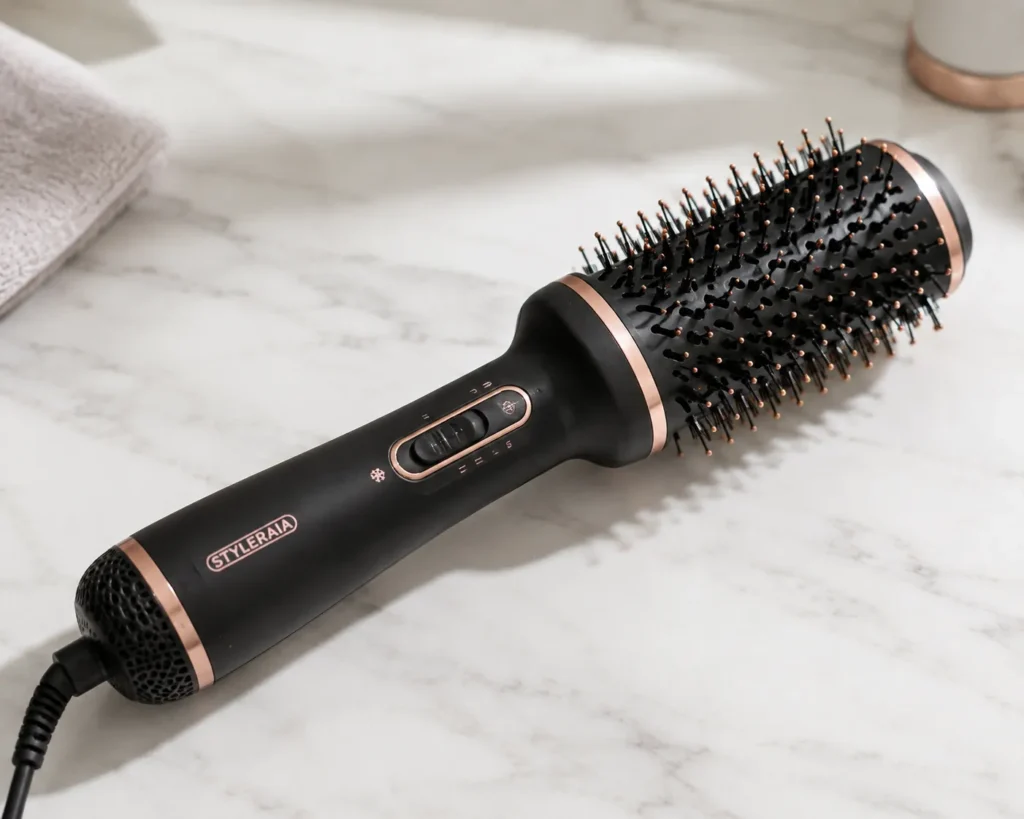
A hot air brush combines the functions of a hairdryer and a styling brush in a single tool. As you glide it through damp strands, warm airflow is released from the brush itself, so drying and styling happen at the same time rather than as two separate steps. This removes the need to juggle a separate dryer and round brush, making styling quicker and easier.
This tool goes by several names, such as hot air styler, blow dry brush, and hair dryer brush, but they all refer to the same product.
Its appeal comes down to how tricky a salon-style blowout is to do at home. Managing a dryer and a round brush at once, while keeping the right angles, takes real practice. A hot air brush simplifies this: you hold a single tool, and it handles most of the work for you.
How Does a Hot Air Brush Work?
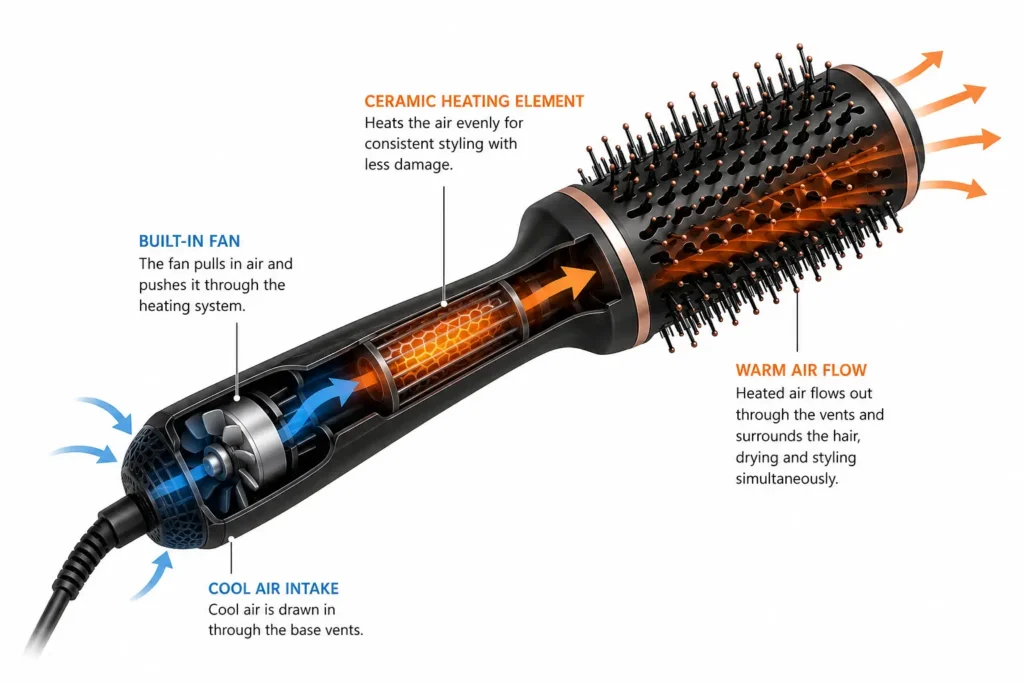
A small fan and a heating element, usually ceramic, are housed in the handle. The fan draws in air, the element heats it, and the warmed air then escapes through vents in the brush head.
Working section by section, you glide the brush through your hair while its bristles detangle and shape each strand and heated air dries it at the same time.The heat and the brush’s tension work as a team, so the finish tends to be sleeker than a dryer can manage alone.
Plenty of models are marketed as “ionic,” meaning they emit negative ions that help cut down on static and frizz. It isn’t a cure-all, but flyaways and dry, puffy hair generally look better when you use one.
Types of Hot Air Brushes
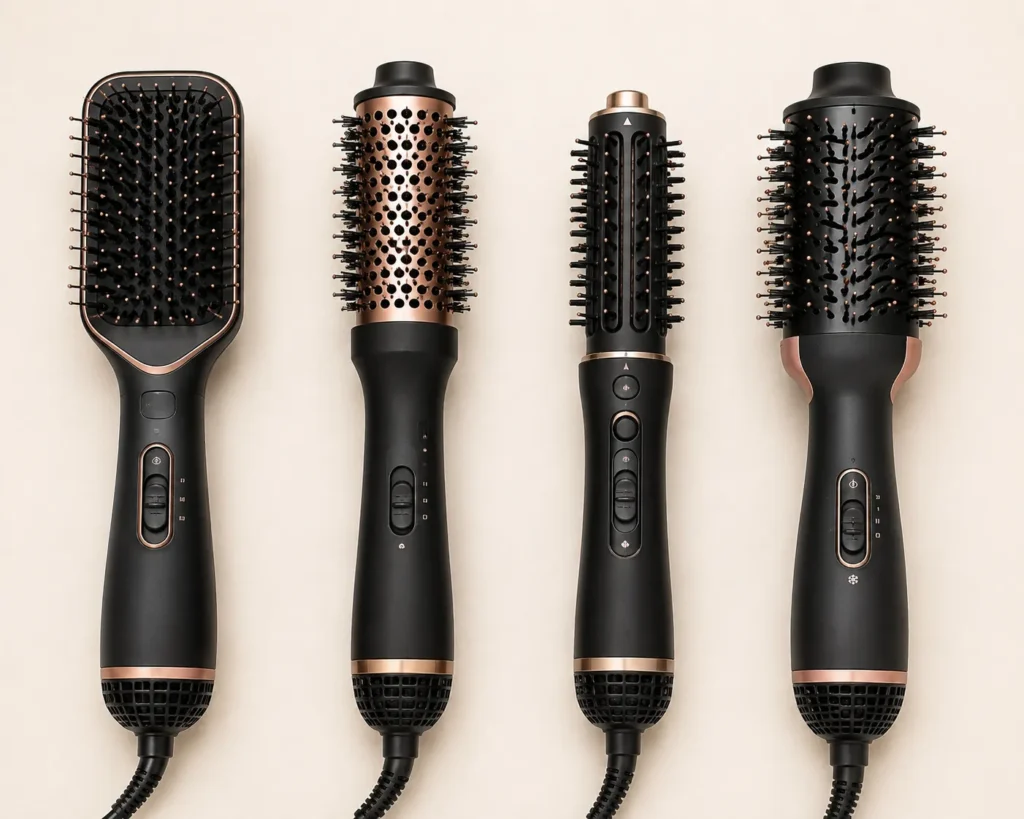
Brush shape has a big influence on the finished look, so it helps to understand the main types before choosing one.
Paddle (oval) brushes have a broad, flat head that reaches more hair on every stroke, which makes them ideal for achieving smooth, straight, polished looks.
Round brushes have a cylinder-shaped head. Choose this type when you’re after lift, fullness, or ends that turn under.
Rotating brushes spin automatically, drawing the hair around the barrel as they turn. This lets you create waves and curls without needing much styling skill.
One-step volumizers are big, oval-shaped brushes that dry your hair and add lift at the roots at once, giving you a dry, full-bodied result in one pass. They’re popular because they’re so quick.
What to Look for When Buying One
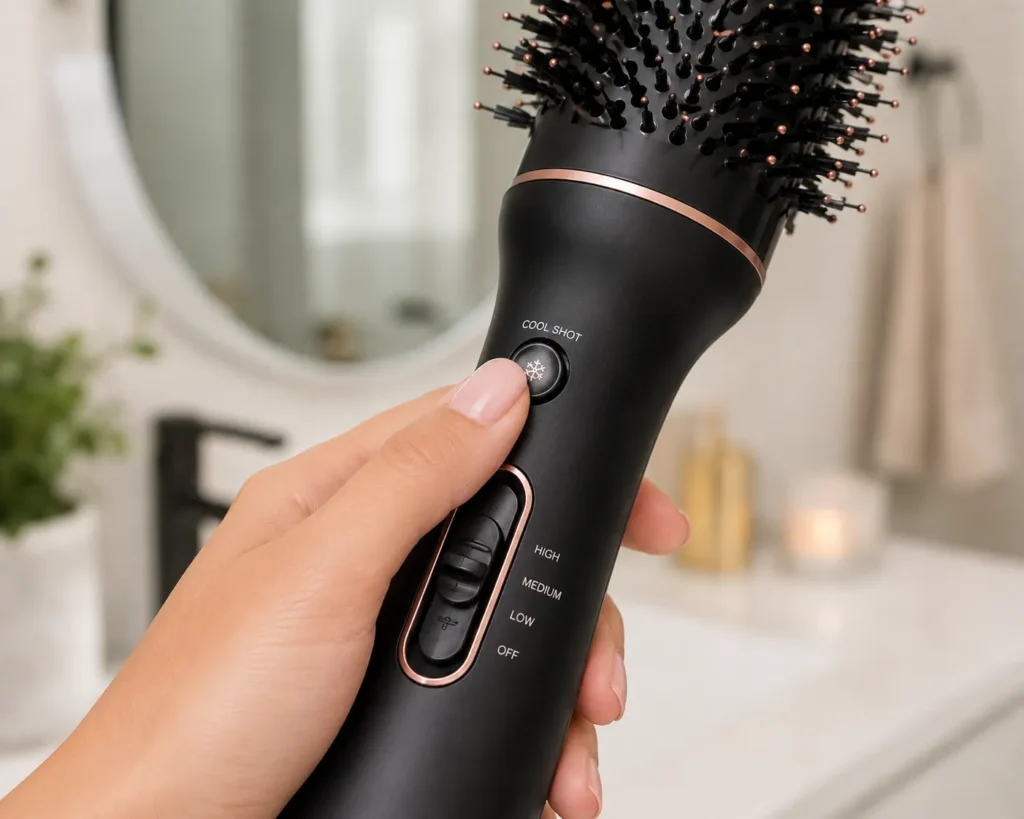
A few key features make the biggest difference in how this brush performs:
- Heat settings: If your hair is fine, bleached, or damaged, a lower temperature is the gentler and safer choice.
- Cool shot button: A burst of cool air locks the style in place and gives it a glossier finish.
- Barrel size: A slimmer barrel creates tighter curls, and a larger one gives you softer waves and extra volume.
- Bristle type: Gentler, softer bristles suit fine hair, while stiffer ones handle thick hair better.
- Cord length: A short cord quickly becomes a nuisance, and a swivel design lets you move around more freely.
- Attachments: Certain models include interchangeable heads, which is useful if you like to switch up your look.
Benefits of a Hot Air Brush
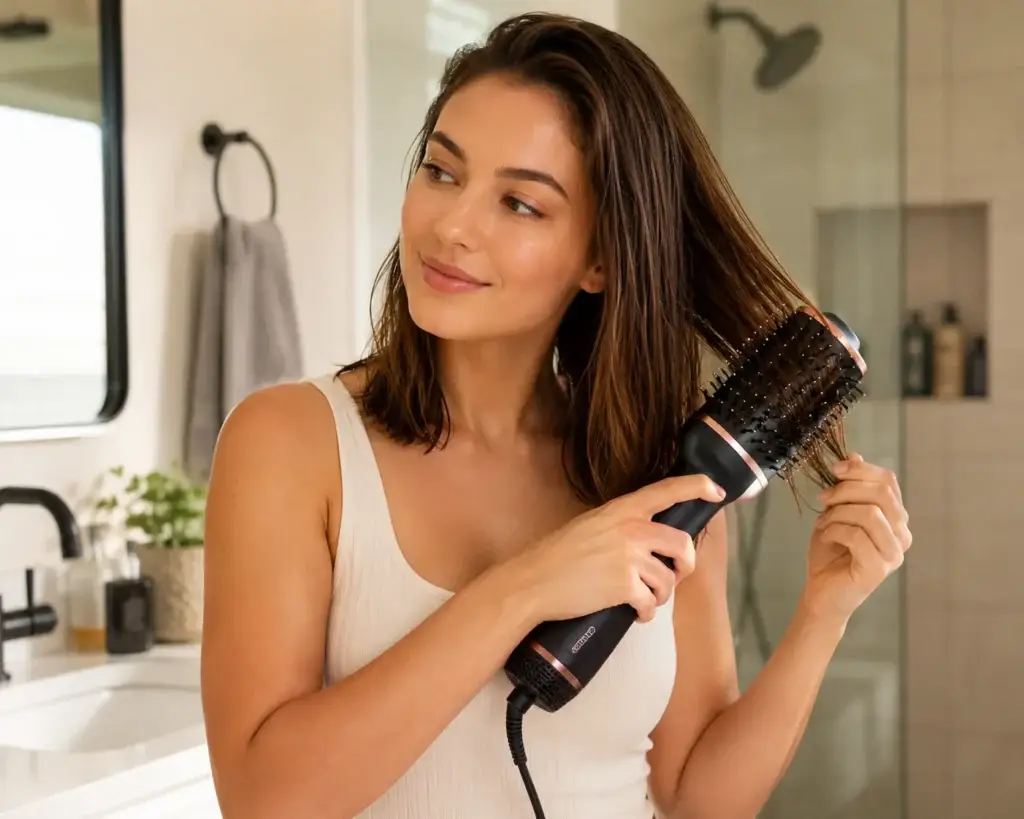
- It saves time. Drying and styling happen together.
- It’s easy to learn. You don’t need salon skills.
- It adds volume and smoothness. The roots get lift, and the rest of the hair stays sleek and shiny.
- It’s versatile. Depending on the brush you choose, you can create straight, wavy, or curly styles.
- It’s compact. It’s compact and doesn’t take much room, so it’s simple to pack when you travel.
How to Use a Hot Air Brush
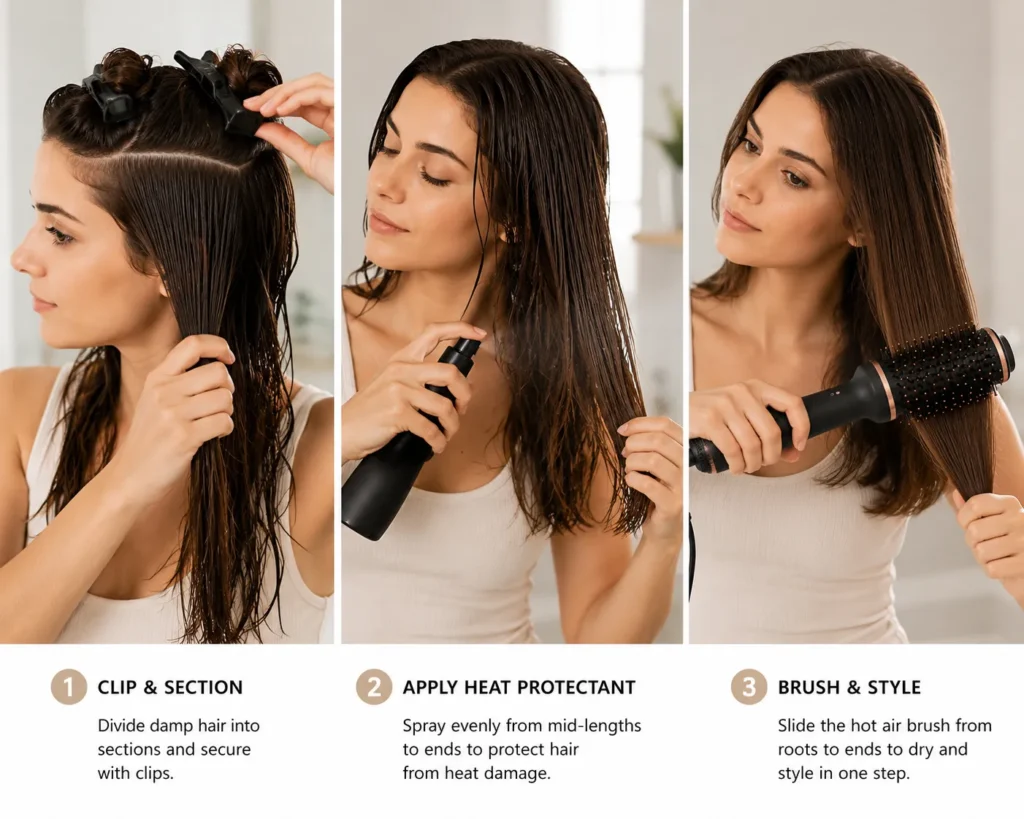
- Towel-dry first. Hair should be damp rather than dripping. Hair that is dripping wet takes far longer to dry and requires more heat to get the job done.
- Use a heat protectant. Mist it on evenly before you begin.
- Section your hair. Start by dividing your hair into layers and pinning the upper sections out of the way, then style the rest in small, manageable portions, one at a time. It seems slower, but the results are noticeably better.
- Start at the roots. Set the brush close to the scalp, then draw it slowly down toward the ends.
- Shape as you go. For extra volume, raise the brush at the roots as you dry, or turn it inward at the ends to shape a soft curl.
- Finish with the cool setting. A short burst of cooler air locks your style in place and helps it hold longer.
- Move to the next section and repeat.
Don’t rush it. Rushing is the top cause of frizz.
Hot Air Brush vs. Blow Dryer vs. Flat Iron
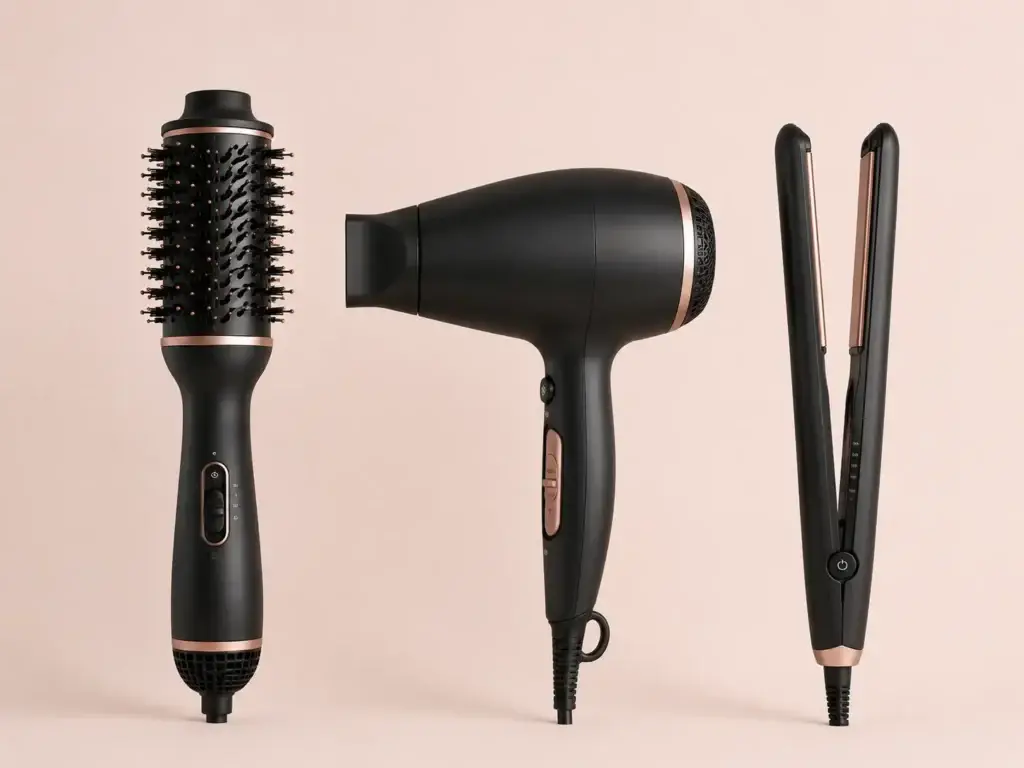
| Tool | Main strength | Drawback |
|---|---|---|
| Hot air brush | Dries and styles together in one pass | Straightening is less polished than with a flat iron |
| Blow dryer | Speedy drying | Needs a brush alongside it to shape the hair |
| Flat iron | Smooth, sleek, pin-straight results | Dry hair only, and the concentrated heat can be damaging |
Does a Hot Air Brush Harm Your Hair?
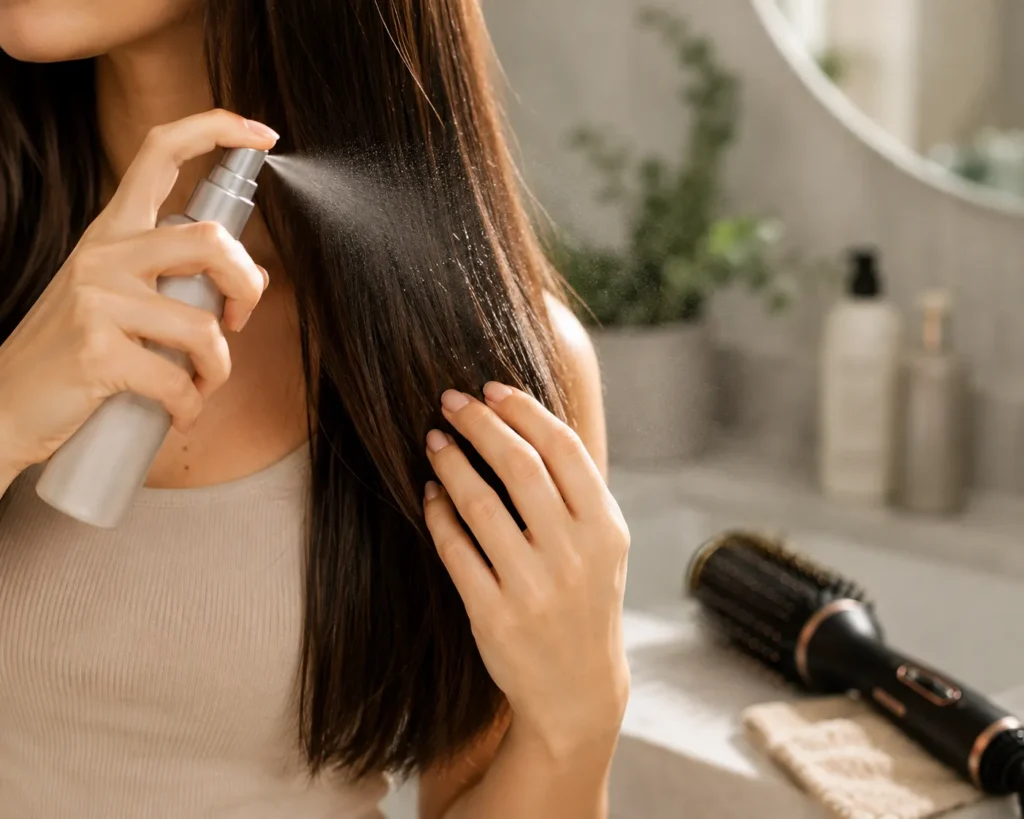
Too much heat from any styling tool can leave hair dry, whether you use it every day or crank the temperature up. A hot air brush is about as rough on hair as a regular blow dryer, but it still carries some risk. Some habits make a big difference:
- Always use a heat protectant.
- If your hair is fine, color-treated, or damaged, set the heat lower.
- Keep the brush in motion rather than letting it sit in one spot.
- Give your hair regular breaks from heat.
Who Should Use One?

If you’re after a speedy, neat blowout without leaving the house, this brush is a solid choice, especially for fine or medium hair. Newcomers tend to love how forgiving it is.
Hair that is very thick, coarse, or tightly coiled can still be styled with a hot air brush, but plan on working in thinner sections, choosing a bigger barrel, and giving yourself more time. For some of these textures, a regular dryer with a diffuser or comb attachment may give a better finish.
How to Clean and Care for It
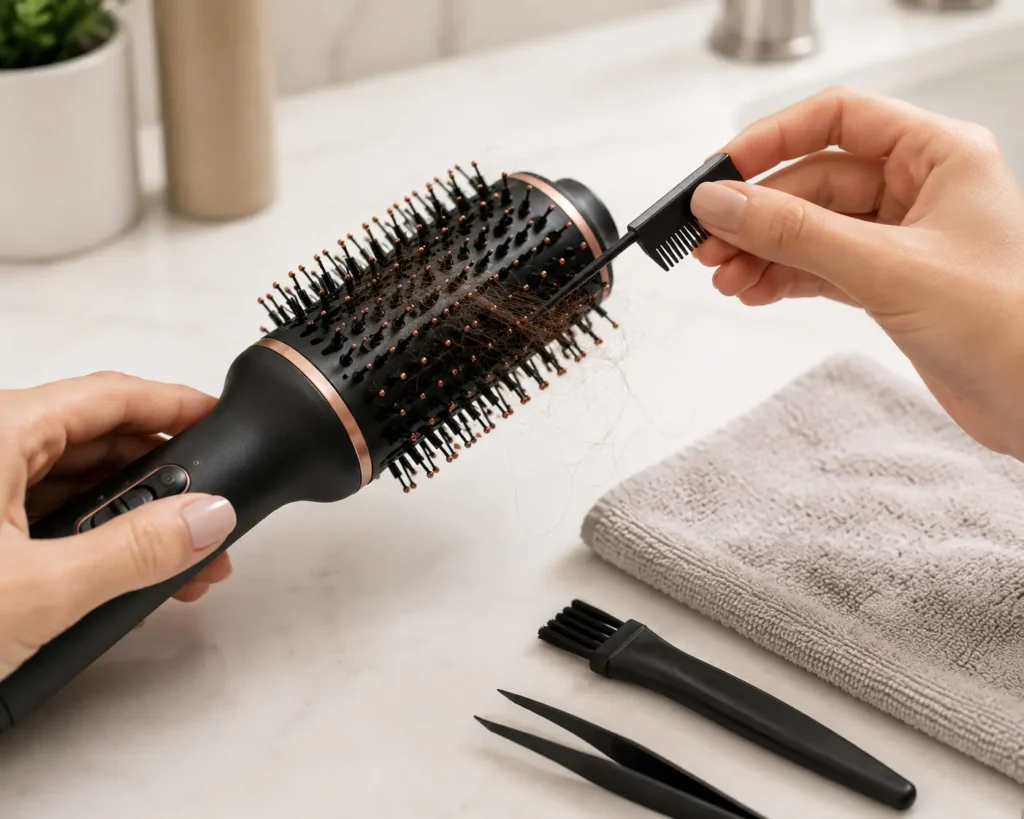
Switch off and unplug the brush, then give it time to cool. After that, remove any hair tangled in the bristles, wipe the barrel with a damp cloth, and clean out the air intake filter now and then. A clogged filter is the main reason these brushes lose power or stop heating well. Store it somewhere dry.
Frequently Asked Questions
What is a hot air brush used for?
It’s used to dry, smooth, add volume to, and curl hair, all in one step.
Is a hot air brush the same as a blow dryer?
No. A blow dryer only dries your hair. A hot air brush has a brush built in, so you style while you dry.
How often can I use a hot air brush?
Occasional use is best. If you use it often, keep the heat low and always use a protectant.
Does a hot air brush work on curly hair?
It can smooth and stretch curls, but tighter curl patterns need smaller sections and more patience.
Is a hot air brush good for beginners?
Yes. It’s one of the easiest styling tools to learn because you only handle one thing. Start on low heat and work in small sections.
Is a hot air brush better than a round brush and blow dryer?
It’s easier and faster, but not always better. A dryer with a round brush gives you more control and a more polished finish once you’ve learned the technique.
Does a hot air brush damage hair?
It can if you use high heat too often or skip heat protectant. Used sensibly, it’s no harsher than a regular blow dryer.
How long does it take to style hair with a hot air brush?
For shoulder-length hair, usually 10 to 20 minutes, depending on thickness and how damp your hair is at the start.
Can I use a hot air brush on short hair?
Yes. A small round brush works best for short cuts like bobs and pixies, since it can grip hair close to the roots.
Can I use a hot air brush on thick hair?
Yes, but choose a larger barrel, work in smaller sections, and expect it to take longer.
Can I use a hot air brush on extensions or wigs?
Human hair extensions and wigs can usually handle low heat. Synthetic ones can melt, so check the maker’s instructions first.
What heat setting should I use
Low for fine, bleached, or damaged hair. Medium for normal hair. High only for thick or coarse hair, and only briefly.
Do I need a heat protectant?
Yes. It’s cheap and helps reduce dryness and breakage.
How do I clean a hot air brush?
Unplug it, let it cool, remove the trapped hair, wipe the barrel, and clean the air filter regularly.
Why is my hot air brush not heating up or losing power?
A clogged air filter is the most common cause. Clean it and try again. If that doesn’t fix it, the heating element or fan may have failed.
Can I travel with a hot air brush?
Yes, most are compact. Check that the voltage matches your destination, or bring a converter.
The Bottom Line
A hot air brush is an easy way to dry and style your hair with a single tool. Choose a shape that suits your hair, keep the heat reasonable, and work in sections. Do that, and you can get a smooth, full blowout at home without much effort.
Pingback: How Does a Hot Air Brush Work? A Plain-English Guide
Pingback: Blow Dryer Brush: How to Choose One That Fits Your Hair
Pingback: Hot Air Brush vs Hair Dryer Difference
Pingback: Hot Air Brush vs Flat Iron: Which Is Better for You?
Pingback: Is a Hot Air Brush the Same as a Volumizer?
Pingback: Hot Air Brush for Beginners: A Simple 7-Step Guide ✔ exact keyword at the front
Pingback: How to Use a Hot Air Brush: 7 Steps for a Smooth Blowout.
Pingback: How to Use a Hot Air Brush on Curly Hair
Pingback: Hot Air Brush for Frizzy Hair: What It Does and How to Use It - STYLERAIA
Nice
Pingback: Does a Hot Air Brush Make Hair Frizzy? Causes and Fixes
Pingback: Is a Hot Air Brush Bad for Your Hair? Risks & Fixes.
Pingback: Is a Hot Air Brush Safer Than a Flat Iron? 5 Differences
Pingback: Hot Air Brush Maintenance & Troubleshooting: Complete Guide
Pingback: Hot Air Brush Keeps Turning Off? 7 Causes and Fixes
Pingback: How to Get Hair Out of a Hot Air Brush Safely