
Your ends feel rougher than they did a month ago, and your hot air brush is the first suspect. So, is a hot air brush bad for your hair? Not by default. How much your hair suffers comes down to three factors within your control: temperature, hydration, and styling frequency. This guide gives you a plain verdict, a screenshot-ready risk chart, and a safe-use routine you can start tonight.
Quick Answer: A hot air brush is not automatically bad for your hair, but it can cause dryness, breakage, and frizz when the heat is too high, the hair is too wet, or use is too frequent. Used on hair about 80% dry, on the lowest effective setting, with heat protectant, risk stays low.
What You Need to Know
- A hot air brush harms hair through excess heat, overly wet hair, and frequent use, not through the tool itself.
- Hot-air-only brushes are designed for damp hair (about 80% dry). Heated-plate brushes belong on fully dry hair.
- Start on the lowest effective setting and apply heat protectant every session.
- No source reviewed for this article sets a proven safe daily limit. A cautious ceiling is every other day.
- Persistent shedding or scalp pain calls for a dermatologist, not a different brush.
Table of Contents
Short Answer: It Can Be, and Here’s What Decides It
A hot air brush can damage hair, but the tool alone rarely tells the story. Heat, moisture, and frequency decide whether a hot air brush damages your hair.
- Heat level: higher temperatures strip more moisture and roughen the hair’s outer layer.
- Moisture: Very wet hair is more fragile and takes longer to dry, so heat lingers.
- Frequency: heat exposure adds up, and daily styling leaves no recovery time.
The American Academy of Dermatology (AAD) advises using the coolest setting, keeping the tool on your hair briefly, and using heat tools as infrequently as possible. health day
How Can a Hot Air Brush Damage Hair?
A hot air brush damages hair by drying the strand, roughening the cuticle, and, if the hair is too wet, overheating water trapped inside it. To see how the airflow and bristles work together, read how a hot air brush works.
Heat and the hair fiber
The cuticle is the scale-like outer layer of a hair strand, used for protecting the inner fiber and holding in moisture. Heat pulls water out and can roughen those scales. The commonly cited results are dry ends, frizz, split ends, and hair that stretches but no longer springs back.
Hair that is too wet
Bubble hair is permanent heat damage in which water inside very damp hair boils and leaves tiny blisters in the strand. According to Head & Shoulders, overheating very damp hair can boil the water inside it and cause this permanent damage. Very damp hair that gets overheated can suffer permanent damage inside the strand.
Brushing wet hair
The AAD says wet hair breaks more easily when brushed or combed, so most people should handle it as little as possible. The exception is tightly curled or textured hair, which the AAD says benefits from wet brushing. That guidance covers ordinary brushing, not heated tools. Read the AAD’s styling guidance for the full list.
Hot Air Brush Risk Chart: Tool Type vs. Hair Moisture
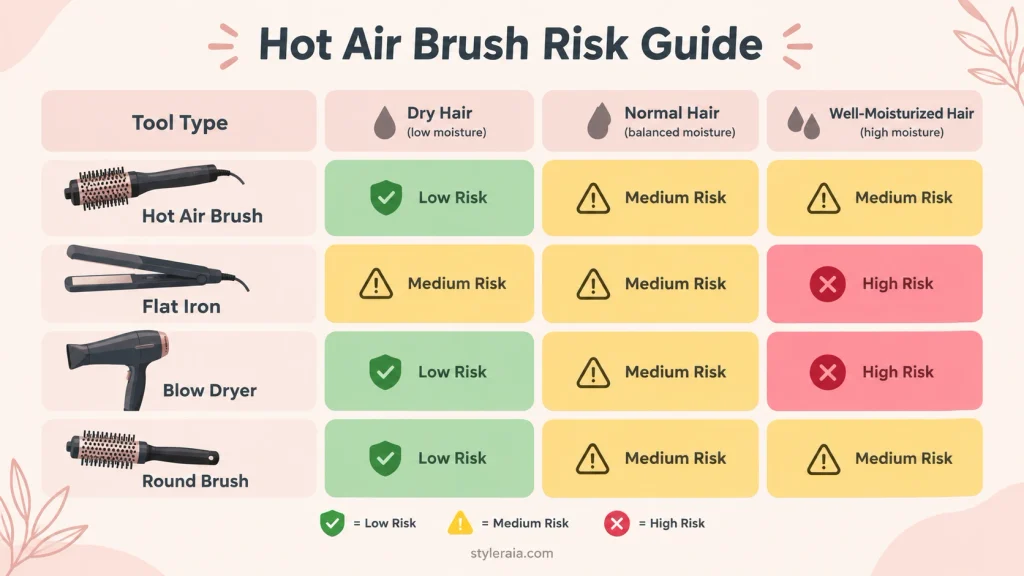
Which tool you hold matters as much as how wet your hair is, because hot-air-only brushes and heated-plate brushes follow opposite rules. A hot air brush is a brush with built-in heated airflow, used to dry, smooth, and add volume to hair. Some models add heated plates, covered in what a hot air brush is. Hot-air-only brushes suit damp hair, while heated-plate brushes belong on fully dry hair.
| Tool type | Wet hair (dripping or towel-wet) | Damp hair (about 80% dry) | Fully dry hair |
|---|---|---|---|
| Hot-air-only brush | Avoid: too little drying power, so heat lingers. | Intended use | Caution: can dehydrate, so use the lowest heat. |
| Heated-plate brush | Avoid: plates on wet hair can injure the cuticle. | Avoid | Intended use, lowest effective heat |
| Combination brush | Avoid | Airflow mode only | Plate or airflow mode, low heat |
Basis: manufacturer and stylist guidance, not clinical testing.
| Your hair | Adjustment |
|---|---|
| Fine or thin | Lowest heat, fewest passes |
| Damaged or bleached | Lowest heat, scheduled heat-free days, deep conditioning |
| Color-treated | Lower heat. Consumer Reports notes processed hair is more vulnerable to hot tools. |
| Thick or coarse | Tolerates more heat, but raise one level at a time. |
| Curly or textured | Same rules, with sessions spaced further apart according to consumer reports |
Save or screenshot this Hot Air Brush Risk Chart. It covers which tool mode fits which hair moisture level.
Stylists and brands differ on damp hair, so check your manual. If it says nothing, never go wetter than damp, and keep plates for dry hair only.
Can You Use a Hot Air Brush on Wet Hair?
No. Neither type of heated brush should touch dripping or towel-wet hair. Airflow brushes lack a full-size dryer’s power, so wet hair stays wet and heat lingers. Rough-dry or air-dry hair to about 80% dry before the brush touches it.
Squeeze out water, towel off, and then let hair dry partway. The AAD recommends partial air drying before styling and blow drying less often each week. aad
Is a Hot Air Brush Bad for Your Hair? Verdict by Hair Type
Not automatically. The risk depends on how fragile your hair already is. Fine, damaged, and color-treated hair carry the highest risk and need the lowest settings.
Fine or thin hair
Fine strands heat up quickly. Use the lowest setting, one slow pass per section, and stop once the hair is dry.
Damaged or color-treated hair
Hair that is already dry, bleached, or brittle has little margin for error. Cut frequency first, then heat. Full guide → Hot Air Brush for Damaged Hair: What Actually Helps (and Hurts)
Thick, coarse, or curly hair
Thicker hair tolerates more heat, but raise the setting one level at a time. Frizz after styling usually points to heat set too high or hair too wet. Full guide: Does a hot air brush make hair frizzy?
Is It Okay to Use a Hot Air Brush Every Day?
Daily use is not recommended, and no source reviewed for this article sets a proven safe daily limit, so a cautious ceiling is every other day. The AAD limits flat irons to dry hair, low or medium heat, and no more than every other day. Borrow that ceiling for a hot air brush. aad
Some stylists suggest two to three sessions a week as a practical target. Treat that as a rule of thumb, not research. If you must style daily, use damp hair, the lowest heat, and heat protectant, and skip a day whenever your ends feel dry.
How to Use a Hot Air Brush With Less Damage
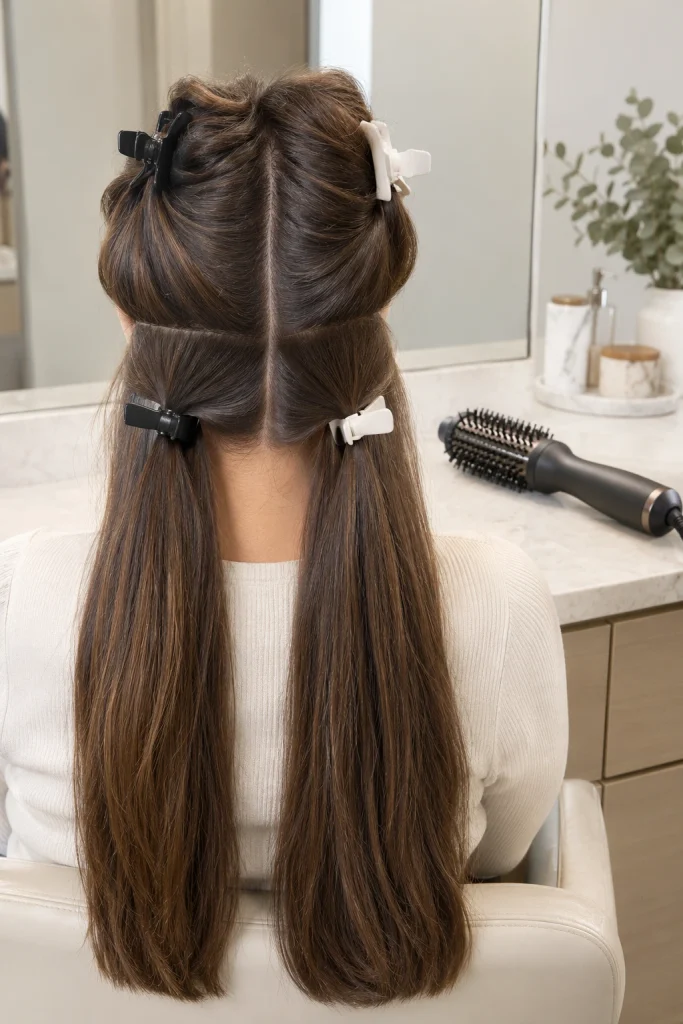
Six habits remove most of the risk: protect, section, start low, keep moving, set cool, and rest. Follow these in order.
- Get hair to about 80% dry. Squeeze out water, towel off gently, and then air-dry or rough-dry until damp, not wet.
- Apply heat protectant. Heat protectant is a spray or cream that coats strands to slow moisture loss, used before any hot tool. Consumer Reports notes it can lessen breakage. consumerreports
- Split hair into four sections. Clip up the crown, left side, right side, and back, then work one section at a time.
- Start on the lowest setting. Raise it one level only if your hair isn’t responding.
- Glide slowly from roots to tips, and never hold the brush still. For a curled end, hold 5–10 seconds, press the cool button if your brush has one, then release.
- Rest between sessions. Skip heat for a day or two, and use braids or rollers when you want shape without heat.
Full guide → How to Use a Hot Air Brush: A Step-by-Step Guide
What to Look For in a Hot Air Brush
Choose a brush with adjustable temperature, because every step above depends on lowering the heat. A fixed-heat model gives fine and thick hair the same temperature.
Hot Air Brush vs Flat Iron vs Blow Dryer: Which Is Gentler?
None of the sources reviewed offers a head-to-head test, so gentler depends on how you use each tool. Claims that brushes are kinder come mostly from brands and stylists, not independent testing. For details, see the hot air brush vs. hair dryer comparison and the hot air brush vs. flat iron breakdown.
| Tool | How heat reaches hair | Main risk | Rule from sources |
|---|---|---|---|
| Hot air brush | Heated air through a brush, sometimes plates | Overheating wet hair or lingering in one spot | About 80% dry, keep moving. |
| Flat iron | Hair pressed between hot plates | Direct contact and hot spots | AAD: dry hair, low or medium heat, every other day at most |
| Blow dryer | Hot air from a distance | Heat too close or too hot | Towel first, medium heat, about 6 inches |
Is it healthier to blow dry or air dry?
Neither is clearly healthier, and that surprises many people. Consumer Reports found little evidence that either method is better and notes careful blow-drying at the right distance and temperature can cause less damage than air-drying. Processed hair is the exception, where hot tools can be more damaging than air drying.
Common Mistakes and Warning Signs With a Hot Air Brush
Dry ends, new frizz, and hair that stretches without bouncing back are the earliest warning signs of heat damage. Spotting them early is easier than repairing them later.
Common mistakes:
- Using a heated-plate brush on wet hair
- Skipping heat protectant
- Starting on the highest setting
- Holding the brush in one spot
- Styling every day with no rest days
| Warning sign | Likely cause | Fix |
|---|---|---|
| Dry, straw-like ends | Heat too high or too many passes | Lower the setting, shorten sessions, and deep condition. |
| New frizz | Roughened cuticle | Lower heat, and add protectant. |
| Split ends or snapping | Repeated heat plus tension | Take heat-free days, and trim ends. |
| Hair stretches but won’t spring back | Lost elasticity | Pause the heat, and handle gently. |
| Color fading faster | Heat on processed hair | Lower the setting |
| Shedding or thinning patches | May not be hot | See a dermatologist |
When to Stop Heat Styling or See a Professional
Stop heat styling and see a dermatologist if you notice shedding, thinning patches, or scalp pain. Persistent shedding or scalp symptoms call for a dermatologist, not a new styling tool. Breakage can make hair look thinner, but only a professional can tell the difference.
An honest limit: research on hot air brushes specifically is thin. This guide applies general heat-styling guidance from the AAD and Consumer Reports. So is a hot air brush safe for hair? It is safe enough with controls, and never risk-free.
Quick Answers: Hot Air Brush and Hair Health FAQ
Is it okay to use a hot air brush every day?
Daily use is not recommended. The American Academy of Dermatology advises using heat tools as infrequently as possible. No source reviewed sets a proven daily limit for hot air brushes. If you style often, use damp hair, the lowest heat, and heat protectant, and skip days when your hair feels dry. healthday
What is the healthiest way to brush your hair?
Brush as little as needed. The American Academy of Dermatology says wet hair breaks more easily when brushed, and brushing 100 strokes a day can cause split ends. People with tightly curled or textured hair are the exception and should brush while wet to reduce breakage. aad
What is the healthiest way to heat style your hair?
Use the lowest effective temperature on partly air-dried hair, apply heat protectant first, and keep the tool moving instead of holding it in one spot. The American Academy of Dermatology also recommends the coolest setting available. Heat-free days between sessions give hair time to recover. healthday
Is it healthier to blow dry or air dry hair?
Neither is clearly healthier. According to Consumer Reports, little evidence favors either method, and careful blow drying can cause less damage than air drying. Towel off first, use medium heat about 6 inches away, and add heat protectant. Already processed hair often does better air dried.
Which is better, a hair straightener or a hot air brush?
Neither wins universally. A straightener presses hair between hot plates and suits dry hair only, while a hot air brush moves heat through a brush. No source reviewed offers a controlled comparison, so settings and technique matter most. See the full comparison.
What is the healthiest way to dry my hair?
Wrap hair in a towel to remove excess water, then let it air-dry partway before styling, as the American Academy of Dermatology recommends. If you blow dry, use medium heat about 6 inches away with heat protectant. Fully air drying is gentlest on bleached or otherwise processed hair.
What’s the most damaging thing to do to your hair?
No single habit tops every list, but dermatologists point to frequent high heat, rough handling of wet hair, and constant tension styles. The American Academy of Dermatology warns that braids, cornrows, ponytails, and extensions worn continuously can cause permanent hair loss if the pulling continues. aad
What to Do Next
You can now answer “is a hot air brush bad for your hair?” for yourself: it depends on heat, moisture, and frequency, and you control all three.
- If your hair is already dry or brittle, start with what helps and hurts damaged hair.
- To lock in technique, follow the step-by-step hot air brush guide.
Pingback: What Heat Setting to Use on a Hot Air Brush? (By Hair Type)
Pingback: How Often Can You Use a Hot Air Brush? Hair Type Chart