
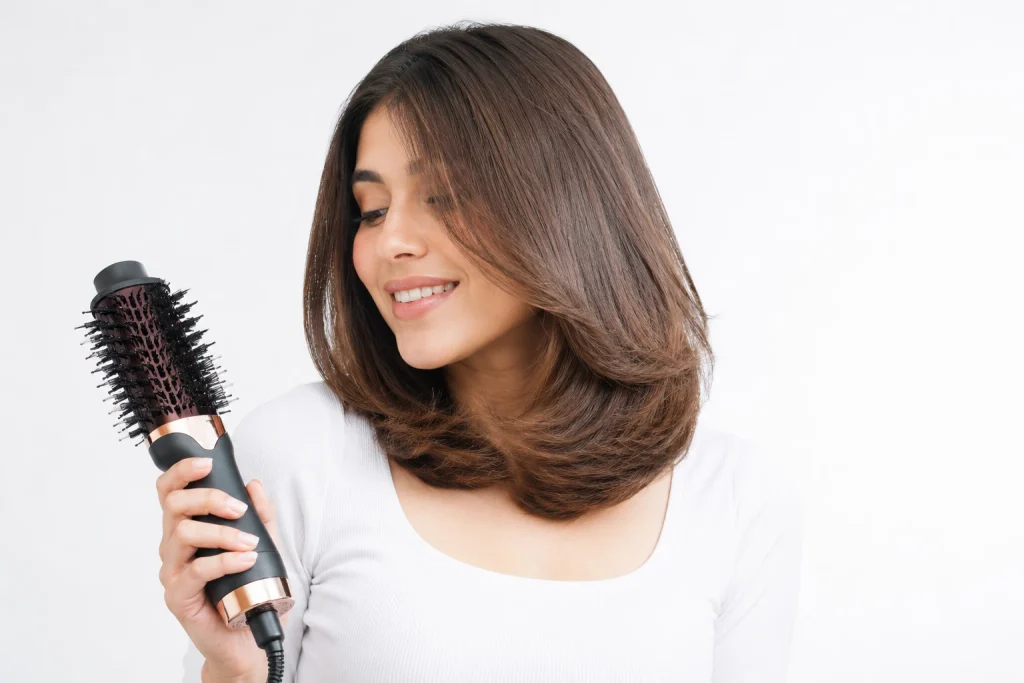
It took you an hour to get your hair looking right, and now you’re bracing for it to droop by morning. Relax: how to make a blowout last longer is mostly about nine small habits, and the biggest ones happen before bedtime.
Quick Answer: A blowout lasts longest when every section is completely dry and left to cool before anyone touches it. Protect it from moisture with a shower cap, sleep with your hair in a loose high bun, and freshen the roots with dry shampoo. Expect roughly two to four days, depending on your hair type and the humidity.
What You Need to Know
- Blowouts usually fade because of moisture, scalp oil, and creases, not because the styling was done wrong.
- Hair can feel dry on the outside while still holding a little water inside, so finishing thoroughly pays off.
- Heat bends the shape, and cooling locks it in. Handling hair while it’s warm loosens the result.
- Sleeping, showering, and sweating cause most of the damage, and each has an easy workaround.
- Results depend on your hair type, so treat the 5-day calendar below as a guide rather than a promise.
How Long Does a Blowout Usually Last?
A blowout is a finished look created by drying hair with heat and a brush, used to get a smooth, full shape. Most careful blowouts stay in good shape for roughly two to four days, and a dry climate can stretch that further.
That range reflects common stylist guidance, not measured data. Several things decide how many days you actually get:
- Hair type: fine hair usually loses lift first, while thick hair keeps its shape but puffs up in humid air.
- Weather: moisture in the air soaks back into strands.
- Scalp oil: roots often droop before the ends do.
- Prep: product buildup or damp patches cut the lifespan short.
So yes, two days is realistic for most people. Reaching day four takes the habits below.
How to Make a Blowout Last Longer: 9 Steps You Can Follow Tonight
To make a blowout last longer, dry every section completely, let it cool before handling it, add a light hold, and then guard it against moisture, friction, and oil. Work through the nine steps in this order.
1. Start with clean, lightly conditioned hair
Use a shampoo that rinses without leaving a film, and apply conditioner only from the mid-lengths down. Conditioner at the scalp drags roots down within hours. Rinse until no product remains, because residue leaves strands limp.
2. Start by applying a lightweight styling product, then spray on a heat protectant so your strands stay shielded from hot tools.
Pick a light styling product that suits your hair type, then layer on a heat protectant. Fine hair tends to respond well to light mousse or root spray, while thick or frizz-prone hair prefers a smoothing cream. Start with a coin-sized amount for fine hair, a bit more for thick hair, and comb it through evenly.
3. Dry every section completely.
Divide your hair into 1- to 2-inch sections and dry every section fully. According to many stylists, leftover dampness is the main culprit behind a blowout that doesn’t last. A strand can feel dry on the surface and still hold some water inside, so make one extra pass over each section.
4. Use the right brush technique.
Pull each section lightly taut and move the brush slowly down from the roots to the tips. A bigger barrel gives straighter results, and a smaller one gives more curl. With a hot air brush, begin on damp, not dripping, hair and keep every pass steady. For a walkthrough, see our guide to a hot air brush for beginners.
5. Let it cool before you touch it.
Hit each section with a few seconds of cool air, then leave it alone until it feels cool to the touch. Warmth makes the shape pliable, and cooling sets it, so brushing or running fingers through warm hair undoes part of the set. If your tool has a cool setting, this is where it helps most. If not, let each section rest for a minute or two before moving on.
6. Set the shape with light hold.
Set your style with a light veil of aerosol hairspray, holding the can roughly 12 inches from your head. Spraying too near leaves clumps, and using too much makes the roots feel stiff. One or two quick passes over your whole head is plenty.
7. Sleep on it the right way.

Pull hair into a loose high bun or a large, soft scrunchie before bed. Tight elastics leave dents, so pick a soft tie or a claw clip. A silk or satin scarf or pillowcase cuts friction, which limits frizz and flat spots overnight.
8. Keep moisture off it.
Wear a snug shower cap while you shower and a cotton headband when you wash your face or work out. Steam, sweat, and humid air all send water back into the strand, which lets hair bend out of shape. Give your hairline extra care, since baby hairs frizz there first. For the science behind this, see the American Academy of Dermatology.
9. Refresh instead of rewashing.
On day two or three, spray dry shampoo at the roots, wait about a minute, then brush it out. If the shape has slipped, rework a few small dry sections with your brush for 20 to 30 seconds each. A tiny dab of smoothing serum can tame light frizz, and our guide to using a hot air brush on frizzy hair goes into more detail.
The 5-Day Blowout Care Calendar
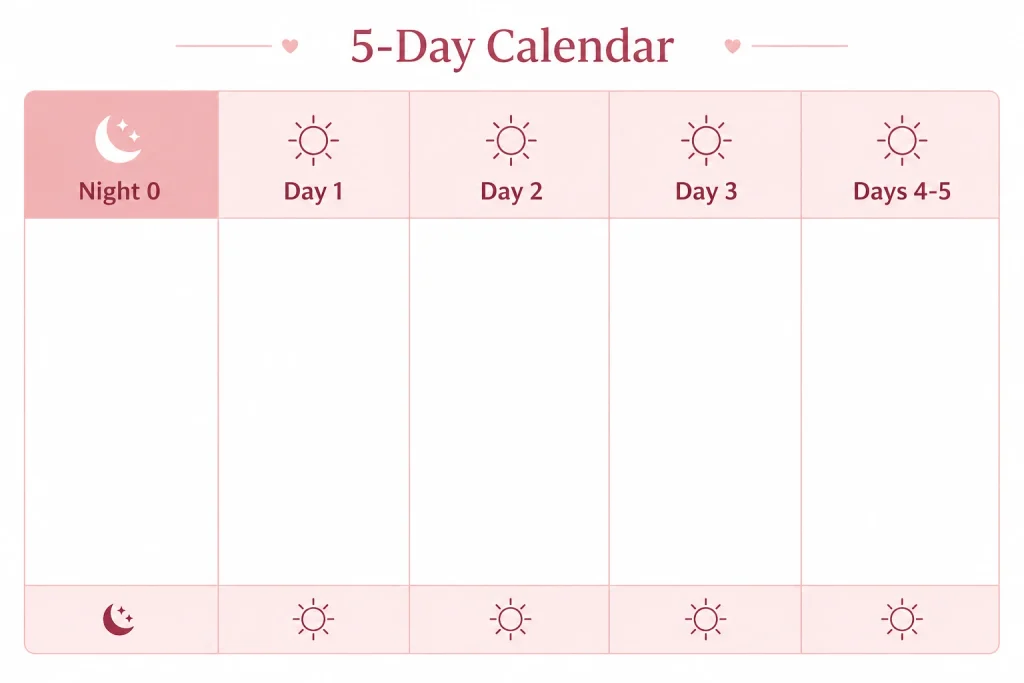
Use this typical schedule to know what to do each day. Results differ by hair type.
| Day | Do | Avoid | Rescue move |
|---|---|---|---|
| Night 0 | Let hair cool fully, then tie a loose high bun on silk. | Tight elastics, or sleeping on damp hair | Re-clip any section that looks flat. |
| Day 1 | Wear a shower cap and keep your hands off. | Touching hair with oily fingers | Dust a little dry shampoo on the roots if needed. |
| Day 2 | Wear a headband to work out and use dry shampoo at the roots. | Brushing too often | Dry-brush loose sections for 20–30 seconds. |
| Day 3 | Freshen the roots and smooth the ends. | Piling product over residue | Re-section and reshape the front. |
| Days 4–5 | Decide whether it’s time to wash. | Adding more product | Wash and start fresh. |
Save or screenshot this 5-Day Blowout Care Calendar. It tells you what to do every night and morning, so there’s no guesswork.
Why Did My Blowout Fall Flat? Troubleshooting Guide
Most blowouts that collapse early trace back to one of five causes. If yours isn’t holding up, check this table first.
| Symptom | Likely cause | Fix |
|---|---|---|
| Roots droop by evening. | The scalp area is not fully dry, or the conditioner is too close to the roots | Dry the roots longer and keep conditioner off the scalp. |
| Frizz along the hairline | Steam, sweat, or humidity | Use a shower cap and a headband. |
| Dents or kinks | Tight elastic or bun | Switch to a soft scrunchie or claw clip. |
| Style drops within hours | Handled or brushed while still warm | Wait until it’s fully cool. |
| Greasy roots on day two | Scalp oil | Use dry shampoo at the roots. |
Blowout Tips by Hair Type
Your ideal routine shifts a little depending on hair type, so tweak the steps above like this:
- Fine or thin hair: Choose a light volumizing product, skip rich creams, and give the roots extra drying time.
- Thick or coarse hair: Work in smaller sections with a smoothing cream, and plan for humidity-driven frizz.
- Curly or textured hair: Moisture can bring curl back fast, so protect the style closely. See our guide to using a hot air brush on curly hair.
- Damaged hair: Keep the heat low and restyle less often. Our guide to a hot air brush for damaged hair covers safer settings.
Blowout FAQ
How do you keep a blowout last all day?
Dry every section completely, give it time to cool, and finish with a light mist of hairspray. Keep your hands out of your hair, and wear a headband if you expect to sweat. Together these steps protect the shape from heat, oil, and humidity.
How long do blowouts typically last?
With careful handling, many last about two to four days, though results vary. Fine hair often loses volume sooner, and humid weather shortens any blowout. A loose bun at night and dry shampoo at the roots help stretch it.
Will a blowout last 2 days?
For most people, yes. A thoroughly dried and fully cooled blowout, protected by a loose bun at night and a shower cap, usually holds for two days. Oily roots or damp weather can cut that short, but dry shampoo helps bridge the gap.
Can a blowout be permanent?
No. A blowout is a temporary style that changes once hair gets wet. Semi-permanent smoothing services are often confused with it, but they are chemical treatments with their own risks, so talk with a licensed stylist before choosing one.
Can you shower after a blowout?
Yes, as long as you cover your hair with a snug shower cap and keep water and steam away from it. Even indirect steam can soften the shape, so keep the shower short and avoid wetting the hairline.
Is a blowout better on clean or day-old hair?
Clean hair is the usual starting point, since residue can weigh strands down. Some people with very fine, slippery hair find that slightly textured, day-old hair holds a style better, so try both and compare.
When to Ask a Stylist Instead
Book a licensed stylist if you notice breakage, a burning or irritated scalp, or hair that feels brittle after heat styling. No routine can promise a set number of days, and damaged hair may need care before it can hold any style.
What to Do Next
Now that you know how to make a blowout last longer, the next move is perfecting your technique. Begin with our Hot Air Brush for Beginners Guide, then read what a hot air brush is to understand the tool, and pick one when you’re ready to compare options.
Pingback: How Often Can You Use a Hot Air Brush? Hair Type Chart