
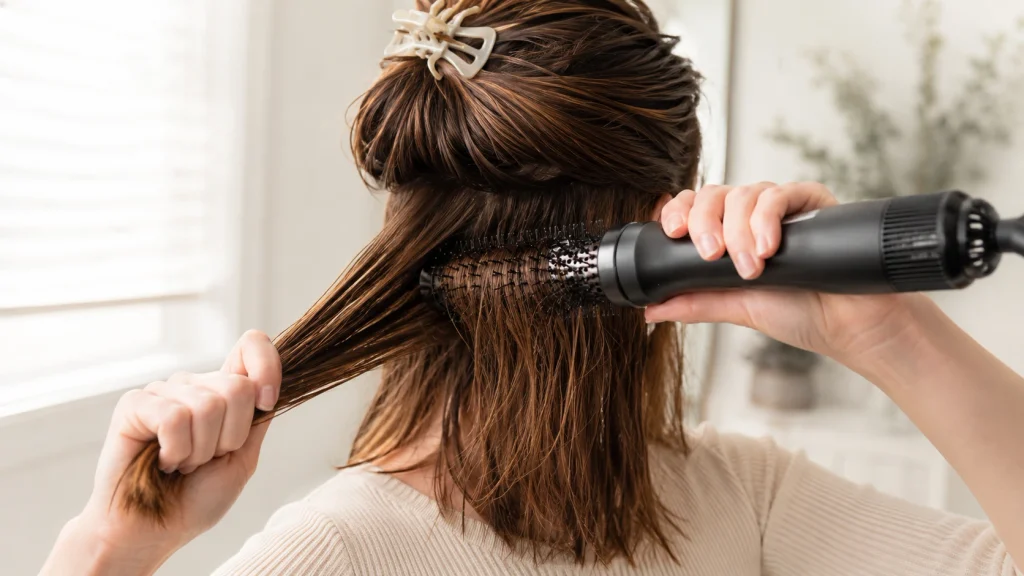
You’re standing at the mirror with a hot air brush, damp hair, and a memory of last time’s bumps and tangles. Here is how to use a hot air brush so the first pass works: damp hair, small sections, steady tension, and a cool finish. Below are each step, the settings that suit your hair, and fixes for when a section goes wrong. If you’re still sorting out what the tool is, our plain-English guide to hot air brushes covers the basics.
Quick Answer: How Do You Use a Hot Air Brush?
Quick Answer: To use a hot air brush, start with hair that is about 80% dry and protected with heat spray. Clip hair into 2-inch sections, then glide the brush from roots to ends while holding the hair taut. Turn the ends under once, then let each section cool before releasing it.
What You Need to Know
- Use damp hair, roughly 80% dry, not dripping and not fully dry.
- Smaller sections (about 1–2 inches) fix most bumps and frizz.
- Keep the brush moving and apply heat protectant first.
- The cool-down sets the style, so don’t skip it.
- Medium hair typically takes 10–20 minutes. Thick hair and first attempts take longer.
Table of Contents
Should You Use a Hot Air Brush on Wet or Dry Hair?
A hot air brush works best on damp hair, about 80% dry. Soaking wet hair sits under the brush’s gentle airflow for too long, while fully dry hair gains little beyond smoothing.
Towel-dry first. If hair is still wet, rough-dry it with a hair dryer until it stops feeling cold and heavy. A hot air brush is a round brush with a built-in heating element and fan, used to dry and shape hair in one pass. That fan moves less air than a dryer, which is why starting damp saves time. Our explainer on how a hot air brush works covers the airflow side.
Dry hair is fine for second-day touch-ups. Check your model’s manual, because some tools specify damp or dry use.
What Do You Need Before You Start?
You need the brush, two or more hair clips, a heat protectant, and a towel. Barrel size matters more than most beginners expect.
- Small barrel (about 1 inch or less): short hair, tighter bend.
- Medium barrel (about 1.5 inches): shoulder-length hair, everyday smoothness.
- Large barrel (about 2 inches): long or thick hair, more volume.
Use plastic or claw clips. Tight elastics can cause breakage.
“Heated brush” can mean two tools. A hot air brush blows heated air through the brush. A heated straightening brush has hot plates or bristles and no airflow. This guide covers the first. For help choosing between barrel types, see our blow dryer brush guide.
How to Use a Hot Air Brush, Step by Step
Seven steps cover the whole process:
- Prep damp, protected hair.
- Section and clip.
- Pick your barrel and heat.
- Glide root to tip with tension.
- Lift at the roots for volume.
- Turn the ends once.
- Cool down to set.
Medium-density hair typically takes 10–20 minutes with this method.
Step 1: Prep damp, protected hair
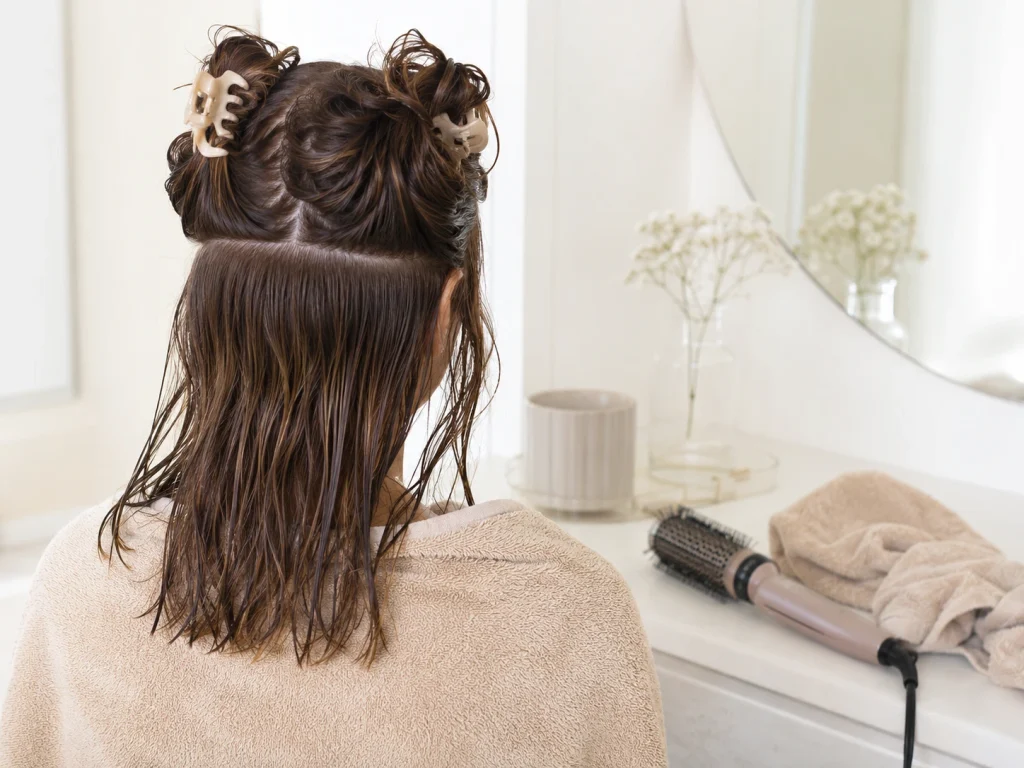
Towel-dry, then rough-dry to about 80% dry. Spray heat protectant through the hair and comb it in. Starting closer to dry cuts total styling time.
Step 2: Section and clip
Clip the top half of your hair up. Work the bottom half in sections about 2 inches wide. For thick hair, use sections around 1 inch, since big sections are the most common cause of bumps.
Step 3: Pick your barrel and heat
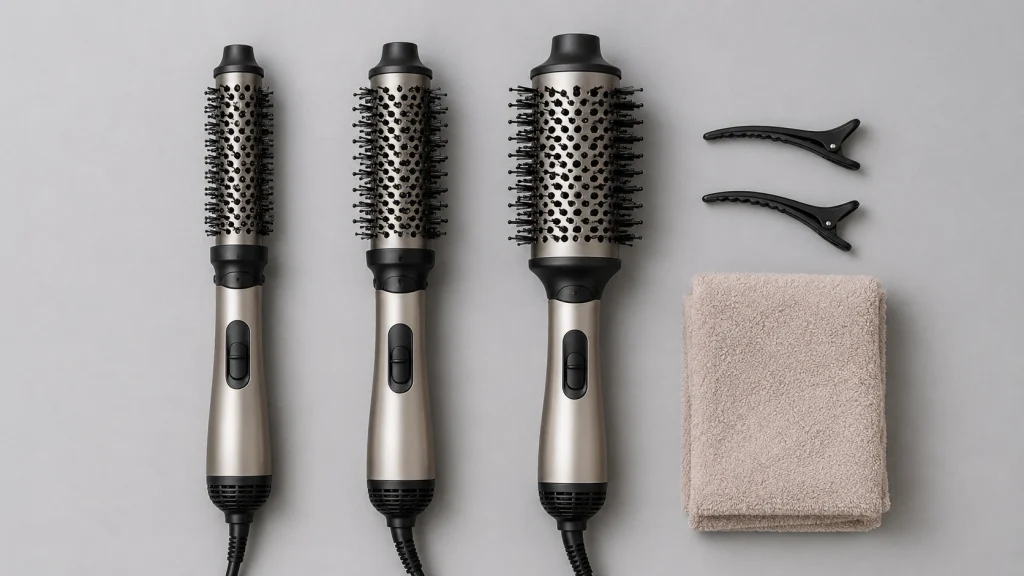
Choose a barrel from the table below. Start on low or medium heat and raise it only if a section isn’t drying smooth after two passes. Give the tool the warm-up time its manual specifies.
Step 4: Glide root to tip with tension
Drape a section over the brush near the roots. Pull the hair gently taut with your free hand and brush downward slowly, as if you were brushing in slow motion. Keep the brush moving, because holding heat in one spot is how hair gets fried.
Step 5: Lift at the roots for volume
For volume, hold each section straight out from your head as you brush. At the crown, hold it straight up. For a sleeker finish, brush straight down instead. If volume is your main goal, see how a hot air brush compares with a volumizer.
Step 6: Turn the ends once
At the bottom of each section, rotate the brush one full turn under (or up, for a flip). One turn is enough for smooth tips. Wrapping the hair around the brush repeatedly is what causes tangles.
Step 7: Cool down to set
Switch to the cool setting if your tool has one, or hold the section for a few seconds before releasing it. Heat shapes the hair, but the style sets as it cools. That’s why a longer blast of heat doesn’t make a style last longer, and a cool finish often does more.
Release the top clip and repeat Steps 4–7 on the upper section.
Hot Air Brush Settings by Hair Type
Match barrel, heat, and section size to your hair type to avoid most problems. When in doubt, use the lowest heat that dries a section smooth.
| Hair type | Barrel | Heat | Section size | Start dampness |
|---|---|---|---|---|
| Fine or thin | Medium (~1.5 in) | Low–medium | ~1–2 in | ~80–90% dry |
| Medium | Medium–large | Medium | ~2 in | ~80% dry |
| Thick or coarse | Large (~2 in) | Medium–high, with protectant | ~1 in (more time) | ~80% dry |
| Color-treated or damaged | Medium | Low–medium | ~1 in | ~80–90% dry |
| Short (bob, pixie) | Small (≤1 in) | Low–medium | ~1 in | ~80% dry |
| Wavy or curly | Medium–large | Medium | ~1 in | ~80% dry (expect smoothing, not curl definition) |
Save or screenshot this Hot Air Brush Settings Chart. It covers barrel, heat, and section size for every hair type.
These are general starting points, not lab-tested results. Your manual and your hair’s response come first.
Using a Hot Air Brush on Short Hair
Short hair needs a smaller barrel, low-to-medium heat, and small sections. Short hair overheats faster, so keep the brush moving.
Use a barrel of about 1 inch or less. Start at the nape and work upward in sections around 1 inch wide, turning the tips under once. Style bangs while they’re damp so they dry smooth.
Troubleshooting: Bumps, Frizz, Flat Roots, and Tangles
Most problems trace back to wet hair, big sections, or low tension. Bumps almost always mean the section was too big or too wet.
| Problem | Likely cause | Fix |
|---|---|---|
| Bumps or waves | Section too big, hair too wet, loose tension | Smaller sections, dry closer to 80%, pull taut |
| Frizz | Too wet, too much heat, too many passes | Lower heat, fewer passes, finish on cool |
| Flat roots | Hair brushed straight down at the roots | Lift sections up and out, then cool-set |
| Flipped or limp ends | Wrong turn or no cool-down | One full turn under, hold to cool |
| Takes too long | Sections too thick or hair too wet | Rough-dry first, thinner sections |
| Hot scalp or burning smell | Heat too high or brush held still | Lower heat, keep moving, stop if it persists |
If hair tangles in the brush:
- Turn the brush off and let it cool for a moment.
- Hold the hair near your scalp to take pressure off the roots.
- Unwind the hair slowly in the opposite direction of the rotation.
- Comb out the section gently. Never yank.
If you can’t free it, stop and ask a stylist for help rather than cutting or pulling it out.
How Often Can You Use a Hot Air Brush Without Damage?
No single frequency suits everyone, but heat protectant and constant movement reduce risk. Damage depends on temperature, how long heat stays in one spot, and how often you repeat it.
Use heat protectant every time. Choose the lowest setting that works, and give hair rest days if it feels dry or starts to break. Dermatologists commonly advise limiting heat and protecting hair when blow-drying. See the American Academy of Dermatology’s hair care guidance for their current recommendations.
Stop and see a stylist or dermatologist if you notice breakage, scalp irritation, or burns. Keep the tool and cord away from water, and follow your manual’s safety instructions. add a consumer-safety source such as the CPSC, URL to be verified.
FAQ
Do you use a hot brush on wet or dry hair?
A hot air brush works best on damp hair, about 80% dry. Towel-dry first, then rough-dry with a hair dryer if needed. Soaking wet hair takes too long under a brush’s gentle airflow, and fully dry hair gains little except touch-ups. Always check your model’s manual, because some tools specify damp or dry use.
How do I style my hair with a hot air brush?
Start with damp, protected hair, clip it into 2-inch sections, and glide the brush from roots to ends while holding each section taut. Lift at the roots for volume, turn the ends under once for a smooth bend, and let each section cool before moving on. Expect roughly 10 to 20 minutes for medium-density hair.
How to use a heated brush?
A heated brush usually means one of two tools. A hot air brush blows heated air through a round brush, so you section hair and glide it root to tip. A heated straightening brush has heated plates or bristles and no airflow, so it works on dry hair. Check which you own, then follow that tool’s manual.
How to use a hot air brush on short hair?
Choose a small barrel, around 1 inch or less, and keep heat on low to medium. Work in small sections from the nape upward, gliding from roots to ends and turning the tips under once. Style bangs while damp so they dry smooth. Short hair dries fast, so keep the brush moving to avoid overheating.
Can you use a hot air brush on curly hair?
Yes, but expect smoothing and stretching, not curl definition. Tight curls need small sections, a larger barrel, and patience, since the brush must pull each section taut. Some owners with very thick or coily hair report the brush struggles, and a heated straightening brush may suit them better. Always apply heat protectant first.
How long does it take to use a hot air brush?
Medium-density, shoulder-length hair typically takes 10 to 20 minutes once you’ve practiced. Thick or long hair can take 30 minutes or more, and first attempts run longer. Start with hair about 80% dry and use smaller sections to save time. Oversized sections are the most common reason styles drag on or come out bumpy.
Do I need heat protectant with a hot air brush?
Yes. A hot air brush applies direct heat to each section, so a heat protectant spray or cream is commonly recommended before drying. Apply it to damp hair, comb it through, and wait until the hair is no longer dripping. Check the label, because some products are made for damp hair and others only for dry hair.
What to Do Next
Now you know how to use a hot air brush, so the next question is how it stacks up against your current dryer. Read our breakdown of the hot air brush vs hair dryer difference to decide when each tool wins.
Pingback: How to Use a Hot Air Brush on Curly Hair
Pingback: Hot Air Brush for Frizzy Hair: What It Does and How to Use It - STYLERAIA
Pingback: Does a Hot Air Brush Make Hair Frizzy? Causes and Fixes