
You’re looking at a flat iron on your counter and a hot air brush in an online cart, and you can’t tell whether the hot air brush vs flat iron choice is a swap or an add-on. Good news: the two tools overlap less than they look, and the deciding factor is how wet your hair is when you start. If you’re new to the tool, our guide to what a hot air brush is covers the basics.
This article is based on manufacturer and stylist guidance and published research, not hands-on testing. Where evidence is thin, it says so.
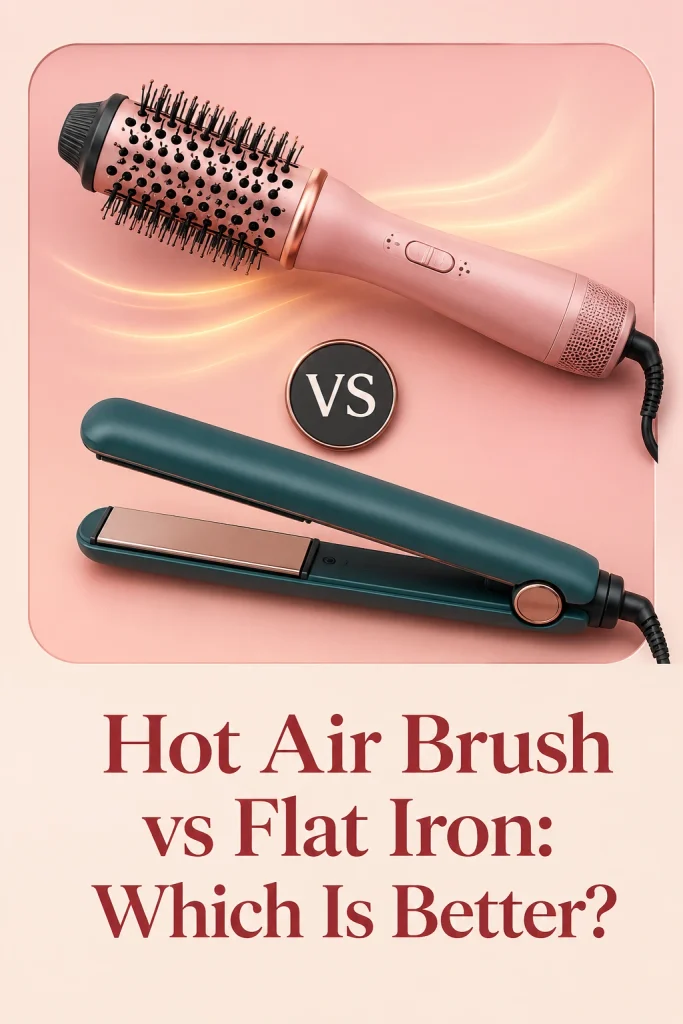
Quick Answer: Neither is better for everyone. A hot air brush uses heated airflow and bristles on damp hair (about 80% dry) for smoothing and volume. A flat iron clamps heated plates over fully dry hair to create ultra-straight, glass-smooth results. Pick a hot air brush if you want to finish drying and style with a single tool, or a flat iron if sleekness matters most.
What You Need to Know
- Use a hot air brush on damp hair. Use a flat iron only once your hair is completely dry.
- “Hot brush” can mean two different tools, and the rules for each differ.
- We found no independent test proving either tool is less damaging.
- A flat iron usually gives the flattest finish, and a hot air brush gives smoothness and body.
- Heat protectant and sectioning matter with both.
Table of Contents
Which Is Better: A Hot Air Brush or a Flat Iron?
No single tool is the best choice for every type of hair. A hot air brush suits people who want smoothness, volume and one tool for the final drying stage on damp hair. A flat iron suits people who want the flattest, sleekest finish on fully dry hair. Used the wrong way, either tool can harm your hair.
Pick the hot air brush if:
- you want to finish drying and style in a single pass
- You want lift at the roots and a smooth, bouncy finish.
- you want a brushing motion instead of clamping plates
Pick the flat iron if:
- you want the straightest, flattest result
- your hair is very curly or coarse
- you already blow dry fully before styling
Hot Air Brush vs Flat Iron at a Glance
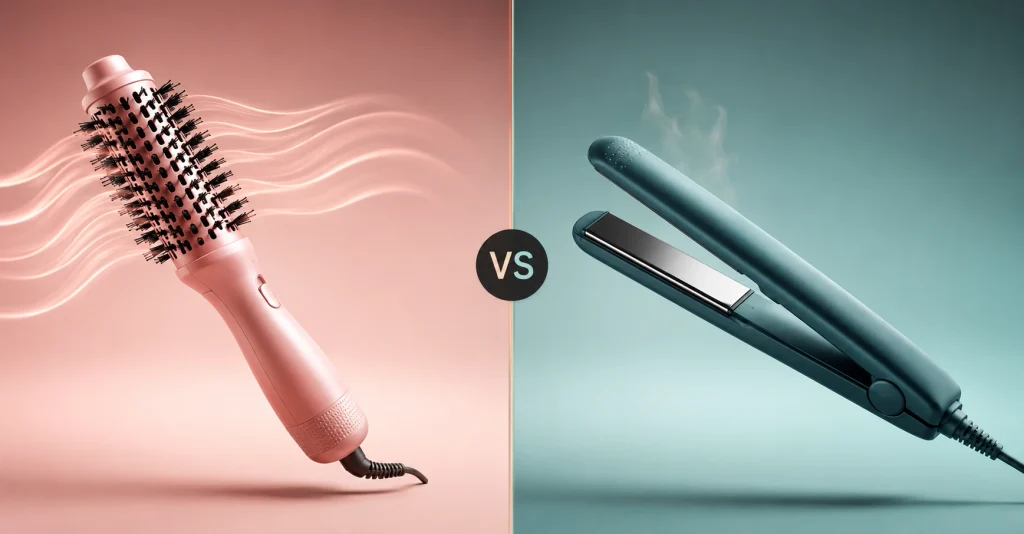
The core difference is heat delivery: airflow for the brush, direct plate contact for the iron.
| Hot air brush | Flat iron | |
|---|---|---|
| Heat delivery | Heated airflow through a brush head | Heated plates pressed on the hair |
| Hair state to start | Damp, about 80% dry | Fully dry |
| Main job | Finish drying, smooth, add volume | Straighten, sleek, flatten |
| Typical finish | Smooth, bouncy, with body | Flat, sleek, glassy |
| Technique | Brushing motion, slow glide, root to tip | Sectioning and plate pressure |
| Replaces a blow dryer? | Partly. It lacks full blow-dryer drying power | No. Hair must be dry first |
If you’ve seen hot air brush vs straightener comparisons online, they describe this same pairing.
How Does Each Tool Apply Heat to Your Hair?
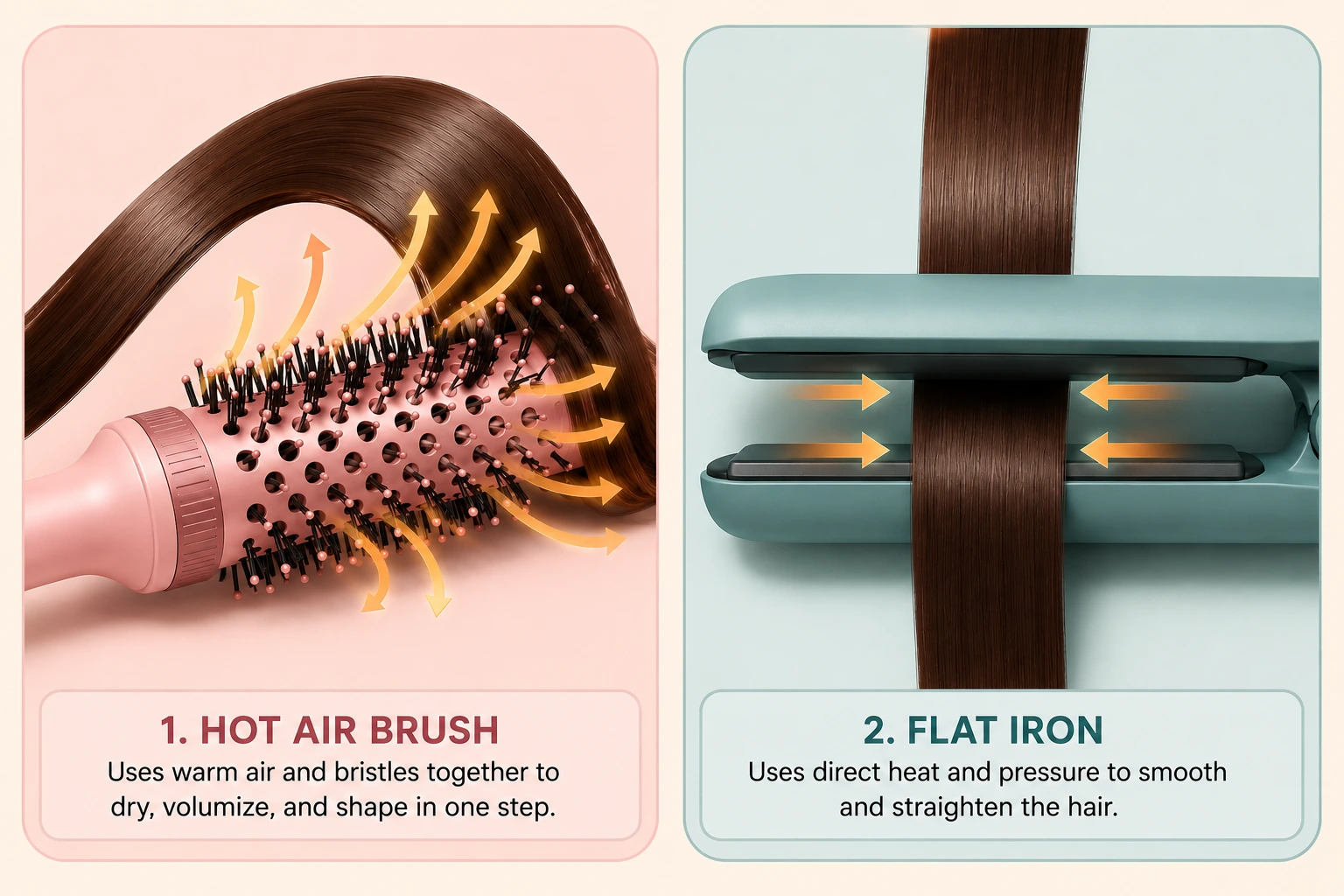
A hot air brush heats mostly with moving air, while a flat iron heats by touching the hair. That difference is why they need different starting conditions.
How does a hot air brush work?
A hot air brush is a styling tool that blows heated air through a brush head, used to dry and shape damp hair. Bristles guide the hair while the airflow smooths it. For the full mechanism, see how a hot air brush works.
How does a flat iron work?
A flat iron is a styling tool with two heated plates that clamp the hair, used to straighten or flatten dry hair. Heat passes straight from the plates into each section, so contact time matters.
Does “Hot Brush” Mean the Same Thing as a Hot Air Brush?
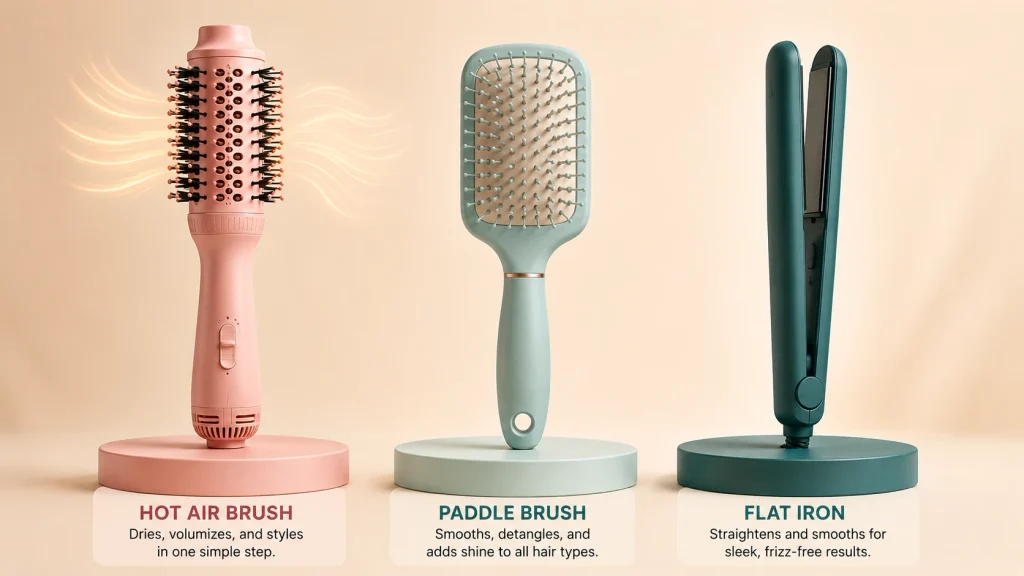
Not always, and that’s the naming trap. A thermal straightening brush heats ceramic plates or bristles and follows flat-iron rules: dry hair only. A hot air brush follows damp-hair rules. Some combination brushes do both, so read the product description before you buy.
The surprising part is that a hot brush vs flat iron comparison can be nearly a like-for-like comparison if the “hot brush” is a thermal straightening brush.
Which Is Less Damaging to Hair?
No independent head-to-head test settles this, so neither tool can be called safer for everyone. Heat damage depends on temperature, contact time and how wet the hair is.
Manufacturer and stylist guidance says heated brushes use less direct contact heat than plates. Some brands advertise figures like “3X less heat damage,” but those are marketing claims, not independent results.
The American Academy of Dermatology notes that repeated heat styling can harm your hair over time.
Which Tool Fits Your Hair State?
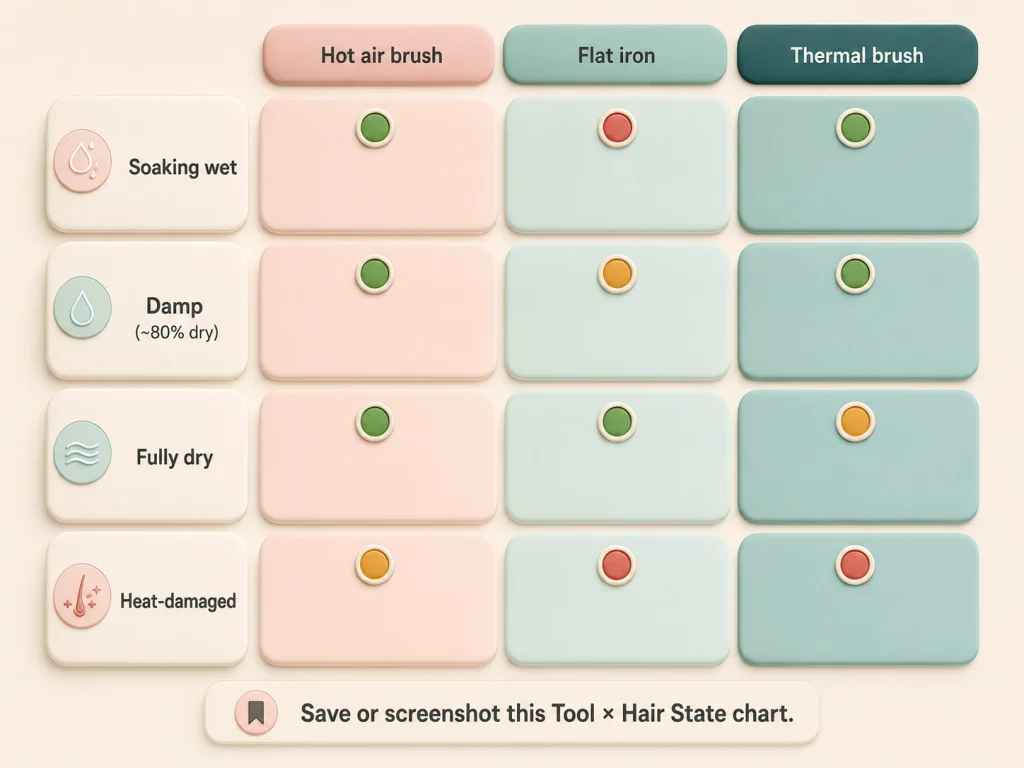
Match the tool to how wet your hair is, because wet hair and heated plates are the combination stylists warn against most.
| Hair state | Hot air brush | Flat iron | Thermal straightening brush |
|---|---|---|---|
| Soaking wet | No: towel or air dry first | No | No |
| Damp, about 80% dry | Yes | No: dry first | No |
| Fully dry | Caution: touch-ups or volume only, low setting | Yes | Yes |
| Heat-damaged or color-treated | Caution: low heat, fewer passes | Caution: low heat, fewer passes | Caution |
Save or screenshot this Tool × Hair State chart. This section explains which tool is the safer choice at each stage of dryness, from soaking wet to fully dry.
Not sure which to pick? Answer in order:
- Check your hair first: is it still damp or completely dry? If it’s damp, a hot air brush is the better fit. Dry points to the iron or a thermal brush.
- Do you want body or maximum flatness? Body points to the hot air brush. Flat points to the iron.
- Is your hair very curly or coarse? The iron usually straightens it further.
- Is your hair fine or damaged? Use lower heat and fewer passes with either tool.
Which Is Better for Your Hair Type?
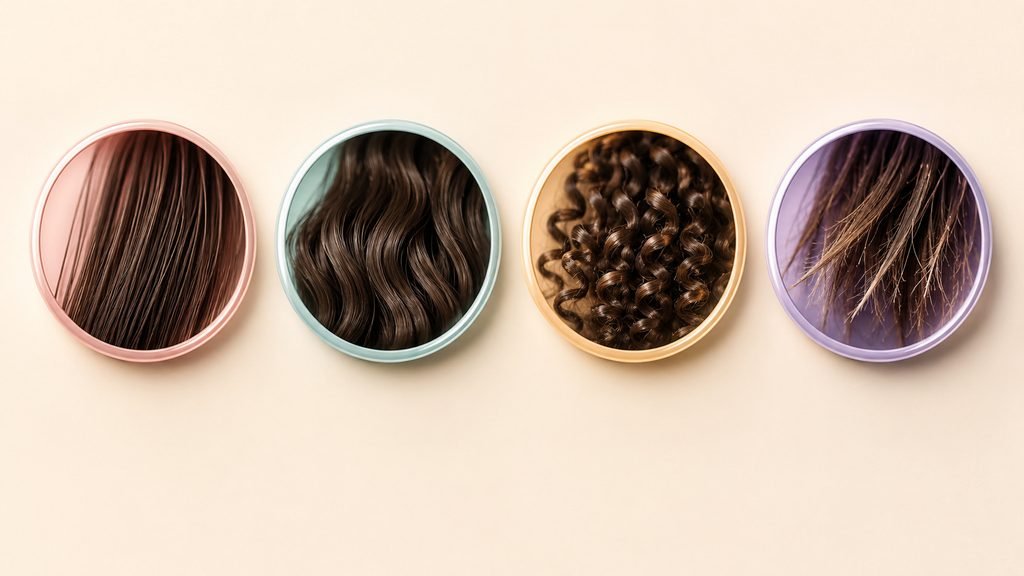
Hair thickness and texture change how much heat you need more than the tool does. Published stylist guidance says fine hair needs less heat, and very thick or coarse hair may need more.
- Fine hair: a hot air brush on low heat adds lift without pressing plates onto delicate strands.
- Thick or coarse hair: either tool works. Plan to work in more sections and set aside extra time.
- Curly hair: a flat iron on fully dry hair typically gets the straightest result. A hot air brush can loosen curls and leave them smoother and longer.
- Damaged or color-treated hair: lower the heat, reduce passes, and consider a stylist’s advice.
Is a Hot Air Brush a Substitute for a Flat Iron?
For smoothing, volume and everyday polish, often yes. For very straight, glassy hair, usually not. The hot air brush vs flat iron choice often ends up as “use one daily, keep the other for special occasions.”
A hot air brush also doesn’t fully replace a blow dryer on soaking hair. See the difference between a hot air brush and a hair dryer and our look at the blow dryer brush.
What About a Curling Iron?
Curling irons give you tight, defined curls by winding hair around a heated barrel, but that’s a separate decision from the one this page covers. A round hot air brush takes a gentler route, using warm airflow to form soft curls and waves.
What Mistakes Should You Avoid With Each Tool?
The most damaging mistake is pressing heated plates onto wet hair. Steer clear of these:
- Using plates on wet or damp hair.Make sure your hair is completely dry before using a flat iron or a thermal brush.
- Starting a hot air brush on soaking hair. Towel dry, then air dry to about 80% first.
- Skipping heat protectant. Apply it before you start, with either tool.
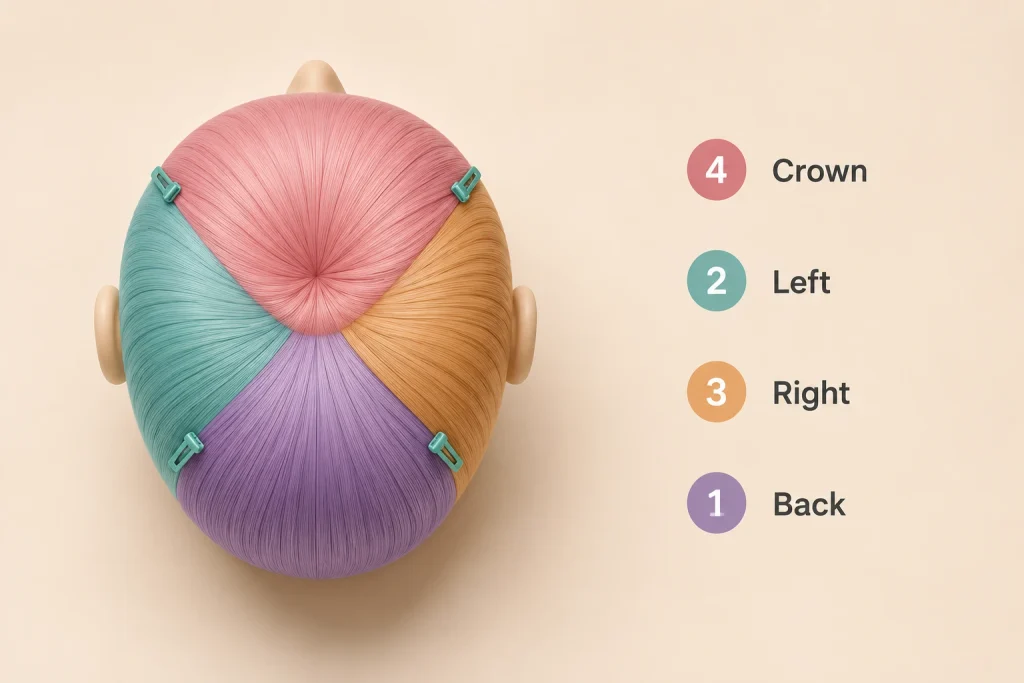
- Skipping sections. Divide hair into 4 sections (crown, left, right, back) so you don’t re-pass strands.
- Rushing. Glide slowly from roots to tips rather than yanking.
When Should You See a Stylist or Dermatologist?
See a stylist if heat damage is already visible, and a dermatologist for scalp problems or unexplained hair loss. Persistent breakage, burning or a sore scalp isn’t something a tool swap fixes.
FAQ
Does a hot air brush straighten as well as a flat iron?
It smooths and straightens well on many hair types, but a flat iron usually delivers the sleekest, flattest finish. A hot air brush works on damp hair with airflow and bristle tension, which gives a smooth, bouncy result. For very curly or coarse hair, a flat iron on fully dry hair typically gets straighter.
Is a hot air brush less damaging than a flat iron?
Not necessarily. Manufacturer and stylist guidance says heated brushes use less direct contact heat than plates, but we found no independent head-to-head test. Damage depends on temperature, contact time and how wet your hair is. Any heat tool can damage hair, so use heat protectant, work in sections and avoid repeated passes over the same strand.
Can you use a flat iron on damp hair?
Stylist guidance says no. Flat irons press heated plates directly against the hair, so the hair should be fully dry first. Heating wet hair with plates risks damaging the cuticle. If your hair is damp, finish drying it first, with a blow dryer or a hot air brush, and flat iron only after it is completely dry.
Can you use a hot air brush on dry hair?
You can, but it is not the best fit. Hot air brushes are designed for damp hair, and blowing hot air on dry hair can dehydrate it. For dry hair, a thermal straightening brush or flat iron with heat protectant suits better. If you only want volume or a quick touch-up, use a low setting and short passes.
Is a hot brush the same as a hot air brush?
Not always. A hot air brush blows heated air through a brush head and works on damp hair. A thermal straightening brush heats ceramic plates or bristles and works like a flat iron on dry hair. Some combination brushes do both. Check the product description before buying, because the hair state rules differ.
Do you still need heat protectant?
Yes. Stylist guidance recommends heat protectant with both tools, because any level of heat can dehydrate and damage hair. Apply it before you start, then section the hair so you do not pass over the same strand repeatedly. A protectant reduces risk but does not make heat styling harmless.
Which is faster?
A hot air brush usually saves a step because it dries the last 20% of dampness and styles at once, while a flat iron needs fully dry hair first. Total time still depends on hair thickness, length and how many sections you make. We found no published timing comparison, so treat speed claims from sellers cautiously.
What to Do Next
Now that you can tell the tools apart, these are your logical next steps:
- Learn the mechanics in how a hot air brush works.
- Compare it with a different tool in the hot air brush vs hair dryer difference.
Pingback: Hot Air Brush for Beginners: A Simple 7-Step Guide
Pingback: How to Use a Hot Air Brush on Curly Hair
Pingback: Does a Hot Air Brush Cause Heat Damage?