
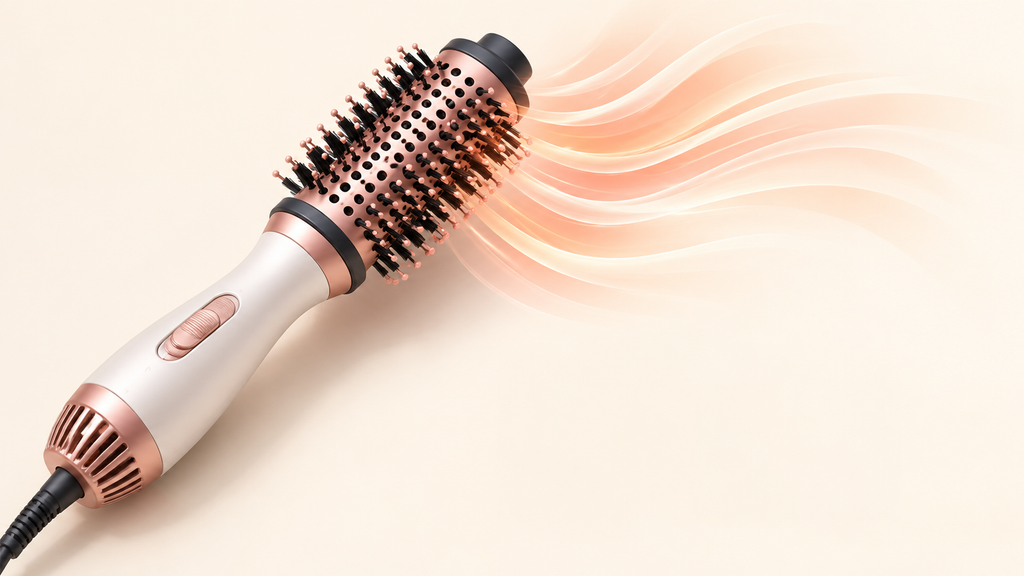
Introduction
Your hair is damp, a hot air brush is in your hand, and one question stops you before you press the switch: how does a hot air brush work, and is it safe for your hair?
The mechanism is simpler than the marketing suggests, and this guide explains each part. If you want the basics first, read our plain-English guide to what a hot air brush is.
Table of Contents
Quick Answer: A hot air brush works by doing three jobs at once: a fan pulls in air, a heating element warms it, and the warm air flows out through vents in a bristled barrel. As you brush, the airflow dries hair while the bristles detangle and shape it, so drying and styling happen in one pass.
What You Need to Know
- A hot air brush combines a fan, a heating element, a vented barrel and bristles in one tool.
- Heated air flows through the barrel while the bristles detangle and shape each section.
- Heat loosens hair into a new shape, and cooling sets it.
- A hot brush heats a barrel that touches your hair. A hot air brush heats moving air.
- Damage risk depends on heat setting, time and hair condition, not on the tool alone.
The Short Answer: Heat, Airflow and Brushing Together
A hot air brush is a styling tool that blows heated air through a bristled barrel, used to dry and shape hair in one pass.
Three jobs happen at the same moment. Warm air dries the strands, the bristles detangle them, and the barrel gives them a curved or straight shape. A hot air brush can stand in for the usual hair dryer plus round brush routine.
How Does a Hot Air Brush Work, Step by Step?
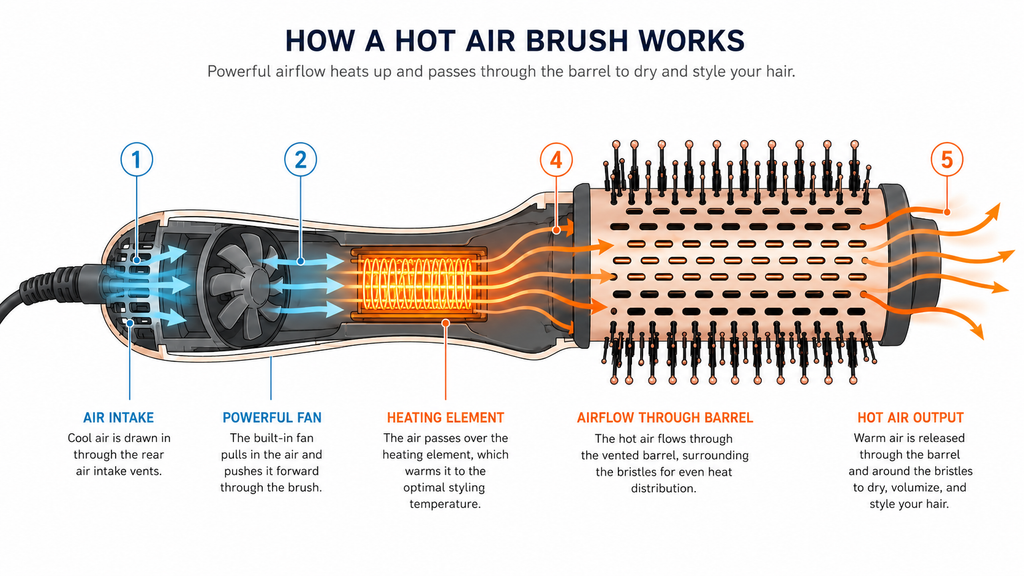
The process has five steps. Exact temperatures, airflow speed and drying time vary by model, so check the manufacturer’s specifications.
- Air is pulled in. A small fan draws room air through an intake, usually a grille on the handle or base. Keep this opening clear.
- The heating element warms the air. The air passes over the heating element, which raises its temperature. A lot of hot air brushes let you choose between two or more heat levels.
- Warm air reaches the vented barrel. The airflow travels up the head and exits through vents around the barrel, right where your hair rests.
- The bristles detangle and shape as you brush. You pull the brush through a section while warm air dries it. A larger barrel tends to give a smoother, straighter result. A smaller barrel tends to give a tighter curl.
- A cool setting helps lock in the shape. Many models include a cool air option, which sets the style (see the science below).
What’s Inside a Hot Air Brush: Parts and What Each Does
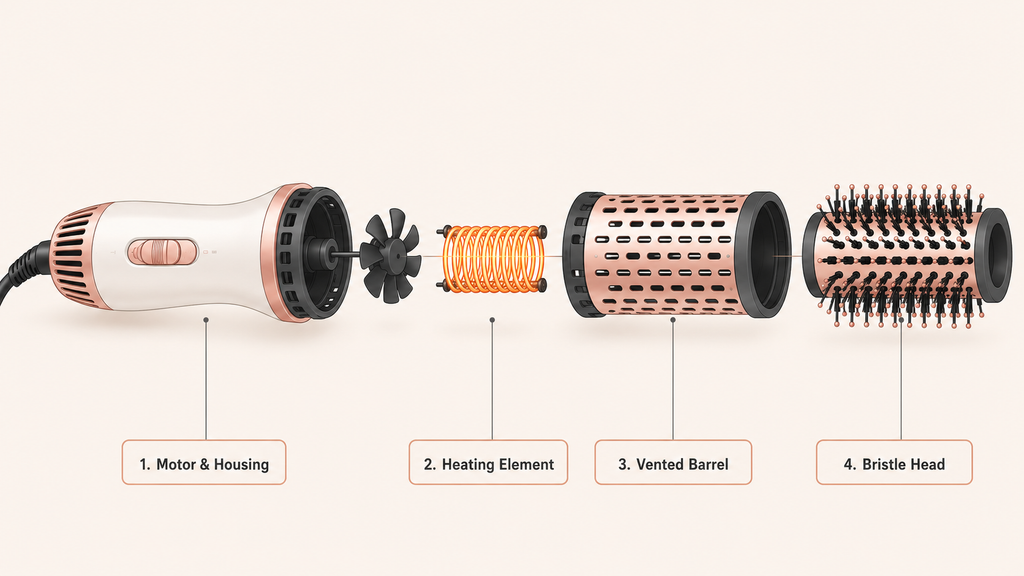
Five parts do the work: a heating element, a fan, a vented barrel, bristles, and a coating or material such as ceramic or ionic. Every answer to “how does a hot air brush work” comes back to these five.
Check the heat settings, barrel size and bristle type on a product page before you weigh the marketing terms.
| Part | What it does | Effect on your hair | What to check on a product page |
|---|---|---|---|
| Heating element | Warms the incoming air | Warm air evaporates water from strands | Whether multiple heat settings are listed |
| Fan | Moves air through the tool | Carries heat across your hair and speeds drying | Whether airflow speed is adjustable |
| Vented barrel | Directs air out around the barrel | Delivers warm air to hair as it wraps the barrel | Barrel diameter and shape |
| Bristles | Grip, detangle and tension the hair | Smooths strands as you brush | Bristle material and spacing |
| Ionic or ceramic coating | Described by manufacturers as reducing static and spreading heat | Claimed to reduce frizz | Whether the brand explains how it works |
Save or screenshot this Parts-to-Results Chart.This guide walks you through the key things to check before buying a hot air brush, so you can pick one that suits your hair and budget.
Want this chart as a one-page printable? Subscribe to the Styleraia newsletter and we’ll email you this checklist, along with our latest hot air brush guides.
What Do Ionic and Ceramic Mean on a Hot Air Brush?
Ionic and ceramic are features manufacturers list to describe how a brush treats hair. Ionic means the brush is said to release negative ions to reduce static and frizz. Ceramic means a coating or part that is said to spread heat more evenly.
Consider both to be marketing claims until the brand shows how its technology actually works. Independent evidence on how much difference they make varies by model.
For independent guidance on heat styling, see American Academy of Dermatology, hair care and heat styling advice.
Hot Air Brush vs Hair Dryer vs Hot Brush
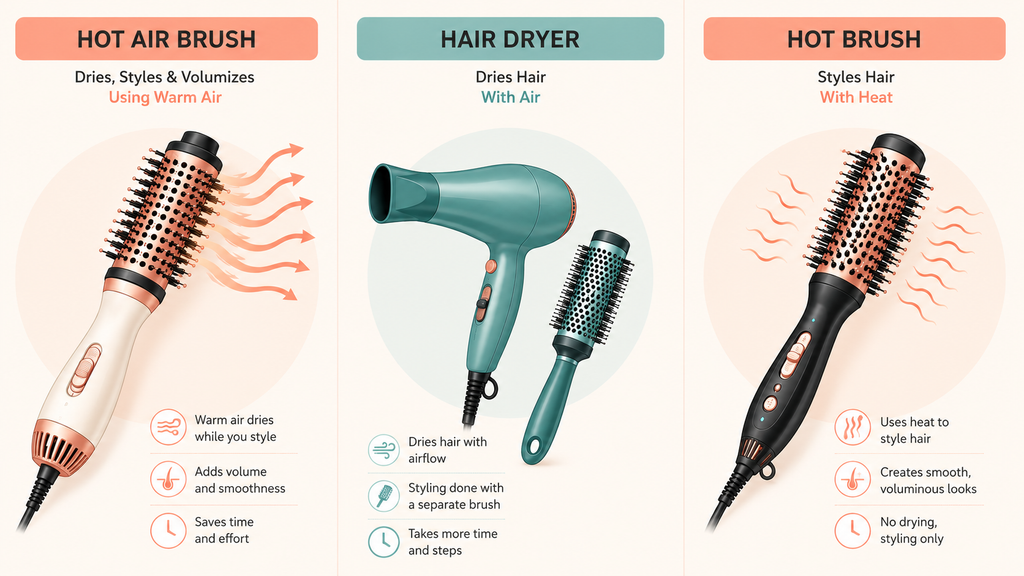
A hot air brush and a hair dryer both heat moving air. A hot brush heats a barrel that touches your hair.
| Tool | How heat reaches hair | Dries hair | Styles hair | Main trade-off |
|---|---|---|---|---|
| Hot air brush | Heated air through a vented barrel | Yes | Yes, as you brush | One tool, but results depend on barrel size and airflow |
| Hair dryer plus round brush | Heated air from a nozzle | Yes | Yes, with a separate brush | Two tools and more hand coordination |
| Hot brush | Heated barrel touching hair | Typically no, used on dry hair | Yes | Direct contact heat, no drying |
The key difference between a hot air brush and a hot brush is how heat reaches the hair: through air or through contact.
Why Hair Holds a New Shape After Brushing
Hair holds a new shape because heat and moisture temporarily loosen bonds in its keratin, and cooling lets those bonds set in the new position.
Keratin is the protein hair is made of, and hydrogen bonds help hold its shape. Water and heat loosen those bonds. As the hair cools, they re-form where the hair is positioned.
The cooling step sets your style, not the heat itself. That is why releasing a section while it is still hot lets the curl or smoothness fall flat.
Who a Hot Air Brush Suits, and When to Be Careful
A hot air brush suits people who want to dry and smooth hair in one step. It calls for extra care if hair is fragile or the scalp is sensitive.
Fragile, heavily treated or breaking hair needs a lower heat setting or a professional’s advice before you use any heat tool.
Keep the brush away from water and follow the manual. See a stylist or dermatologist if you notice breakage, hair loss or scalp burns.
Common Mistakes With a Hot Air Brush
Most problems come from too much heat, too little preparation or skipped upkeep. These are the usual culprits:
- Starting on high heat. Begin on a low setting and raise it only if the hair is not responding.
- Styling soaking-wet hair. Check the manual, since many brands recommend towel-dried or damp hair.
- Holding the brush in one spot. Keep it moving through each section.
- Skipping the cool setting. The style is less likely to hold.
- Ignoring the air intake. Clean it as the manual directs so airflow stays clear.
Hot Air Brush FAQ
Are hot air brushes good for your hair?
A hot air brush can be a reasonable choice for your hair when you use it as directed on a moderate setting. Like any heat tool, it can cause damage if you use high heat, hold it in one spot, or style hair that is already fragile. Shorter passes and lower settings reduce that risk.
Is a hot brush damaging to hair?
A hot brush, which heats a barrel that touches your hair, can damage hair if used at high temperatures, on damp strands, or repeatedly in the same spot. A hot air brush works differently because it heats air, but both are heat tools. Damage depends on temperature, contact time and the condition of your hair.
Is it okay to use a hot air brush every day?
Using a hot air brush every day is possible but adds up, since each session exposes hair to heat. If you use one daily, keep the setting as low as still works, work in smaller passes, and give fragile or color-treated hair days without heat. If you notice breakage, dryness or scalp irritation, cut back and ask a stylist or dermatologist.
How do you properly use a hot air brush?
To use a hot air brush properly, start with hair that is towel-dried or lightly damp, detangled and sectioned. Choose a low or medium heat setting, then brush each section slowly from root to ends while keeping the brush moving. Finish each section with the cool setting if your model has one, then release the hair once it feels cool.
Is a hot air brush the same as a hair dryer?
No. Both blow heated air, but a hot air brush builds the brush into the airflow path, so one tool dries and shapes hair. A hair dryer only supplies airflow and heat, so you typically need a separate round brush, used with your other hand, to style while drying.
What do ionic and ceramic mean on a hot air brush?
Ionic and ceramic are features manufacturers list to describe how a hot air brush treats hair. Ionic means the brush is said to release negative ions to reduce static and frizz, and ceramic means a coating or part that is said to spread heat more evenly. How much difference they make varies by model, so check the maker’s explanation.
Pingback: Blow Dryer Brush: How to Choose One That Fits Your Hair
Pingback: Hot Air Brush vs Hair Dryer Difference
Pingback: Hot Air Brush vs Flat Iron: Which Is Better for You?
Pingback: Is a Hot Air Brush the Same as a Volumizer?
Pingback: Hot Air Brush for Beginners: A Simple 7-Step Guide
Pingback: How to Use a Hot Air Brush: 7 Steps for a Smooth Blowout.
Pingback: How to Get Volume With a Hot Air Brush: 7 Easy Steps
Pingback: Hot Air Brush for Damaged Hair: Is It Safe? (2026 Guide
Pingback: Is a Hot Air Brush Bad for Your Hair? Risks & Fixes.
Pingback: What Heat Setting to Use on a Hot Air Brush? (By Hair Type)