
Introduction
Your hot air brush just gave off a faint burning smell, or the airflow dropped to a weak puff halfway through a blowout. That is usually trapped hair and product residue, not a dead motor, and the fix takes about 10 minutes. Here is how to clean a hot air brush without letting water near the electronics.
Quick Answer: Unplug the hot air brush and let it cool for at least 15 minutes. Remove trapped hair, clear the air vent or filter, and then wipe the barrel and bristles with a lightly damp cloth. Let everything dry for 10 minutes before use. Never submerge it, and follow your model’s manual.
Table of Contents
What You Need to Know
- Unplug the tool and let it cool for 15 minutes before touching anything.
- Hair in the air vent causes more trouble than hair on the bristles because it restricts airflow.
- Use a lightly damp cloth, never a soaked one, and never submerge the tool.
- A common rhythm is to remove hair after each use and do a full clean about once a week.
- Stop using the brush if a burning-plastic smell continues after cleaning or you see a damaged cord.
What Is the Best Way to Clean a Hot Brush?
The best way to clean a hot brush is to unplug it, let it cool, pull out trapped hair, clear the air vent or filter, and wipe the barrel and bristles with a lightly damp cloth. Let it dry fully before use. Never submerge it, and follow your model’s manual.
A hot air brush is a styling tool that combines a round brush barrel, a heating element, and a small fan, used to dry and smooth hair in one pass. That design sets the cleaning order: hair collects where air is pulled in, and residue collects where heat is highest.
Hair that reaches the air vent usually does more harm than hair on the bristles, because it restricts airflow.
What You Need Before You Start
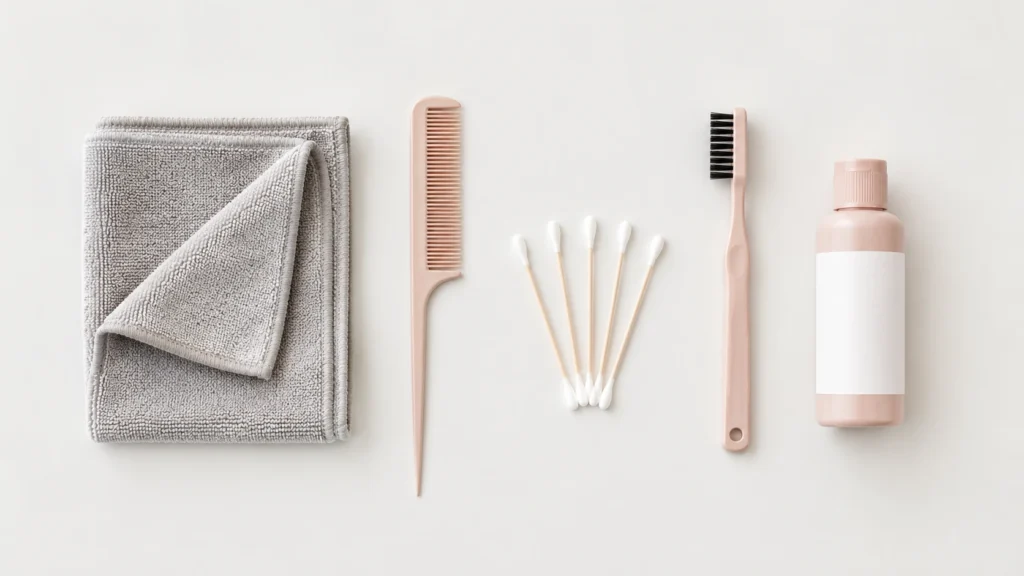
You need five inexpensive items, and none of them are specialty products. Set aside 10 to 15 minutes of hands-on time, plus cooling and drying time.
- A soft microfiber cloth for wiping the barrel
- A tail comb or plastic pick for lifting wrapped hair
- 4 to 6 cotton swabs for bristle bases and tight gaps
- A soft, dry brush, such as a clean toothbrush or small makeup brush, for the vent
- Optional: isopropyl alcohol, only if your manual allows it
Keep metal tools such as scissors and pins away from the barrel, because many barrels have a coating that scratches easily.
How to Clean a Hot Air Brush in 6 Steps
Six steps cover the whole job, and the order matters: remove hair first, introduce moisture last. The timings below are practical estimates, not manufacturer specifications.
- Unplug the tool and let it cool for 15 minutes. Pull the plug from the wall, not just the switch. A hot barrel can burn you, and a plugged-in tool is a shock risk near any moisture.
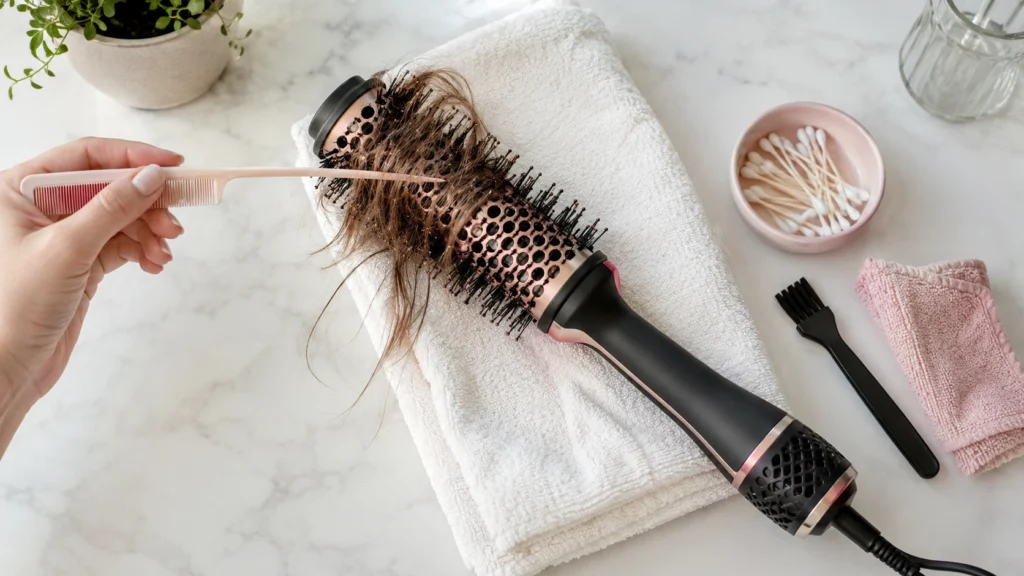
- Remove loose hair from the bristles and barrel (2 to 3 minutes). Slide the tail comb under wrapped strands and lift them away. If hair is wound deep around the base, follow the dedicated walkthrough on getting hair out of a hot air brush.
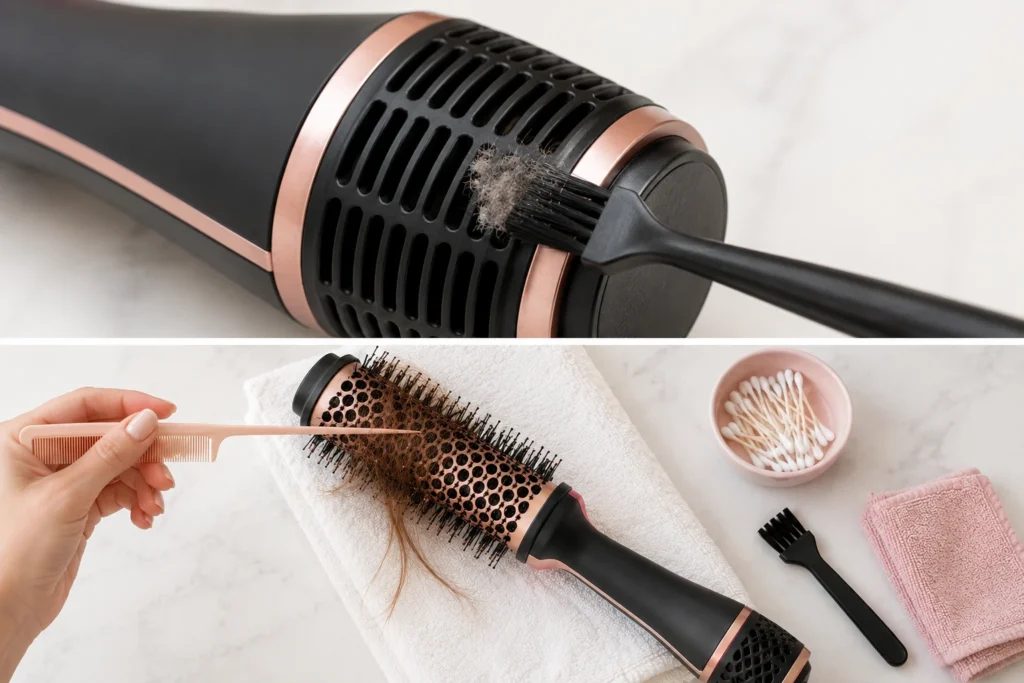
- Clear the air vent or filter (2 minutes). Find the intake, usually a slotted section near the handle, and sweep lint away with the soft brush. If your model has a removable filter cover, clean the hot air brush filter only as your manual shows. If you are unsure where the intake sits, how a hot air brush works explains the airflow path.
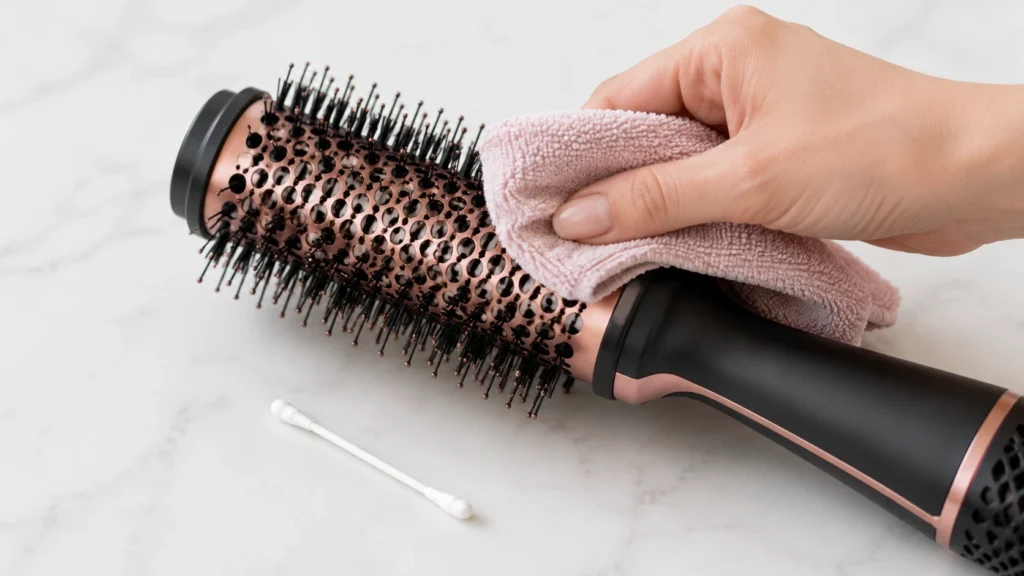
- Wipe the barrel and bristles with a lightly damp cloth (3 minutes). Wring the cloth until no water drips. Wipe along the barrel, then use a cotton swab at the base of each bristle row.
- Treat sticky buildup only as the manual allows (2 to 3 minutes). Dampen a swab with water or with a few drops of isopropyl alcohol if your manual permits. Keep it away from vents and electrical openings.
- Dry completely for 10 minutes. Leave the tool unplugged in open air, then check that the vent is clear before the next use.
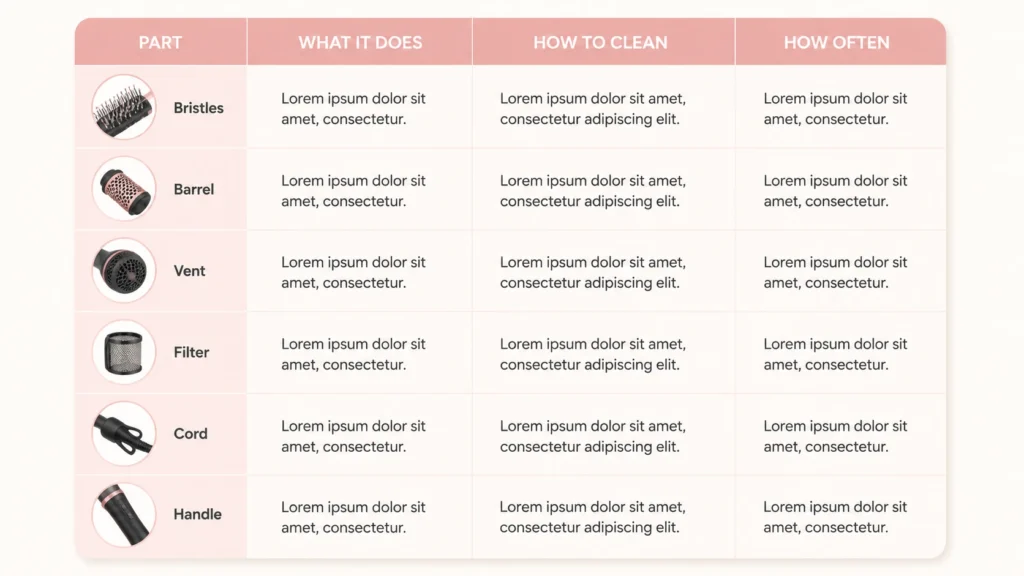
Hot Air Brush Cleaning Cheat Sheet: What to Clean, How Often, and With What
This table lists every part of the tool, a typical cleaning rhythm, and the warning signs to watch for. Frequencies are typical guidance, not manufacturer specifications, so your manual wins any conflict.
| Part | How often | Use | Avoid | Warning sign |
|---|---|---|---|---|
| Bristles | Hair removal after each use; wipe weekly | Tail comb, damp cloth | Soaked cloth, sharp picks | Snagging, hair pulling |
| Barrel | Weekly | Lightly damp microfiber | Abrasive pads, harsh chemicals | Sticky or brown film |
| Air vent | Check each use; clear weekly | Soft dry brush | Water, pins | Weak airflow, burning smell |
| Removable filter (if your model has one) | Every 1 to 2 weeks | Soft brush, manual-approved method | Forcing the cover open | Visible lint, weaker airflow |
| Cord and plug | Monthly visual check | Dry cloth | Wet cloth while plugged in | Cracks, exposed wire |
| Handle | As needed | Dry or barely damp cloth | Spraying liquid on it | Sticky residue |
How to Remove Brown Residue and Product Buildup
Brown or sticky residue is usually styling product and natural oils baked onto the barrel by repeated heat. A lightly damp cloth removes most light film. People searching for how to get the brown stuff off a straightener describe the same mechanism, but a hot air brush has vents and electronics, so use even less liquid.
Work in this order:
- Cool the tool fully and unplug it.
- Wipe the barrel with a lightly damp microfiber cloth.
- Rub stubborn spots with a barely dampened cotton swab.
- Dry for 10 minutes before plugging in.
Use the least liquid that works. Rubbing alcohol is not universally approved: some manuals allow it on a swab, while others specify water only. Heavy product layering feeds buildup too, which is one reason to read whether you need heat protectant for a hot air brush.
How Often Should You Clean a Hot Air Brush?
A common rhythm is quick hair removal after every use and a full six-step clean about once a week. Your manual’s schedule takes priority.
| Your usage | Hair removal | Full clean |
|---|---|---|
| Near-daily | After every use | Weekly |
| 2 to 3 times a week | After every use | Every 2 weeks |
| Occasional | Before storing | Before long-term storage |
Heavy styling product use calls for cleaning more often, not less. How often you use the tool and how often you clean it are separate questions, and how often you can use a hot air brush covers the first one by hair type.
Signs Your Hot Air Brush Needs Cleaning
Four symptoms point to a dirty tool: a burning smell, weak airflow, a sticky barrel, and hair snagging. The sooner you match the symptom to the fix, the less likely it is to recur.
- Burning smell → Unplug and cool the tool, then check the vent for lint. If the smell continues after cleaning, stop using it.
- Weak airflow → Clear the air vent and any removable filter.
- Sticky barrel → Use the residue method above.
- Hair snagging or pulling → Clean the bristle bases, then read why a hot air brush tangles your hair.
- Hair wrapped around the barrel → Lift it out with the tail comb before the next use.
A blocked vent can make the tool run hotter than the manufacturer intended, which is why manuals warn about keeping vents clear. The routine for how to clean a hot air brush is partly a safety habit, not only a cosmetic one.
Common Mistakes to Avoid When Cleaning a Hot Brush
The most damaging mistakes involve moisture, heat, and sharp tools. Owner forums and manufacturer care guides repeat the same warnings.
- Submerging or rinsing the tool. Water can reach the motor, heating element and wiring. Safety regulators such as the U.S. Consumer Product Safety Commission treat water contact with plugged-in hair appliances as a shock hazard.
- Cleaning while plugged in or still hot. Both raise the risk of injury.
- Scraping the barrel with scissors, pins, or metal picks. These can scratch the coating and cut bristles.
- Soaking the cloth or spraying cleaner onto the tool. Liquid runs into vents. Wring out the cloth after lightly dampening it.
- Storing it damp. A tool that looks dry can still hold moisture near the vents.
How to Store a Hot Air Brush Between Uses
Store the brush only after it has cooled fully and dried, ideally in a dry spot away from sinks. Loop the cord loosely rather than winding it tightly around the handle, which can strain it over time.
When to Stop Cleaning and Replace Your Hot Air Brush
Stop using the brush if cleaning does not fix the problem or if you see physical damage. Cleaning cannot repair a failing tool.
- Melted or warped plastic
- A damaged power cord with visible cracks, fraying, or exposed wires.
- A burning-plastic smell that persists after cleaning
- Water inside the handle or vents
- Repeated shutoffs during use
- Any sparks, which means unplug immediately
Do not open the housing yourself. Contact the manufacturer and check your warranty first.
Frequently Asked Questions
What is the best way to clean a hot brush?
Work in this order: unplug, cool for 15 minutes, remove hair, clear the vent, wipe with a lightly damp cloth, and then dry for 10 minutes. This order keeps moisture away from electrical openings until hair and lint are gone. Use cotton swabs for bristle bases, never submerge the tool, and check your manual for model-specific limits.
How do I get the brown stuff off my straightener?
That brown film is usually styling product and oils baked on by heat. On a flat iron, unplug it, let it cool, and wipe the plates with a damp cloth. On a hot air brush, use even less liquid and keep it away from vents. Skip abrasive pads, which can scratch coatings.
Can a hot brush be used on wet hair?
Many hot air brushes are designed for damp, towel-dried hair rather than dripping wet hair, but rules differ by model. Water dripping into the vents is a bigger concern than damp hair, so towel-dry thoroughly first. If your manual says dry hair only, follow it.
What is the best way to clean a hair straightening brush?
A hair straightening brush is a heated brush with bristles that smooths hair directly, unlike a hot air brush, which blows heated air. Unplug it, cool it fully, and remove hair with a comb. Wipe the bristles and heating surface with a lightly damp cloth, dry before storing, and follow your manual.
Can you wash a hot air brush with water?
No. Do not submerge it or run it under a tap, because water can reach the motor, heating element, and wiring. A lightly damp cloth on the barrel and bristles is the usual limit. If water enters the handle or vents, leave it unplugged and contact the manufacturer before using it again.
Is rubbing alcohol safe to use on a hot air brush?
Only if your manual allows it. Some manufacturers permit a few drops of isopropyl alcohol on a cotton swab for sticky buildup, while others specify water only. Never pour or spray alcohol onto the tool, keep it away from vents, and let everything dry completely before plugging in.
What to Do Next
Knowing how to clean a hot air brush comes down to three habits: cool it, clear the air path, and keep moisture out. Do the quick hair check after each use and the full six steps weekly.
- Go deeper on upkeep: read the full Hot Air Brush Maintenance & Troubleshooting: The Ultimate Guide.
- Keep your style longer: see how to make a blowout last longer.
Pingback: Hot Air Brush Maintenance & Troubleshooting: Complete Guide
Pingback: How Long Does a Hot Air Brush Last? Signs to Replace