
Styleraia · hot air brush care
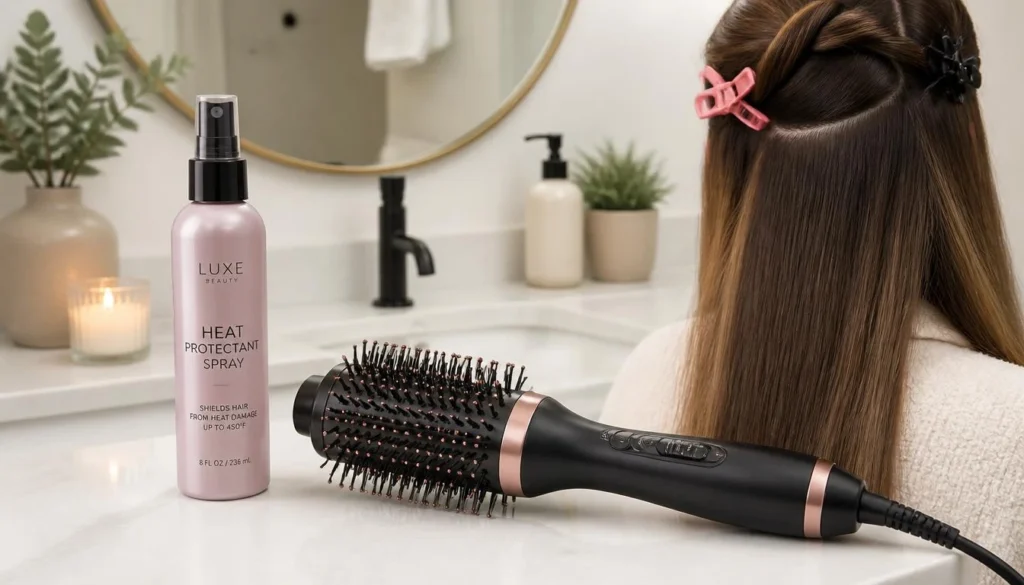
You just plugged in a hot air brush that looks as harmless as a regular hairbrush, and the heat protectant on your shelf suddenly feels optional. Do you need heat protectant for a hot air brush? Yes.
Below you’ll find the moments it matters most, a chart you can screenshot, and a routine that adds about a minute to your styling.
Quick Answer: Yes. Spray heat protectant on damp hair, mid-lengths to ends, before every hot air brush session, including touch-ups. Brush heat still reaches each strand, often more than once, and the barrier slows moisture loss. Protectant reduces damage rather than preventing it, so also use the lowest setting that works.
What You Need to Know
- Do you need heat protectant for a hot air brush? Yes: apply it before every session, on damp hair, from mid-lengths to ends.
- The American Academy of Dermatology’s hair-care tips list a heat-protecting product, added to wet hair before styling, as a way to minimize heat damage.
- Low heat lowers stress on hair but doesn’t replace protectant. The one exception is a true cool-air mode with the heating element off.
- Match the formula to your hair: lightweight spray or mousse for fine hair, richer cream for thick or coarse hair.
- Protectant cuts damage but can’t undo it, so pair it with slow passes and a low setting.
Is Heat Protectant Necessary for Hot Air Brush Styling?
Yes. Heat protectant is a leave-in product, applied before heat styling, that coats each strand to slow moisture loss and cushion it against direct heat. A hot air brush counts as a heat tool, so the same rule applies.
In dermatologist hair-care tips released by the American Academy of Dermatology in 2014, a heat-protecting product added to wet hair before styling appears as a way to minimize heat damage. A hot air brush moves heat through bristles and airflow instead of clamping hair between plates, but every strand still absorbs that heat on each pass.
Why Can a Hot Air Brush Still Damage Unprotected Hair?
Because heat, moisture loss, and bristle tension all hit the same strand at once. Heat damage is the gradual loss of moisture, smoothness, and strength that builds up in hair after repeated heat exposure.
Water boils at 212°F (100°C). When styling heat drives moisture out of damp hair quickly, strands turn drier and rougher, and the damage builds through repetition, not in a single session. That is why the cost of skipping protectant tends to show over weeks rather than overnight.
For the severity question, read our breakdown of whether a hot air brush causes heat damage. Here the point is narrower: protectant is the cheapest way to lighten the load on every pass.
Do You Need Heat Protectant for a Hot Air Brush on Low or Cool Settings?
Yes, on low heat. The only time you can skip it is when your brush is truly in cool-air mode with the heating element off. Low heat reduces the stress on your hair, but it doesn’t replace a protectant.
A HealthDay tip on using less heat lists the coolest workable setting, brief contact time, and infrequent styling as ways to cut heat exposure. Those are extra layers, not substitutes. Choose your temperature with our hair-type chart for hot air brush heat settings, then add protectant on top.
One limit: this is general guidance, not a tested temperature cutoff. None of the sources behind this guide name a setting at which protection becomes unnecessary.
Heat Protectant Decision Chart for Hot Air Brush Users
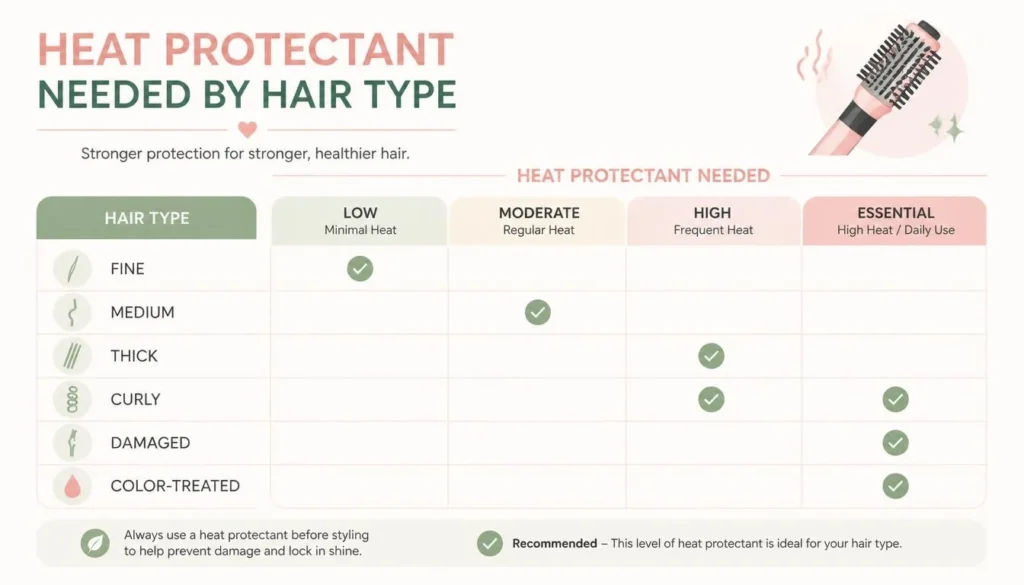
This chart answers the question for nine common situations in under 30 seconds. Your brush manual and product label override it if they say something different.
| Situation | Protectant needed? | When to apply | What to check |
|---|---|---|---|
| Hot air brush on damp hair | Yes | After towel-drying, before the brush heats up | Brush manual’s dampness limit |
| Dry-hair touch-up | Yes, light mist | On dry hair, just before brushing | Lightweight formula |
| Low or cool setting | Yes, unless heating element is off | Same as normal | Low heat is extra caution, not a substitute |
| Heated-plate brush | Yes | On fully dry hair, per most manuals | Plates vs. hot air: check your model |
| Color-treated or damaged hair | Yes, every time | Damp hair, mid-lengths to ends | Fewer passes, lower heat |
| Fine or thin hair | Yes | Light, even mist | Spray or mousse that won’t flatten roots |
| Thick, coarse or curly hair | Yes | Section by section | Cream or richer spray; label heat rating |
| Oil or leave-in only | Not unless labeled heat-protective | n/a | Look for a stated heat-protection claim |
| High setting or many passes | Yes, and lower the heat | Before the first pass | Cut passes before raising heat |
Save or screenshot this heat protectant decision chart—it covers nine common hot air brush situations in one view.
How Do You Apply Heat Protectant Before Using a Hot Air Brush?
Apply it to damp hair, mid-lengths to ends, before the brush heats up. The six steps below add about a minute. Spray before the heat, never after.
- Towel-dry until hair stops dripping. Squeeze with a microfiber towel or soft cotton t-shirt instead of rubbing. A hot air brush is a finishing tool, so most stylist guides start it at damp, with roughly 80% dry as a common benchmark. Your brush manual sets the real limit.
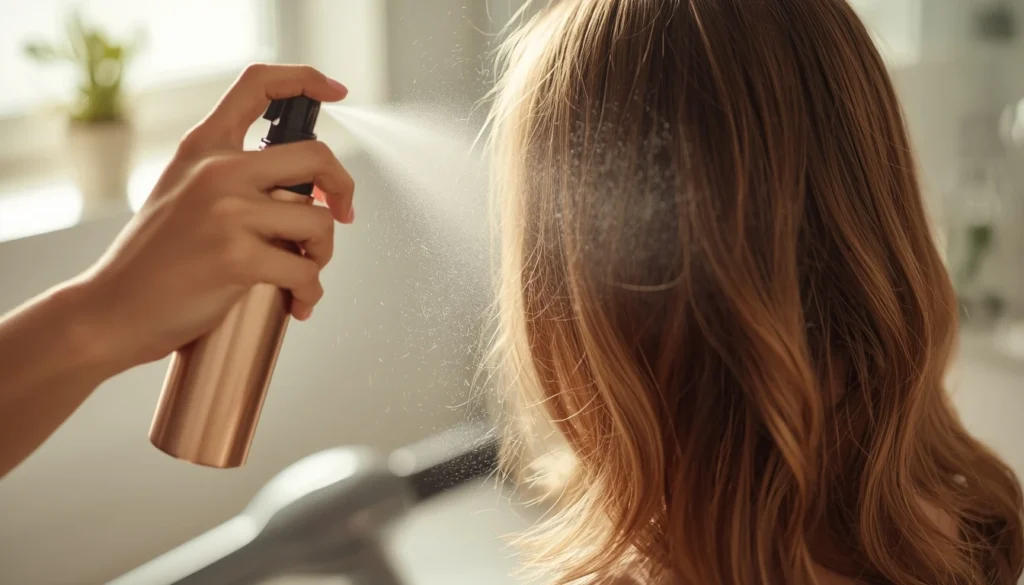
- Mist from 6 to 10 inches (15 to 25 cm) away, from mid-lengths to ends. Those sections have endured the most styling and washing. Use the amount printed on your product’s label, spread evenly.
- Comb through with a wide-tooth comb. This spreads the product and removes tangles that block even coverage.
- Split hair into 4 sections and clip them. Crown, left, right, and back. The minute this takes lets the product settle.
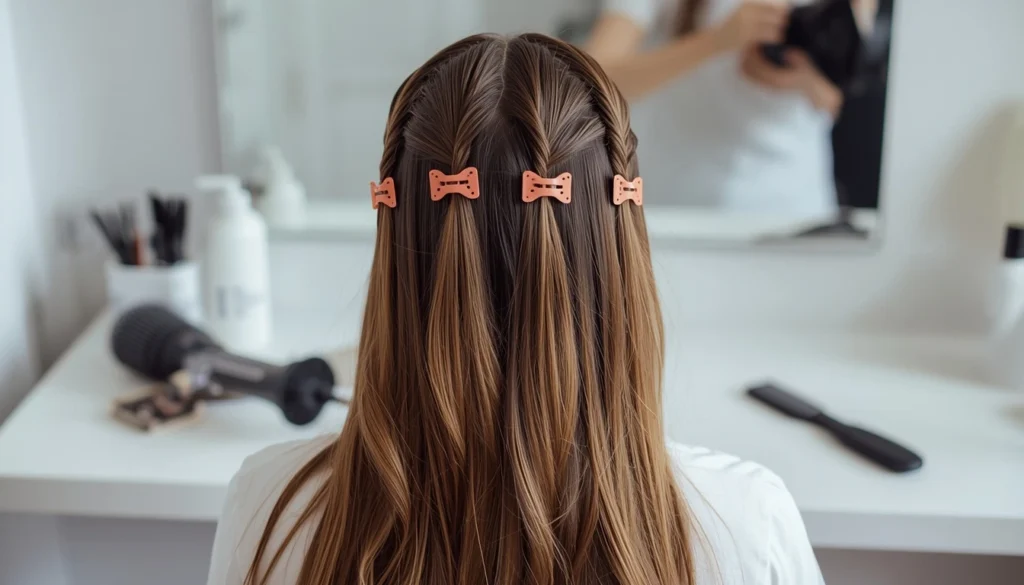
- Brush each section slowly, roots to ends, starting at the back. Aim for one pass per section and cap it at two. If hair is still damp, repeat at the same low setting instead of raising the heat.
- Finish with cool air if your brush has it. A few seconds per section sets the shape.
What Mistakes Make Heat Protectant Less Effective?
Five habits reduce what protectants can do. Spraying after styling does nothing for heat that has already reached your hair.
- Too much product: heavy layers weigh hair down and leave residue that builds up. If hair looks shiny-wet from the product, you used too much.
- Top-layer-only coverage: hidden sections get brushed too, so section first and mist each one.
- Oil instead of protectant: oils add moisture, but only a label that states heat protection counts.
- Raising the heat because the protectant is on: the protectant lowers the damage per pass, but it doesn’t make high heat safe.
Spray, Cream, or Mousse: Which Heat Protectant Suits Your Hair?
Pick by hair thickness: lightweight for fine hair, richer for thick hair, and always a product whose label states heat protection. If the label lists a maximum temperature, compare it with your brush manual.
| Hair type | Formula to look for | Why |
|---|---|---|
| Fine or thin | Lightweight spray or mousse | Protects without flattening roots |
| Thick, coarse, or curly | Cream or richer spray | Coats dense strands more fully. |
| Color-treated or bleached | Heat-protective spray or cream that also conditions | Lightened hair has less margin for error. |
When Is Heat Protectant Not Enough?
When hair already snaps, splits, or feels rough despite protectant product alone, it won’t fix it. A protectant reduces damage; it doesn’t reverse damage that has already happened.
A trim removes damaged ends, and slower passes at lower heat prevent new damage. Our guide to using a hot air brush on damaged hair covers what helps and what hurts. See a hairdresser for persistent breakage, and a dermatologist for scalp irritation or noticeable hair loss.
Heat Protectant and Hot Air Brush FAQs
Is it okay to blowdry without heat protectant?
An occasional skip won’t ruin healthy hair, but it shouldn’t become the habit. Blow drying delivers the same repeated heat that dermatologist tips ask you to buffer with a heat-protecting product. If you’ve already skipped it, add it next time, lower the temperature, and watch for dryness or rough ends over the following weeks.
Is a hot air brush good for hair?
It can be a reasonable choice when you use it on damp hair, at a low to medium setting, with heat protectant applied first. Results depend on your brush, your hair’s condition, and how often you style. For the full breakdown, read our article on whether a hot air brush is bad for your hair.
Are heat protectants necessary?
Yes, for any heat styling. A heat protectant coats each strand to slow moisture loss, and the American Academy of Dermatology’s hair-care tips list a heat-protecting product on wet hair before styling. It reduces damage without eliminating it, so keep your heat setting as low as your style allows.
Do you need heat protectant for a hot air brush if your hair is healthy?
Yes. Healthy hair is exactly what you’re protecting, and damage builds through repeated heat, so the best time to start is before any shows up. Use a lightweight formula, apply it to damp hair from mid-lengths to ends, and keep passes to one or two per section.
Should I use heat protectant with my hot air brush on dry hair?
Yes. Dry-hair touch-ups still apply heat, so lightly mist a lightweight protectant over the sections you’ll brush before switching the brush on. Use less than you would on damp hair, because extra product shows up as stiffness or greasiness. If your brush uses heated plates, follow its manual, which often calls for fully dry hair.
What to Do Next
You have the answer and the routine. These next steps cover what most readers ask after this:
- Set your temperature: What Heat Setting to Use on a Hot Air Brush? A Hair-Type Chart
- Already seeing dryness or breakage: Hot Air Brush for Damaged Hair: What Actually Helps (and Hurts)