
Introduction
Your hot air brush just got too hot to hold or shut itself off mid-style, and now you’re unsure whether to keep going. Hot air brush overheating usually has a simple cause; you can check in about five minutes, and below you’ll see how to spot it, fix it, and tell when it’s time to stop using the brush.
Quick Answer: A hot air brush usually overheats because airflow is blocked by hair, lint, or a clogged vent. Unplug it, let it cool for at least 15 minutes, then clear the vents and fan area and drop to a lower heat setting. If you notice smoke, sparks, a burning smell, or a damaged cord, stop using it.
Table of Contents
What You Need to Know
- A warm barrel is normal. A handle too hot to grip, weak airflow, or repeated shut-offs are not.
- Blocked vents and hair in the fan are the usual causes, and both are fixable at home.
- A shut-off can be the brush’s safety feature working, not proof that it’s broken.
- Smoke, sparks, a burning smell, or a damaged cord means stop using it right away.
- The lowest heat setting that styles your hair is the safest one to use.
Is It Normal for a Hot Air Brush to Get Hot?
Yes, a hot air brush is built to get hot, because the barrel and bristles warm up on purpose. Warm and steady is normal; so hot that you can’t hold it, or heat that keeps climbing, is not.
| Normal | Warning sign |
|---|---|
| Barrel and bristles are hot while running at your chosen setting. | The handle is too hot to grip comfortably. |
| Airflow is steady and warm. | Airflow is weak, uneven, or stuttering. |
| Brush cools down after you switch it off. | Brush stays very hot or shuts off again and again. |
| A faint new-product smell in the first few uses | A strong or lingering burning smell |
Overheating means the brush gets hotter than its design intends, usually because heat can’t escape. Our explainer on how a hot air brush works shows why airflow matters so much.
What Causes Hot Air Brush Overheating? 6 Common Causes
Overheating usually starts with blocked airflow. When hair, lint, or dust clogs the intake vent or fan, heat can’t escape, so the barrel and handle climb past their normal range. Unplug the brush and let it cool before checking anything, then work through the six causes below.
1. Blocked vents or lint
The intake vent pulls in air, and dust and loose hair collect there over weeks of use. A clogged vent is the first thing to check, because it needs no tools and costs nothing to fix.
2. Hair caught in the fan or bristles
Strands that wind around the bristles or slip into the fan area slow the airflow and trap heat. If your brush also keeps snagging hair, see why a hot air brush tangles your hair.
3. Heat set too high
Higher settings produce more heat, and long sessions on the top setting keep the brush hot for longer. Our heat setting chart by hair type helps you pick the lowest setting that works for you.
4. Overheat protection: switching it off
Overheat protection is a built-in safety feature, used to cut power when a tool’s internal temperature rises too high. Many models include it, so a brush that shuts off mid-style may be doing its job. A shut-off that keeps happening after you’ve cleaned the vents points to a fault.
5. Damaged cord or internal fault
A frayed cord, a loose plug, or a casing that feels hotter in one spot than elsewhere suggests a fault inside the brush. Do not open the casing. Stop using the brush and contact the manufacturer.
6. An old or poor-quality unit
Heaters and fans wear out with age. A brush that carries a recognized safety certification mark, such as UL or ETL, has been independently tested against safety standards, which gives you more assurance about how it handles heat. Tools without one give you less, so look for the mark on the packaging, the brush itself, or the product listing, and check your manual.
Hot Air Brush Troubleshooting Chart: Cause, Fix, and When to Stop
Match what you see to a row, then follow the safest next move. If a symptom lands in a “Yes” row under Stop, unplug the brush and don’t use it until the problem is sorted out.
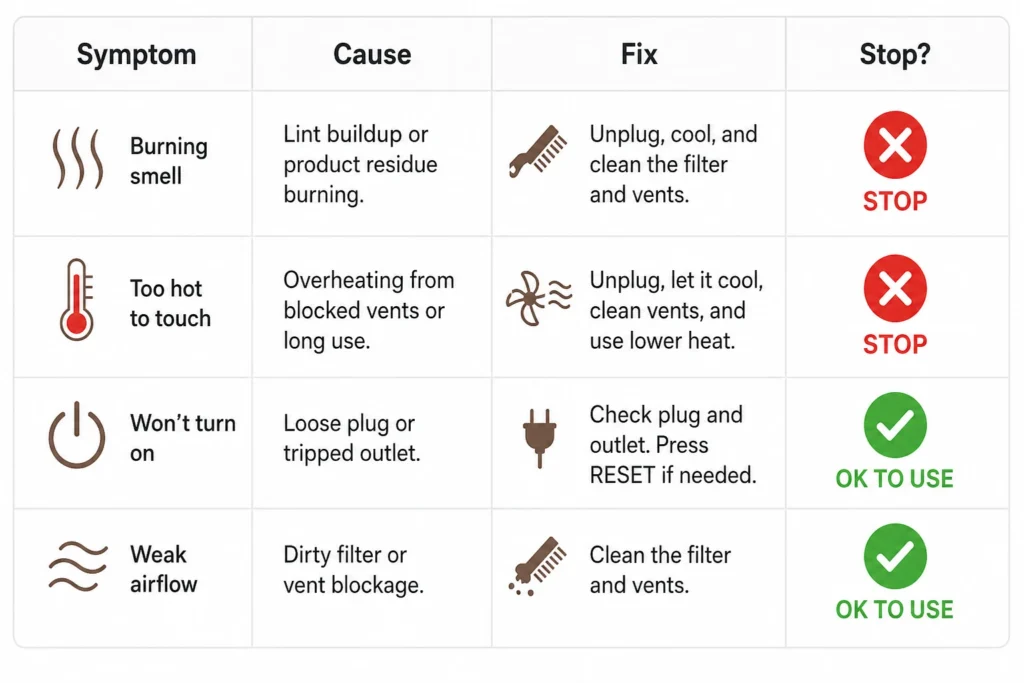
| Symptom | Likely cause | Safe DIY fix | Stop using it? |
|---|---|---|---|
| Gets hot, airflow feels weak | Blocked vent or lint | Unplug, and cool and clear the vents as your manual allows. | No |
| Hot barrel with hair wound inside | Hair in the fan or bristles | Unplug, cool, and remove the hair. | No |
| Shuts off during a long session | Overheat protection triggering | Cool fully, shorten sessions, lower the heat | No |
| Very hot on the highest setting | Heat set too high | Drop to a lower setting. | No |
| Burning smell, smoke, or sparks | Internal fault | None | Yes |
| Damaged, loose, or hot cord | Cord or wiring fault | None | Yes |
Save or screenshot this Overheating Symptom Chart. It covers every symptom you’re likely to meet before you decide whether to keep using the brush.
The 60-second decision tree
- Do you see smoke, sparks, or melted plastic, smell burning, or notice a damaged cord? If yes, unplug the brush and stop using it. If no, go to step 2.
- Is the airflow weak or the vent visibly clogged? If yes, clean it using the steps below. If no, go to step 3.
- Are you on the highest heat, or has the brush been running for a long stretch? If yes, lower the setting and give it a break. If no, go to step 4.
- Is it still too hot or shutting off after cleaning and cooling? If yes, treat it as a fault, stop using it, and contact the manufacturer.
How to Fix an Overheating Hot Air Brush (Step by Step)
Unplug the brush first, then cool it, clear it, and test it. This hot air brush overheating fix takes roughly 25 to 30 minutes, and most of that is waiting for the brush to cool. These times are a cautious rule of thumb, so follow your manual if it says otherwise.
- Unplug it and let it cool for 15 to 20 minutes. Set it on a heat-safe surface away from towels and hair.
- Check for damage. Look over the cord, plug, and casing for cracks, melting, or fraying. If you find any, stop here.
- Remove hair from the fan area and bristles. Pull wound hair out gently. Our guide on how to get hair out of a hot air brush covers stubborn tangles.
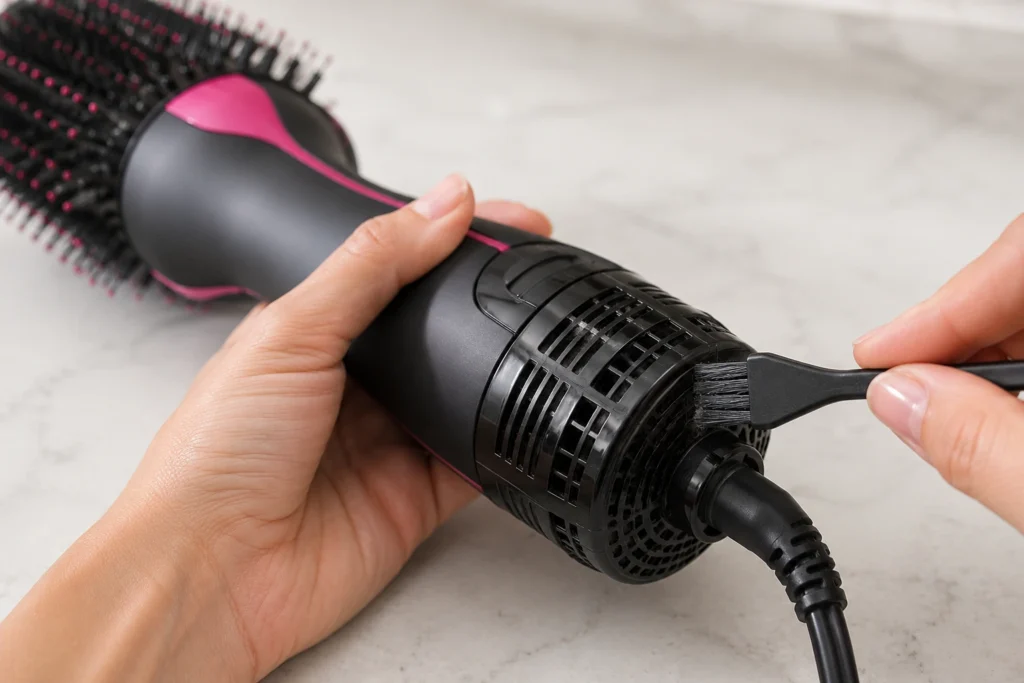
- Clear the air vents. Use a dry, soft brush, such as a clean old toothbrush, and never water or sharp tools.
- Lower the heat. Start on low or medium, and raise it only if your style needs it.
- Run a two-minute test. Switch it on at a low setting and check that the airflow is strong and the handle stays comfortable. If it heats up fast or cuts out, stop using it.
Warning Signs: When Should You Stop Using a Hot Air Brush?
Stop right away if you see smoke or sparks, smell burning, or find damage to the cord or casing. A hot air brush showing any of these is no longer safe to use, even if it still switches on.
- Smoke, sparks, or a crackling sound
- A strong, lingering burning smell
- Melted, warped, or discolored plastic
- A frayed, cracked, or unusually hot cord
- Repeated shut-offs that continue after cleaning and cooling
Don’t open the casing to look inside. Repairs to heating or electrical parts belong with the manufacturer or a qualified technician. If your brush is old or overheating keeps coming back, replacing it is usually the safer choice.
Can Overheating Damage Your Hair?
Yes, extra heat is harder on hair, and an overheating brush delivers more of it than you planned. The safer habit is to use the lowest heat setting that still gets the job done.
The American Academy of Dermatology recommends the lowest heat setting that works and air drying whenever you can. To weigh the full picture, read if a hot air brush causes heat damage. A brush that runs hotter than normal can also scorch your scalp if it touches the skin.
How to Prevent a Hot Air Brush From Overheating
Keep the vents clear, use the lowest effective heat, and give the brush short breaks. Clearing the vents every few uses prevents most airflow-related overheating. Preventing hot air brush overheating comes down to a few habits:
- Remove hair from the bristles after each session.
- Wipe lint from the vents every few uses.
- Match your heat setting to your hair type.
- Pause during long sessions so the brush can cool. Our answer on using a hot air brush every day covers how often is reasonable.
- Never cover the vents with your hand, hair, or fabric while it’s running.
FAQs
Does a heat brush damage your hair?
A heat brush can damage hair when it runs too hot, stays on one section too long, or is used on hair that is very wet. Used at a low or medium setting, with heat protectant and steady movement, the risk is much lower. An overheating brush raises the risk, which is why fixing it matters.
Is it normal for a hot air brush to get hot?
Yes. The barrel and bristles are meant to be hot while the brush runs. What isn’t normal is a handle too hot to hold, weak airflow, repeated shut-offs, or a strong burning smell. Any of those means unplugging the brush and working through the cooling and cleaning steps above.
Why does my hot air brush shut off by itself?
Many hot air brushes include overheat protection that cuts power when the internal temperature gets too high. Blocked vents, hair in the fan, or a long session on a high setting are common triggers. Let it cool fully and clear the vents. If it keeps shutting off, stop using it and contact the manufacturer.
How long should I let a hot air brush cool down?
A cooling time of 15 to 20 minutes is a cautious margin before you check or clean it, though your manual may give a different figure. Always unplug the brush first and place it on a heat-safe surface. Never clean the vents while the brush is still hot or plugged in.
Is it safe to keep using a hot air brush that got too hot once?
Often yes, if the cause was a clogged vent or a very high setting, and the brush behaves normally after cooling and cleaning. Run a short test at low heat. If it overheats again, or you see smoke, sparks, a burning smell, or cord damage, stop using it.
What heat setting should I use to avoid overheating?
Start with the lowest setting that styles your hair and raise it only if needed. Fine or damaged hair usually needs less heat than thick, coarse hair. Our hot air brush heat setting chart matches settings to hair types.
What to Do Next
Once your brush is running normally again, check your heat setting with the hot air brush heat setting chart, then see whether daily use is a good idea. For cleaning schedules, warning signs, and repair-or-replace advice in one place, read the Hot Air Brush Maintenance & Troubleshooting guide.
Pingback: Hot Air Brush Maintenance & Troubleshooting: Complete Guide