
Introduction
You step out of the shower, pick up your brush, and wonder: can you use a thermal brush on wet hair, or do you need to dry it first? It’s a fair question, because the answer isn’t a simple yes or no. A thermal brush (also called a hot air brush) is designed for damp hair, not hair that is still dripping.
This guide shows you exactly where that line sits, how to check it in seconds, and what to do if your hair is too wet.
Table of Contents
Can You Use a Thermal Brush on Wet Hair?
Yes, but only on damp hair, not soaking wet hair. A thermal brush works best once hair is towel-dried and no longer dripping, because heating very wet hair can cause steam, slow styling, and extra stress on fragile strands. Check the wetness chart below, then follow your brush’s manual.
The reason comes down to what hair is like when it’s wet. Strands are softer and more fragile, and a lot of water has to be driven off before the hair can take shape. A hot air brush combines heat and airflow, so it handles the last stretch of drying well, but it isn’t a replacement for a towel.
If you’re new to the tool, our guide on how a hot air brush works explains why it behaves differently from a flat iron.
How Damp Should Hair Be for a Hot Air Brush?
Think in stages instead of a vague “damp.” Hair moves through four stages after a wash, and only two of them are right for your brush.
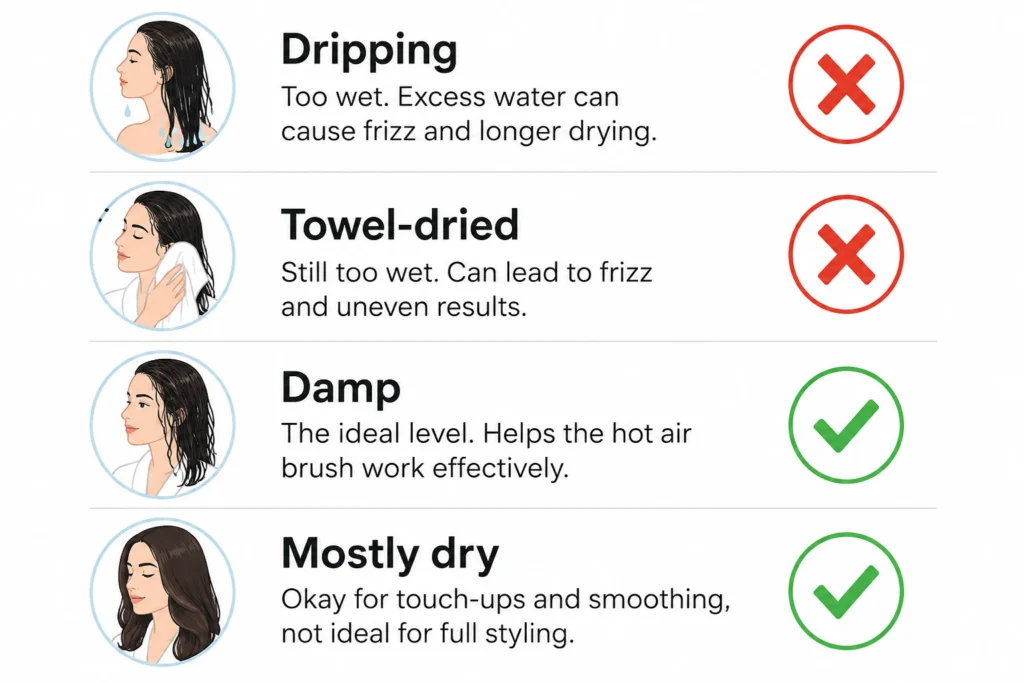
| Stage | How it looks and feels | Brush it now? | What to do |
|---|---|---|---|
| Dripping | Water falls when you tilt your head | No | Squeeze and blot with a towel. |
| Towel-dried | No drips, but hair still feels clearly wet | Not yet | Rough-dry or air-dry a little longer |
| Damp | Cool and slightly moist, no visible water | Yes | Section and start brushing |
| Mostly dry | Barely cool, nearly dry | Yes | Use it to smooth and finish |
These stages are a practical guide, not a lab measurement. Hair thickness, length, and your brush’s power all change how long each stage lasts.
The 30-second wetness test
Run through these questions in order:
- Does water drip when you tilt your head? If yes, keep towel-drying.
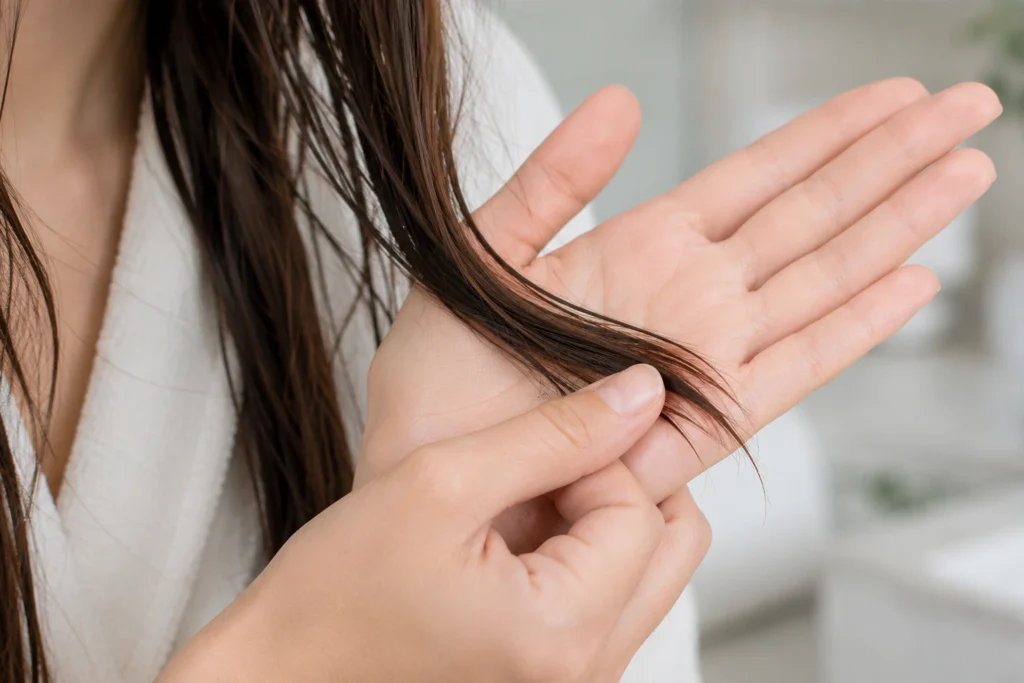
- Press a small section against your palm. Does it leave a wet mark? If yes, give it a little more time.
- Does the section feel cool and slightly moist, with no shine of water on it? If yes, you’re ready.
What Happens If You Use a Thermal Brush on Soaking Wet Hair?
Using a hot air brush on soaking wet hair causes a few problems at once:
- Steam and extra heat stress. Water on the strand heats up fast, and wet hair is already at its weakest.
- Slower styling. The brush spends its energy evaporating water instead of shaping hair, so each section takes longer.
- Frizz and a poor finish. Hair that is shaped while very wet often dries unevenly and loses the smooth result you wanted.
- More time under heat. Longer exposure means more total heat on your hair, which is exactly what you want to avoid.
None of these is a disaster after a single use, but they add up. The American Academy of Dermatology advises using the lowest heat setting and letting hair air dry when possible, so keeping heat low and brief is the safer habit.
Do Thermal Brushes Damage Hair?
The tool itself isn’t the problem. Damage comes from too much heat, held too long, on hair that is too wet or already weak. A thermal brush used on damp hair, at a sensible heat setting, with protectant, is a gentler routine than many people expect.
For a deeper look, read does a hot air brush cause heat damage and is a hot air brush bad for your hair.
How to Use a Thermal Brush on Damp Hair (Step by Step)
- Wash and towel-dry. Squeeze out water and blot until nothing drips.
- Let hair reach the damp stage. Use the wetness test above.
- Apply heat protectant. Comb it through from the middle of each strand out to the ends. do you need heat protectant for a hot air brush.
- Pick a heat setting. Start low or medium, and raise it only if needed. Our heat setting chart by hair type helps you choose.
- Work in small sections. Clip the rest of your hair up. Narrow sections let the heat reach every strand, so the finish looks neater.
- Brush slowly from roots to ends. Don’t let the brush rest on one spot, and finish each section with a burst of cool air if your brush offers it.
For a fuller walkthrough, see how to use a hot air brush.
What If Your Hair Is Too Wet?
If you’ve realized your hair is too wet, you don’t need to start over. Try this instead:
- Squeeze sections gently in a microfiber towel or an old cotton T-shirt.
- Let it air dry a few minutes, then run the wetness test again.
- Use a blow dryer to take off the extra water first, then switch to the brush. Our comparison of a hot air brush vs a hair dryer explains when each tool fits.
When to Skip the Thermal Brush Entirely
A thermal brush isn’t right for every moment. Skip it, or check with a professional if:
- Your hair is badly damaged, breaking, or very dry.
- Your scalp is irritated, sunburned, or sore.
- Your brush’s manual says not to use it on wet or damp hair.
- The brush feels unusually hot, smells of burning, or behaves oddly. In that case, stop using it and see our maintenance and troubleshooting guide.
Models differ, so your manual always has the final word.
FAQs
What kind of brush is best to use on wet hair?
No brush is made for soaking wet hair. Choose a hot air brush whose manual says it’s safe on damp hair, with adjustable heat and a cool setting.
What hot brush can I use on wet hair?
Any hot brush you use should be on damp, towel-dried hair, not dripping hair. Check the instructions for your exact model, since manufacturers word this differently.
Is a hot brush better than a blow dryer for wet hair?
For very wet hair, a blow dryer removes water faster. A hot air brush is better for shaping once the hair is damp.
Do I need to air dry before using a thermal brush?
Not fully. You only need to remove the dripping water and reach the damp stage.
The Bottom Line
So, can you use a thermal brush on wet hair? Yes, if “wet” means damp and towel-dried, and no if it means dripping. Use the wetness test, protect your hair, and keep the heat moderate. Next, learn the right heat setting for your hair type, and browse the full Hot Air Brush Maintenance & Troubleshooting guide.
Pingback: Hot Air Brush Maintenance & Troubleshooting: Complete Guide