

Table of Contents
Why the Names Cause Confusion
Online stores love inventing names. One listing says “hot air brush,” another says “hair dryer and volumizer,” and you can’t tell if you’re comparing two products or one. The short version is that you almost certainly are looking at one. Our guide to what a hot air brush is covers the basics if you want them first.
The Verdict in 30 Seconds
- A hot air brush is a brush with a heated airflow system in its head. That’s the category.
- “Volumizer” is normally a marketing name for a model with an oval head, built to lift hair at the roots.
- Revlon’s 1,100-watt One-Step Hair Dryer and Volumizer is a good example, because Revlon describes it as a hot air brush.
- Don’t trust a title. Compare wattage, head shape, bristles, settings, and voltage.
- Sometimes “volumizer” is a spray or mousse, which has no motor at all.
One Tool, Two Names
Look at how Revlon words its own page. The product title says “Salon One-Step Hair Dryer and Volumizer,” and the description calls it a hot air brush. The title tells you the benefit, while the description tells you the tool type.
The one case where the two words really differ is a styling product. Sprays and mousses add body to hair, but nothing about them is heated or motorized.
What a Hot Air Brush Does
You pull it through your hair, and warm air flows out of the brush head as you go. Drying and shaping happen together, so there’s no switching between a dryer and a brush. For the inner workings, read how a hot air brush works.

Decoding “One-Step”
“One-Step” is used in two ways. It can describe any hot air brush that dries and lifts roots in a single pass, and it’s also the name of a Revlon product line.
The Revlon Salon One-Step has 1,100 watts, an oval head, and nylon pin and tufted bristles. One retailer repeats Revlon’s claim of blowouts in up to half the time. That is a manufacturer claim, not a tested result.
Versions also differ. Revlon’s page shows three heat and speed settings. An Optima Beauty Supply listing for the same line shows two settings, a cool option, and an ionic generator. Because the name is identical, it won’t tell you which version you’re buying.
A Quick Label Cheat Sheet

| What the listing says | What it usually is | Same as a hot air brush? |
|---|---|---|
| Hot air brush | Brush head with built-in heated airflow | Yes, it’s the category |
| Volumizer / hair dryer and volumizer | A hot air brush sold for root lift | Mostly yes |
| One-step dryer and styler | A hot air brush that dries and styles at once | Mostly yes |
| Hair dryer brush / blow dryer brush | Another name for the same tool | Mostly yes |
| Heated brush (hot brush) | A brush with a heated barrel, usually no airflow | No, read the product page |
| Round brush + blow dryer | Two tools used together | No |
| Volumizing spray or mousse | A styling product | No |
Five Specs to Check Before Buying
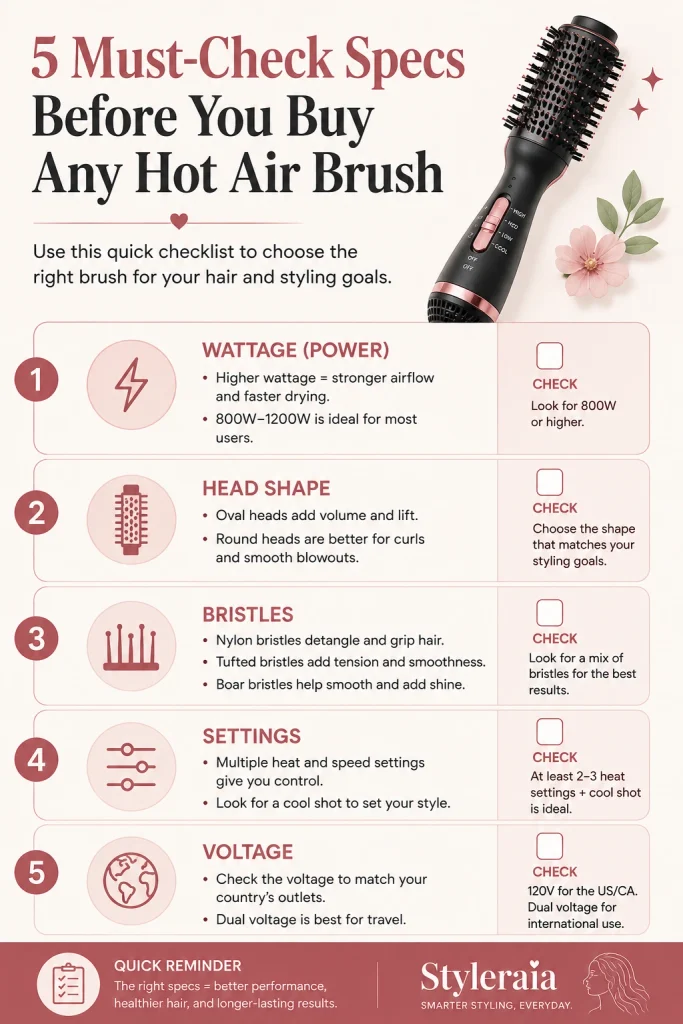
- Wattage. It shows how much heating power the tool has. Revlon lists 1,100 watts.
- Head shape. Revlon says its oval head smooths hair and its rounded edges create volume. Round barrels are a different design.
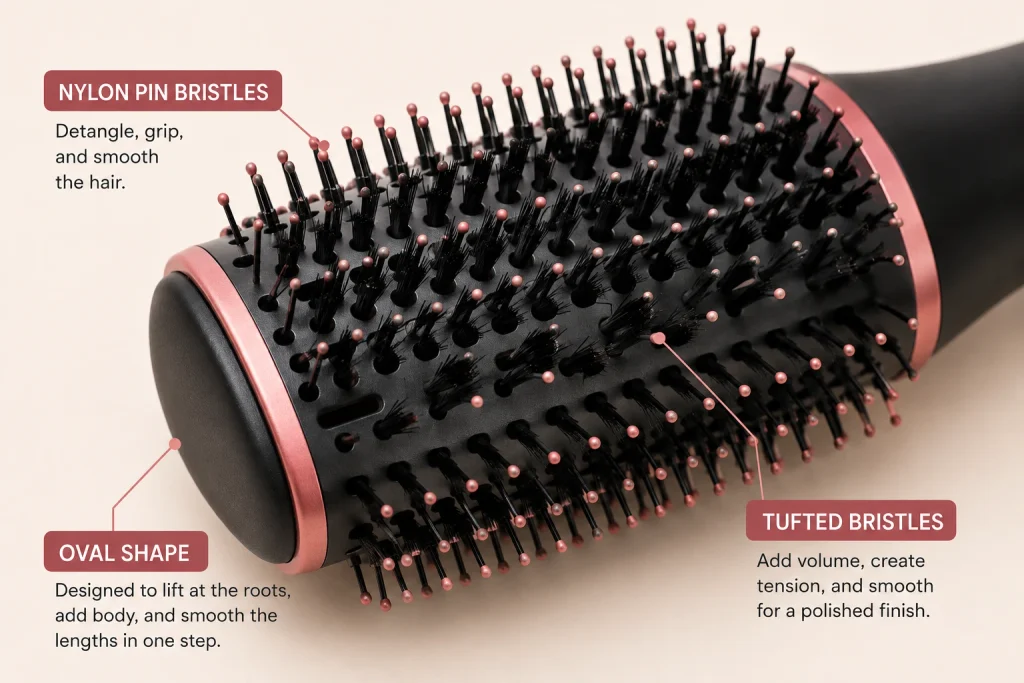
- Bristles. Revlon uses nylon pin and tufted bristles for detangling and control.
- Heat settings and cool option. The count changes by version, so confirm it on the exact product page.
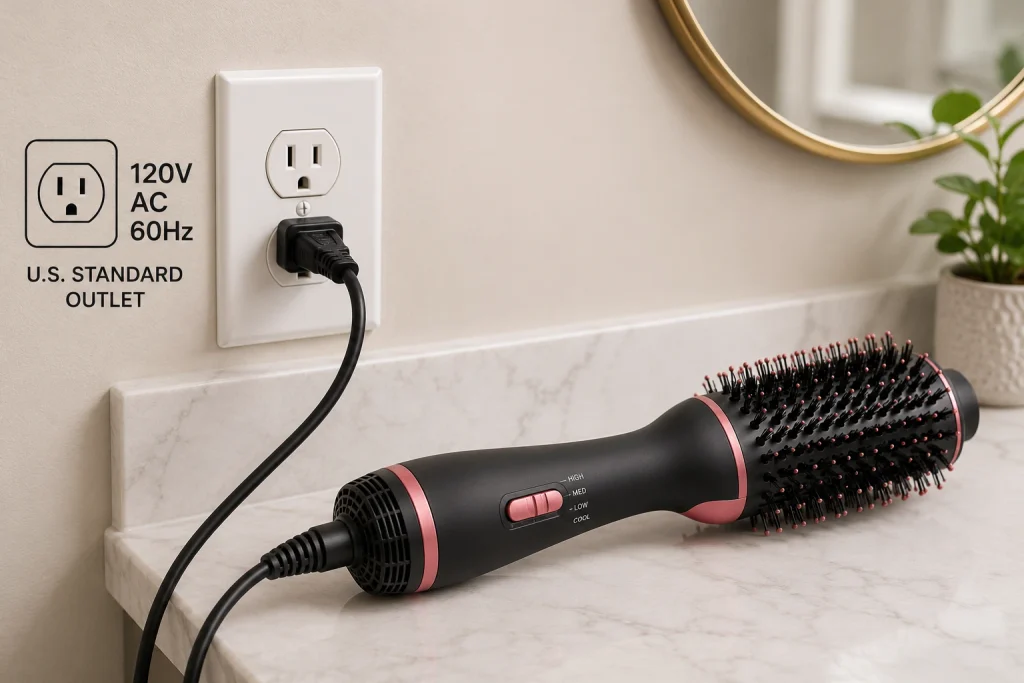
- Voltage and safety. Revlon’s unit is for 120V U.S. outlets only and has an ETL safety seal.
Which Tool Gives the Most Lift?
Root lift is what this tool type is designed for. With a standard hair dryer, you’d need a separate brush to get something similar. Revlon says its volumizer can sit closer to the scalp than a conventional dryer, which is why it markets volume.
A flat iron works the other way, smoothing hair rather than raising the roots. For side-by-side details, see hot air brush vs hair dryer and hot air brush vs flat iron. No independent test data is cited here, and results change with hair type.
Is It Right for You?
It suits you if you want to dry and style with one tool and get lift in a single pass.
Think twice, or ask a professional first, if:
- you want a detachable head (Revlon’s is fixed),
- you live outside 120V regions and can’t get the right voltage version,
- you have a scalp condition, thinning hair, or chemically damaged hair. A stylist or dermatologist can advise you.
Heat can damage hair, so use the lowest setting that works. Read the American Academy of Dermatology’s guidance on heat styling and hair damage.
Mistakes That Cost Shoppers
- Trusting the name. The same tool can have different names, and one name can cover different versions.
- Using a voltage converter. Revlon says it will damage the U.S. unit, and this is the one mistake that can ruin the tool.
- Assuming settings match. Check the exact listing.
- Assuming the head comes off. Revlon’s doesn’t.
- Mixing up tools and products. A spray has no heat, and a hot brush may not blow air.
- Skipping the safety check. Look for the ETL seal and the “test” button on the plug, which Revlon says U.S. hair dryers must have. See the ETL mark explanation from the testing body.
Frequently Asked Questions
Is a one-step hair dryer worth it?
It can be if you want one-pass drying and styling. Revlon’s model pairs 1,100 watts with an oval head, and retailers repeat its claim of blowouts in up to half the time. No independent tests are cited here, so treat that as a manufacturer claim.
What is a one-step dryer and styler?
It’s a hot air brush that dries and shapes hair in one go, replacing the dryer-plus-brush routine. “One-Step” is also a Revlon product-line name, so the phrase can mean either the category or that brand.
Which hair dryer adds volume?
A hot air brush or volumizer, because lift is built into the head. Revlon says its oval design can sit closer to the scalp than a standard dryer. A regular dryer can add volume too, but you’ll usually need a separate round brush.
Is the Revlon One-Step a hot air brush?
Yes. Revlon’s page describes it that way, with a 1,100-watt motor, an oval head, and nylon pin and tufted bristles.
Is a hot air brush the same as a hair dryer?
No. A dryer blows air from a handheld body and needs a separate brush. A hot air brush combines airflow and brush head. Our hot air brush vs hair dryer breakdown explains more.
Does it work on every hair type?
Results vary, and the sources here don’t cover every type. Very long, thick, or chemically damaged hair may need more time or lower heat. With scalp concerns or breakage, ask a stylist or dermatologist first.
Where to Go Next
- Learn the mechanics: how a hot air brush works.
- Compare with your current routine: hot air brush vs hair dryer.
- Weigh it against smoothing tools: hot air brush vs flat iron.