
Introduction
You switch your brush on, and nothing comes out, or the air fades to a trickle halfway through a section. When a hot air brush stops blowing air, the cause is typically a clogged air intake, tangled hair around the fan, or a power fault. Each takes about five minutes to check, and this guide shows you how to identify the culprit, repair it, and recognize when the brush should be retired.
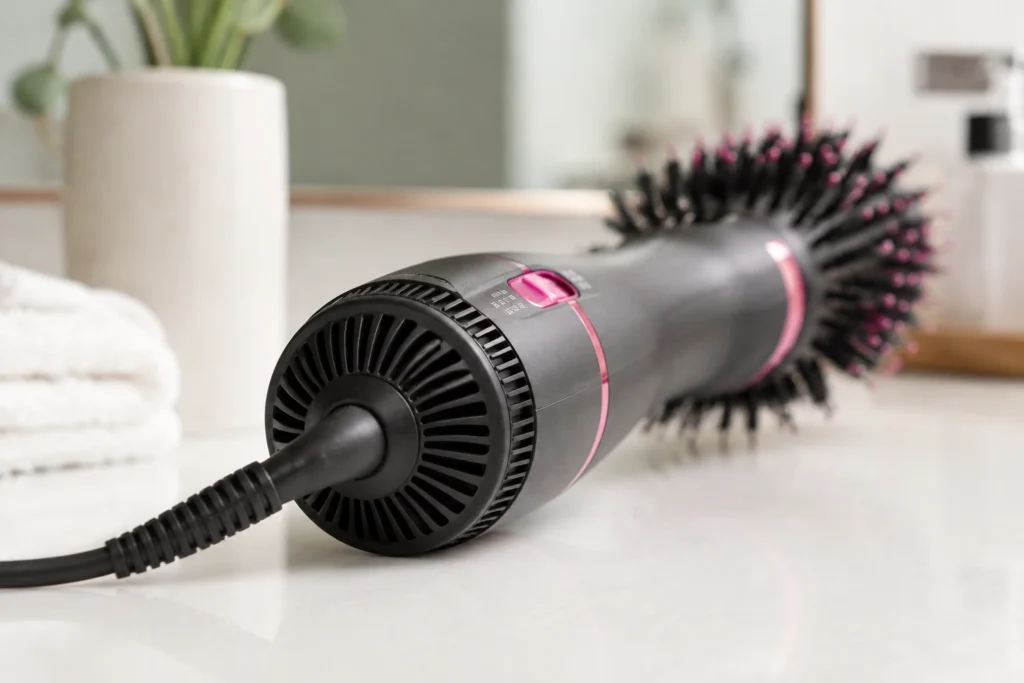
Quick Answer: A hot air brush usually stops blowing because hair, lint, or a clogged vent blocks the airflow. First disconnect the brush from the outlet and give it 15 to 20 minutes to cool. Then pull any hair away from the fan and clear out the vents. Stop using it if the fan makes no sound while the brush warms up, or if you notice a burning smell.
Table of Contents
What You Need to Know
- Most of the time, the problem is clogged vents or hair caught in the fan, and you can fix either one yourself.
- A power problem, a stuck switch, or overheat protection can also stop the air.
- Heat without airflow is the real danger, so unplug the brush before you troubleshoot.
- Stop using the brush if the fan makes no noise while the brush heats up, if you smell burning, or if the cord is damaged.
- Most checks take about 30 minutes, and most of that is waiting for the brush to cool.
Can You Safely Run a Hot Air Brush When No Air Is Coming Out?
No. A brush that heats while the fan isn’t moving air can overheat, so unplug it before you try anything else. The danger is not the missing air itself but the heat that has nowhere to go.
The fan carries heat away from the heating element. If the air stops, heat can keep building in the barrel and the handle. Many models include a thermal cut-off, which is a safety switch that cuts power when the temperature gets too high, but you shouldn’t rely on it.
Run these three checks first:
- Unplug the brush. Don’t keep running it to “test” the problem.
- Sniff for burning and look for smoke. If you notice either, stop here and don’t use the brush again.
- Inspect the cord and plug. A worn cord, a plug that doesn’t sit firmly, or a scorched patch are all reasons to retire the brush.
Why Is Your Hot Air Brush Not Blowing Air? 6 Common Causes
Most cases start with blocked airflow. When hair, lint, or dust clogs the intake vent or fan, little or no air gets through, and other usual suspects include a power problem, a stuck switch, or overheat protection. Always pull the plug first, and only then start checking the six possible causes below.
Start with blocked airflow, since it’s the easiest cause to eliminate and you don’t need any tools or money to check it.
1. No power at the plug or outlet
A loose plug or a dead outlet can make the brush look broken. Test the outlet with a lamp or phone charger. Some models have a plug with a reset button, so check your manual.
2. Blocked intake vent or filter
The intake vent pulls air into the brush, and lint, dust, and loose hair collect there over weeks of use. Our explainer on how a hot air brush works shows where the air travels.
3. Hair or debris in the fan
Strands that wind around the bristles or slip into the fan area can jam it or slow it down. Our guide on how to get hair out of a hot air brush covers stubborn tangles. If hair keeps snagging, see why a hot air brush tangles your hair.
4. Switch or setting problem
Some models have separate buttons for power, speed, and heat. A switch left in the wrong position, or one gummed up with product, can mean no air. Cycle each control once and check your manual.
5. Overheat protection shutting it off
Many brushes have overheat protection, a safety feature that shuts off power when the tool gets too hot. The surprising part is that a brush that has stopped may not be faulty at all, and it can work normally again once it cools down. If it keeps shutting off, don’t keep using it.
6. Failed fan motor or internal fault
A hot air brush fan not working shows up as a silent fan, grinding sounds, or a brush that heats with no air. Don’t open the casing. Stop using the brush and contact the manufacturer, especially if it’s still under warranty.
Troubleshooting Chart for No Airflow: Symptoms and Next Steps
Look for the symptom that matches yours, then do the safest step shown. If the row says “Yes” under Stop, unplug the brush and don’t use it until the problem is resolved.
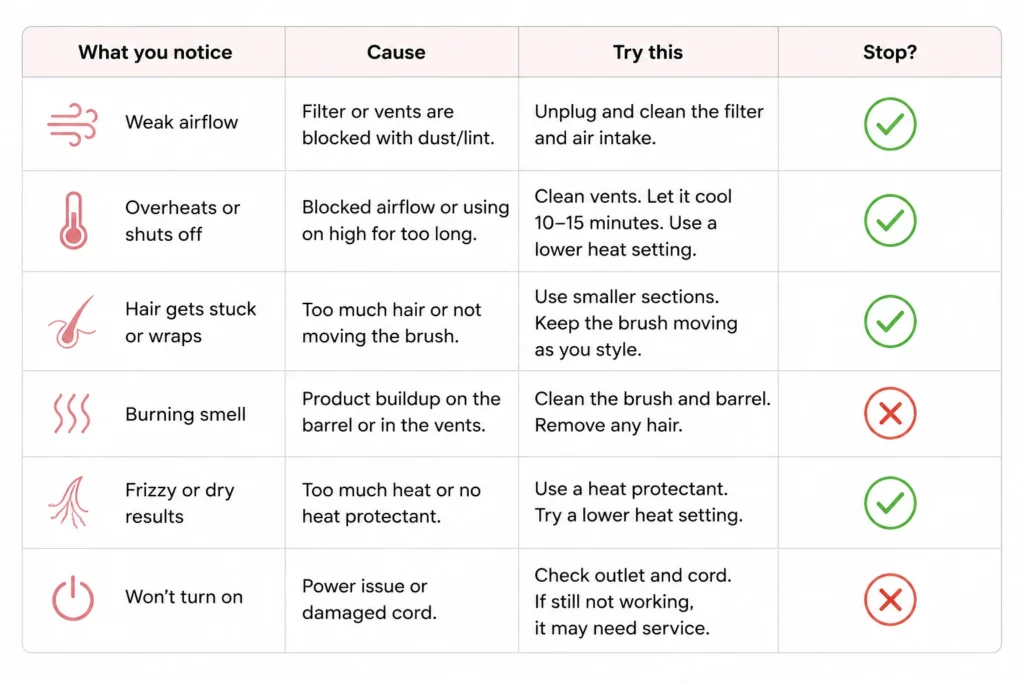
| What you notice | Likely cause | Try this. | Stop using it? |
|---|---|---|---|
| Nothing happens when switched on. | No power: plug, outlet, or cord | Try another outlet and check the plug. | Yes, when the cord or plug shows damage. |
| Heat, but the fan is silent. | Fan or motor failure | Unplug immediately. | Yes |
| The fan spins, and airflow is weak. | Blocked vent or filter | Cool, then clear the vents. | No |
| Rattling or hair smell, little air | Hair jammed in the fan | Unplug, cool, and remove the hair. | No |
| Airflow cuts out after a few minutes. | Overheat protection | Cool fully, and clear the vents. | No, unless it repeats |
| Burning smell or smoke | Internal fault | None | Yes |
Save or screenshot this No-Airflow Diagnosis Chart so you have it handy. It lists what to check first for each symptom you’re likely to run into.
The 60-second decision tree
- Is there smoke, a burning smell, or visible damage to the cord? If so, unplug the brush and don’t use it again. If not, move on to step 2.
- Does anything happen when you switch it on? If no, test the outlet and plug. If yes, go to step 3.
- Is the fan silent while the brush heats? If yes, stop using it. If no, go to step 4.
- Is the airflow weak, or does it fade after a few minutes? If yes, wipe the vents and remove debris around the fan, then.
How to Fix a Hot Air Brush That Won’t Blow Air (Step by Step)
When a hot air brush won’t blow air, work through cooling, checking, clearing, and testing in that order. Many airflow problems clear up in about 30 minutes without any tools. These timings are a cautious rule of thumb, so follow your manual if it says otherwise.
- Unplug it and let it cool for 15 to 20 minutes. Set it on a heat-safe surface away from towels and hair.
- Check for damage. Look over the cord, plug, and casing for cracks, melting, or fraying. If you find any, stop here.
- Test the outlet. Plug a lamp or phone charger into the same outlet. This takes about 2 minutes and rules out a dead outlet.
- Remove hair from the fan area and bristles. Pull wound hair out gently, working from the bristles toward the vent.
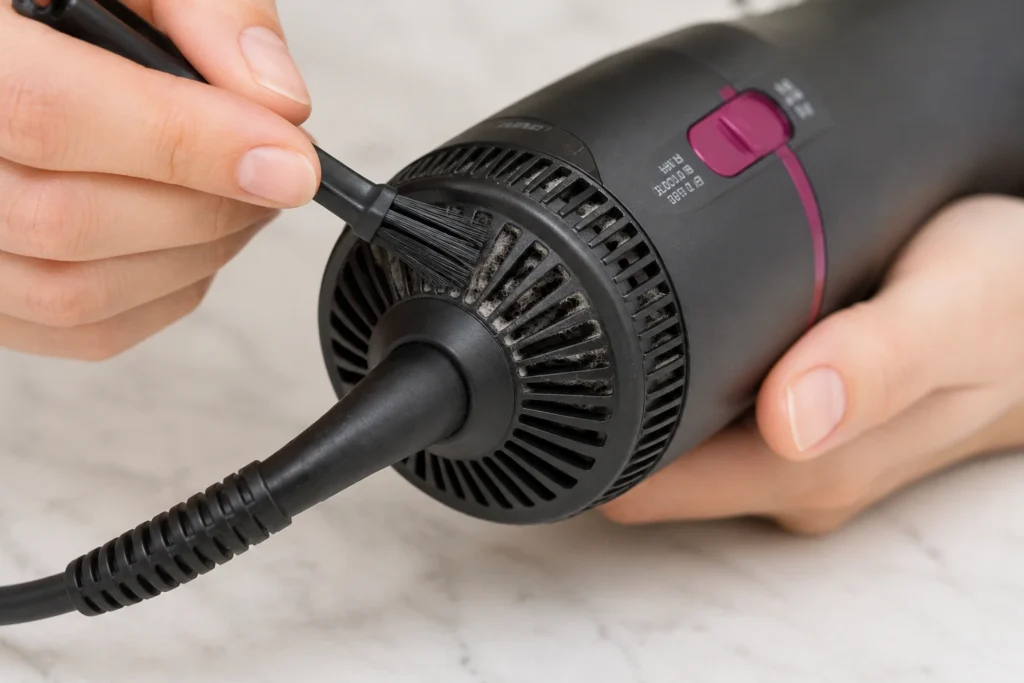
- Clear the vents. Use a dry, soft brush, such as a clean old toothbrush, for 2 to 3 minutes. Never use water or sharp tools.
- Cycle the controls. Switch the power, speed, and heat controls through each position once, as your manual allows.
- Run a 2-minute test on the lowest setting. You want strong, steady airflow. If the air is still weak or the fan stays silent, stop using the brush.
Want a printable version? Our free Hot Air Brush Airflow Checklist is a one-page reminder you can keep in a drawer.
When to Stop Using It and Replace the Brush
Stop at once if the fan is silent while the brush heats, you smell burning, or you see smoke, sparks, or a damaged cord. A brush that heats without moving air is not safe to keep using, even if it still switches on.
- A silent fan with a warm or hot barrel
- A strong, lingering burning smell, smoke, or sparks
- Melted, warped, or discolored plastic
- A frayed, cracked, or unusually hot cord
- Airflow that keeps failing after cleaning and cooling
Don’t open the casing to look inside. Repairs to heating or electrical parts belong with the manufacturer or a qualified service center. The U.S. Consumer Product Safety Commission advises discarding a hair dryer or taking it in for service if it doesn’t work properly or its cord, plug, or other parts are damaged. Check your warranty first, since a failed fan may be covered. If you replace the brush, look for a recognized safety certification mark, such as the UL Mark, which signals independent safety testing, and buy from a reputable seller. The CPSC has warned consumers to stop using several hair dryer brushes that did not meet U.S. safety requirements.
How to Keep Airflow Strong
Keep the vents clear, remove hair after each session, and don’t block the air intake while you style. Clearing hair from the bristles after every session prevents most jams.
- Pull hair from the bristles and fan area after each use.
- Wipe lint from the vents every few uses.
- Keep your hand, hair, and fabric away from the intake vent while it runs.
- Match heat to your hair type with our heat setting chart so you aren’t pushing the brush harder than needed.
- Follow the technique in our How to Use a Hot Air Brush guide.
FAQs
Why is my hairdryer not blowing hot air?
Two different problems look similar. If no air comes out at all, the cause is usually a blocked vent, hair in the fan, a power problem, or overheat protection, and the steps above apply. If air blows but stays cold, the heating side has failed or a heat control is set wrong. Check your manual or contact the manufacturer.
Why is my hairdryer heating up but not blowing air?
That points to a failed or jammed fan, and it needs attention right away. Without airflow, heat stays inside the brush. Unplug it, let it cool, and check for hair in the fan. If the fan still doesn’t move, stop using the brush and contact the manufacturer.
How do I unclog a hot air brush?
Unplug it and let it cool for 15 to 20 minutes. Remove hair from the bristles and fan area, then clear the vents with a dry, soft brush such as a clean old toothbrush. Never use water or sharp tools. Run a 2-minute test on the lowest setting to confirm the airflow is back.
Why did my hot air brush stop working suddenly?
A sudden stop usually means a power problem, overheat protection, or a jammed fan. Test the outlet, then let the brush cool for 15 to 20 minutes and clear hair from the fan. If it restarts, the safety cut-off is probably triggered. If it stays dead or smells burnt, stop using it.
Why does the airflow fade after a few minutes?
Fading airflow often means a partly blocked vent or overheat protection starting to act. Lints and hair restrict the air, so the brush heats up faster and may catch fire. Clear the vents, let it cool fully, and use a lower heat setting. If it keeps happening, treat it as a fault.
Should I repair or replace a hot air brush with no airflow?
If cleaning and cooling don’t bring the airflow back, replacing the brush is usually the safer choice. Repairs to the fan, motor, or wiring need a qualified technician, and they rarely cost much less than a new brush. Check your warranty first, since a failed fan may be covered.
What to Do Next
Once the airflow is back, learn the right technique for a hot air brush and pick the right heat setting for your hair type. For cleaning schedules, warning signs, and repair-or-replace advice in one place, read the Hot Air Brush Maintenance & Troubleshooting guide.
Pingback: Hot Air Brush Maintenance & Troubleshooting: Complete Guide